
US Airport Fee Hikes Autumn 2026: MSP, Dulles, BWI, BNA, BDL, ANC Landing Rates and Passenger Fare Guide
Major US airport hubs including Minneapolis–Saint Paul, Washington Dulles, BWI, and Nashville implement significant landing fee and terminal rate hikes ahead of fall 2026, driving indirect airfare pressure.

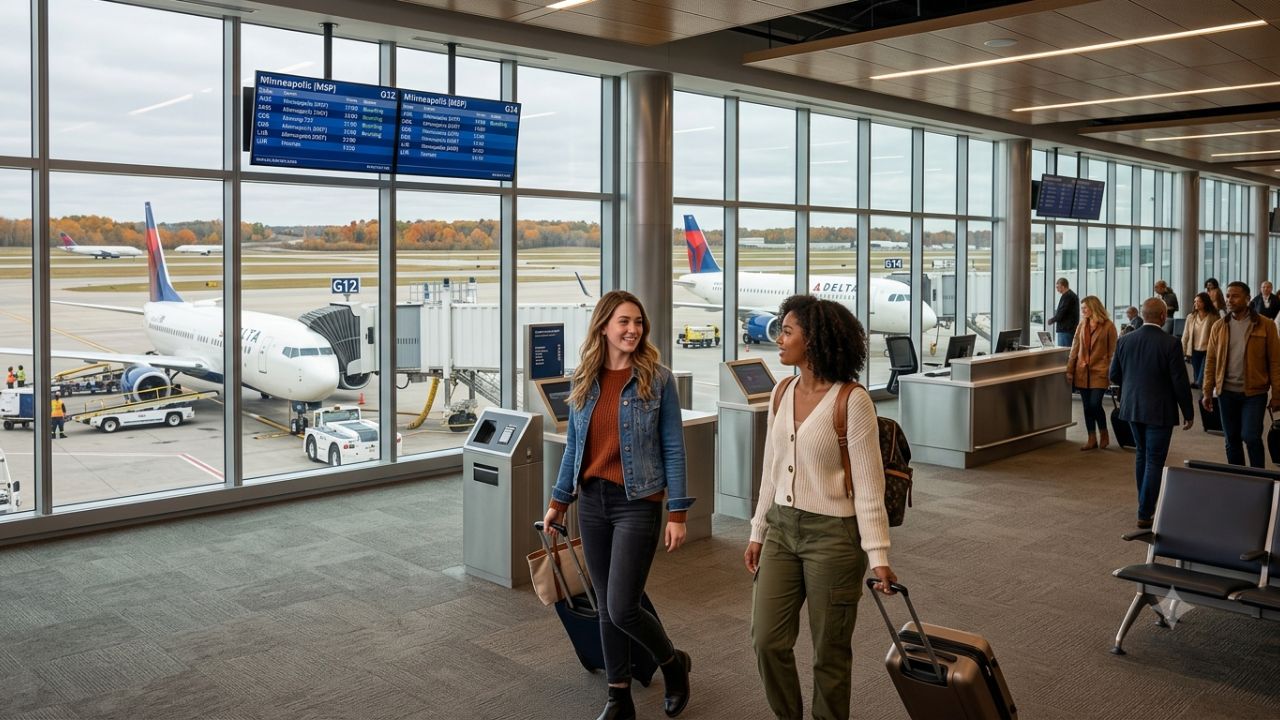
Photo: Nomad Lawyer / Aviation Logistics Archive
Commercial airports across the United States are executing structured increases in aeronautical operating charges and airline facility rates ahead of the fall 2026 travel season. Key international and regional hubs—including Minneapolis–Saint Paul International Airport (MSP), Washington Dulles International Airport (IAD), Baltimore/Washington International Thurgood Marshall Airport (BWI), Nashville International Airport (BNA), Bradley International Airport (BDL), and Ted Stevens Anchorage International Airport (ANC)—are updating landing fee calculations and terminal rental agreements to finance billion-dollar capital development programs and meet rising operating expenses.
The rate revisions across domestic aviation hubs come as airport authorities balance expanding passenger volumes against mounting long-term infrastructure debt. While these cost adjustments do not appear as direct standalone line items on consumer ticket receipts, they increase carriers' landing, gate, and terminal overhead. As airlines evaluate network profitability for the late 2026 schedule, rising airport aeronautical charges are poised to filter into base airfares across high-demand domestic and transatlantic routes.
Financial Architecture of US Aeronautical Rate Increases
The regulatory framework governing airport revenue structures in the United States operates under strict Federal Aviation Administration (FAA) guidelines. Airports rely on dual financing streams: aeronautical charges paid directly by air carriers (such as maximum certificated gross landing weight fees and gate rental tariffs) and non-aeronautical revenue (concessions, vehicle parking, and real estate leases).
+-------------------------------------------------------------------------+
|                  US AIRPORT CAPITAL & OPERATING FUNDING                 |
+-------------------------------------------------------------------------+
                                     |
         +---------------------------+---------------------------+
         |                                                       |
         v                                                       v
+----------------------------------+            +----------------------------------+
|    AERONAUTICAL AIRLINE FEES     |            |  PASSENGER FACILITY CHARGES (PFC)|
+----------------------------------+            +----------------------------------+
| - Landing Fees (per 1,000 lbs)   |            | - Capped at $4.50 per segment    |
| - Terminal & Gate Rentals        |            | - Directly funds FAA safety &    |
| - Apron & Deicing Charges        |            |   capacity infrastructure        |
+----------------------------------+            +----------------------------------+
         |                                                       |
         +---------------------------+---------------------------+
                                     |
                                     v
+-------------------------------------------------------------------------+
|                 INDIRECT AIRLINE PASS-THROUGH TO AIRFARE                |
+-------------------------------------------------------------------------+
Under federal statutes, eligible airport authorities may also levy Passenger Facility Charges (PFCs) capped at up to $4.50 per eligible passenger segment. These funds are legally restricted to FAA-approved safety, security, noise mitigation, and capacity preservation projects. However, expanding physical infrastructure—such as terminal concourse extensions, automated baggage handling machinery, and airfield pavement rehabilitation—requires supplemental capital funding generated through airline cost-recovery formulas.
Airport-by-Airport Fee Schedule Specifications
The scheduled fee modifications taking effect during the 2026 fiscal cycle highlight distinct operational and geographic drivers across primary US flight hubs.
2026 US Airport Fee Adjustments and Facility Rates
| Airport Hub | Jurisdiction | Increased Fee Category | 2026 Rate Change Details | Effective Date | Core Infrastructure Driver | Traveler Impact Level |
|---|---|---|---|---|---|---|
| Minneapolis–Saint Paul International Airport (MSP) | Minnesota | Landing fees & facility charges | Landing fee increasing from $4.92 to $5.62 per 1,000 lbs | FY2026 (Fall operations) | Airfield pavement, runway maintenance, operating inflation | Minor base fare adjustments by network carriers |
| Washington Dulles International Airport (IAD) | Virginia / DC | Passenger boarding & terminal rates | Facility charges adjusted for $19.9B redevelopment plan | Post-2026 long-term program | Underground tunnels, transit systems, terminal upgrades | Long-term ticket pricing changes on international routes |
| Baltimore/Washington Thurgood Marshall Airport (BWI) | Maryland | Landing fees & terminal rentals | Revised FY2027 rate structure for aeronautical users | Mid-2026 rate period | Concourse maintenance & financial stability plans | Indirect fare shifts on competitive Eastern Seaboard routes |
| Nashville International Airport (BNA) | Tennessee | Landing fees & gate rental rates | Updated FY2027 rate schedule for commercial operators | July 2026 onward | Rapid passenger growth, gate expansion programs | Marginal carrier cost absorption or localized fare tweaks |
| Bradley International Airport (BDL) | Connecticut | Landing & terminal rental charges | Published FY2027 updated aviation fee schedule | July 2026 | New facility management & operational maintenance | Moderate adjustment across regional connecting flights |
| Ted Stevens Anchorage International Airport (ANC) | Alaska | Landing fees & cargo facility tariffs | Published 2026 rate book updates for passenger & cargo | July 2026 | Transpacific cargo & remote passenger gateway costs | Impact focused on heavy cargo and regional route yields |
Key Hub Developments: Minneapolis–Saint Paul and Washington Dulles
At Minneapolis–Saint Paul International Airport (MSP), the primary airline-facing fee change centers on airfield landing assessments. The landing fee is projected to rise from $4.92 per 1,000 pounds of maximum landing weight in 2025 to $5.62 per 1,000 pounds in fiscal year 2026. Because landing charges directly reflect aircraft weight, long-haul widebody operations and dense domestic narrowbody flights incur higher baseline operational costs per departure.
MSP Airport Landing Fee Projection (per 1,000 lbs)
2025: $4.92  [====================================]
2026: $5.62  [=========================================] (+14.2% Increase)
At Washington Dulles International Airport (IAD), fee adjustments support a long-term $19.9 billion airport modernization master plan. The multi-year capital program encompasses sub-surface passenger transit tunnels, modernized main terminal processing zones, and expanded international gate concourses. The Metropolitan Washington Airports Authority (MWAA) is structuring long-term airline terminal rents and facility use tariffs to underwrite debt service for these mega-projects.
Similarly, growing mid-Atlantic and Southern gateways like BWI Thurgood Marshall and Nashville International (BNA) are adjusting rate books starting in July 2026 to support recent passenger terminal expansions. Fast-growing hubs must frontload capital debt service before peak passenger volumes materialize, avoiding airfield congestion and processing bottlenecks.
Traveler Logistics Guide: Navigating Autumn 2026 Fare Changes
Because airlines incorporate airport fee increases into global pricing algorithms, passengers will rarely see a line-item entry labeled "MSP Landing Charge" on an e-ticket. However, understanding carrier pricing mechanics allows travelers to mitigate indirect fare surges.
                                NAVIGATING FALL 2026 AIRPORT COST INCREASES
                                                     |
         +-------------------------------------------+-------------------------------------------+
         |                                           |                                           |
         v                                           v                                           v
+----------------------------------+    +----------------------------------+    +----------------------------------+
|      BOOKING TIMING WINDOW       |    |      SECONDARY HUB ROUTING       |    |     BAG & SEAT ANCILLARY AUDIT   |
+----------------------------------+    +----------------------------------+    +----------------------------------+
| Lock in peak autumn & Thanksgiving|    | Compare secondary airports (e.g. |    | Factor full itinerary ancillary  |
| travel 45-60 days in advance to  |    | BWI vs DCA vs IAD) where multi-  |    | fees to offset carrier fare      |
| avoid last-minute yield spikes.  |    | carrier competition caps fares.  |    | restructuring at high-cost hubs. |
+----------------------------------+    +----------------------------------+    +----------------------------------+
Strategic Recommendations for Fall 2026 Bookings
- Monitor Peak Holiday Fare Windows: For autumn travel surrounding Thanksgiving and late-fall conferences, lock in itineraries 45 to 60 days prior to departure. Airlines typically adjust yields upward closer to departure dates to capture high-yield business travel while offsetting increased landing costs.
- Leverage Multi-Airport Metro Competition: In metropolitan markets served by multiple facilities—such as the Washington DC area (IAD, BWI, DCA)—compare fares across all gateways. Strong carrier competition at secondary airports can suppress fare hikes even when individual airport operating fees increase.
- Audit Ancillary Fee Structures: When airlines face higher airfield fixed charges, base fares on competitive routes may remain flat while unbundled fees (checked luggage, seat selection, carry-on allowances) increase. Calculate total travel costs including baggage before selecting a carrier.
- Buffer Connection Times at Modernizing Hubs: Airports undergoing multi-billion-dollar modernizations (such as Washington Dulles) may experience localized gate reassignments or longer terminal walk times due to ongoing construction. Maintain a minimum layover threshold of 75 minutes for domestic transfers and 120 minutes for international-to-domestic connections.
Related Travel Guides
Disclaimer
This article is for informational and educational purposes only. It does not constitute legal, financial, or professional advice. While we strive to provide accurate and up-to-date information, travel policies, regulations, and conditions change rapidly. Always verify information with official sources before making travel decisions. Nomad Lawyer makes no representations about the accuracy, reliability, completeness, or suitability of the information provided. Readers should consult qualified professionals for advice specific to their circumstances. The views expressed in this article are those of the author and do not necessarily reflect the views of Nomad Lawyer.
Kunal K Choudhary
Co-Founder & Contributor
A passionate traveller and tech enthusiast. Kunal contributes to the vision and growth of Nomad Lawyer, bringing fresh perspectives and driving the community forward.
Learn more about our team →