
US Airports Face Massive Chaos With 1,475+ Flight Cancellations and Thousands of Delays in 2026
Severe weather and technical outages triggered over 1,475 flight cancellations and nearly 10,000 delays across major US hubs on July 19, 2026.

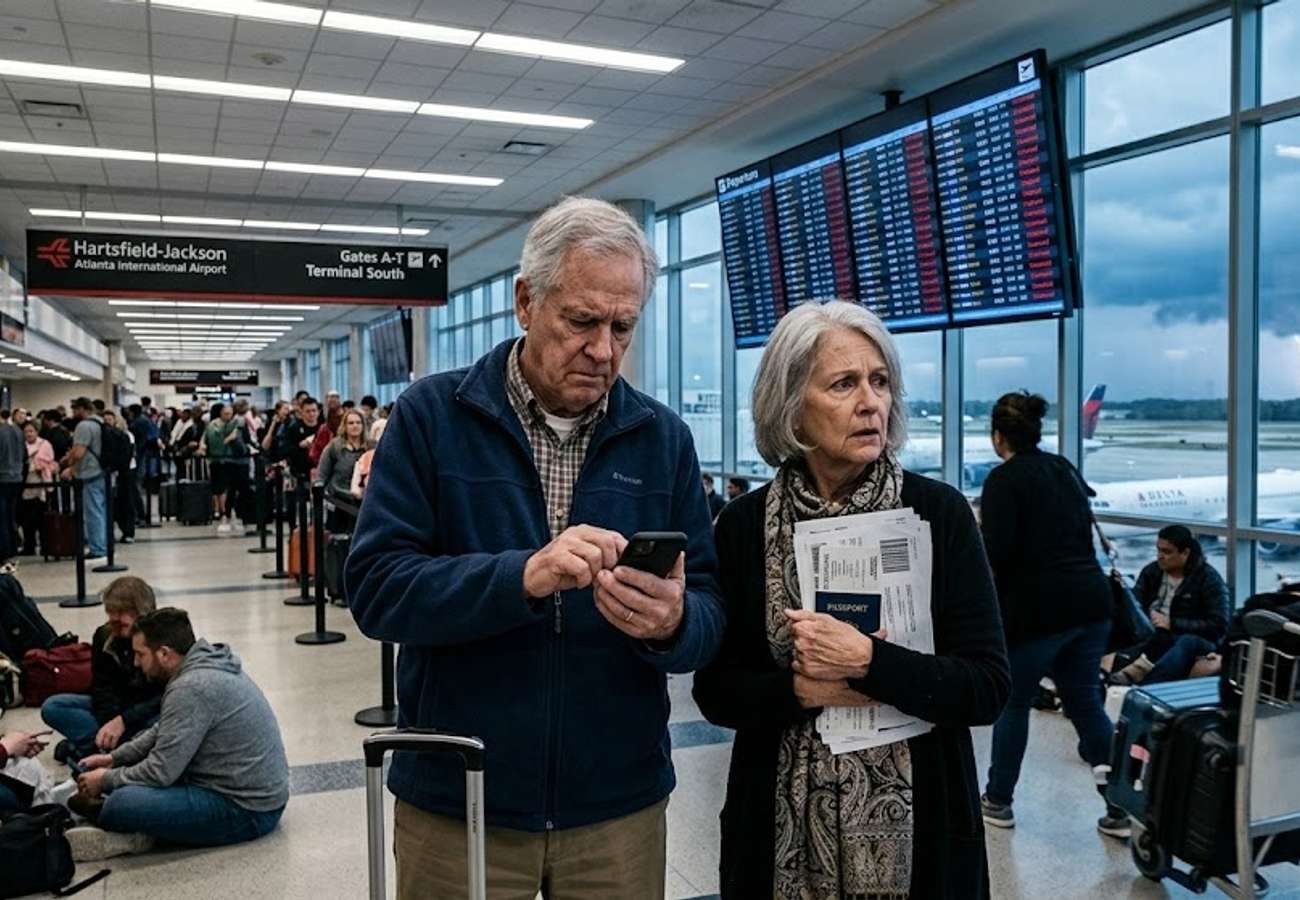
Image generated by AI
A convergence of severe weather systems and critical technical failures paralyzed the United States aviation network over a chaotic 24-hour window ending July 19, 2026. The disruption left thousands of passengers stranded, with a combination of atmospheric instability and systemic glitches creating a bottleneck at the nation's busiest transit hubs.
Data from FlightAware reveals the scale of the collapse: 9,947 delays were recorded for flights moving within, into, or out of the U.S. on July 19 alone. Alongside these delays, 1,477 flights were canceled entirely, forcing travelers into lengthy rebooking queues and unexpected overnight stays.
Atlanta Emerges as Epicenter of Disruptions
Hartsfield-Jackson Atlanta International Airport (ATL) bore the brunt of the operational failure. As the world's busiest hub, it recorded the highest number of canceled flights and the most significant volume of delays globally.
The impact was particularly acute for Delta Air Lines, which utilizes Atlanta as its primary fortress hub. Delta recorded 832 delays at ATL, representing nearly 50% of its total flight volume departing from the airport.
US Airports With the Most Canceled Departures (July 19, 2026)
| Rank | Airport | Cancellations |
|---|---|---|
| 1 | Hartsfield-Jackson International Airport | 142 |
| 2 | John F. Kennedy International Airport | 118 |
| 3 | Newark Liberty International Airport | 71 |
| 4 | LaGuardia Airport | 71 |
| 5 | Boston Logan International Airport | 61 |
Beyond the top five, significant operational volatility was reported at Reagan National, Fort Lauderdale International, Chicago O'Hare, and Philadelphia International airports. Additional disruptions were concentrated in corridors serving Charlotte, Orlando, and Detroit.
Systemic Failures: Weather, Tech, and Mechanical Issues
While inclement weather served as the primary catalyst, the crisis was compounded by secondary failures. United Airlines struggled with a severe technical outage that hampered its ability to manage schedules effectively.
Passenger reports indicate that mechanical failures also played a role in the instability. Travelers on routes between Washington D.C. and Charlotte reported multiple aircraft being grounded due to cockpit air conditioning failures and other mechanical malfunctions, suggesting a wider strain on fleet maintenance during the peak summer travel window.
Customer service responses varied, with some passengers reporting "impossible" rebooking options. One traveler noted that Delta offered a flight that had already departed (a "flight in the past") or suggested alternatives from airports located three hours away from their original destination.
Airline Performance and Recovery Efforts
The disruption affected all major carriers, but the nature of the impact differed between cancellations and delays. Delta Air Lines faced the highest number of cancellations, reaching the 400 mark on Sunday due to heavy congestion at its JFK and ATL hubs. Conversely, Southwest Airlines recorded the highest volume of delays.
US Airlines With the Most Delays (July 19, 2026)
| Rank | US Airline | Delays |
|---|---|---|
| 1 | Southwest Airlines | 1,706 |
| 2 | Delta Air Lines | 1,440 |
| 3 | American Airlines | 1,380 |
| 4 | United Airlines | 964 |
| 5 | SkyWest | 517 |
To mitigate the ongoing fallout, Delta has implemented flexible rebooking policies for flights on July 21 and July 22. These waivers specifically target the Northeast corridor due to forecasted inclement weather.
The affected hubs for these flexible options include:
- Boston (BOS)
- Baltimore (BWI)
- Washington-Reagan (DCA)
- Newark (EWR)
- White Plains (HPN)
- Washington-Dulles (IAD)
- New York-Kennedy (JFK)
- New York-LaGuardia (LGA)
- Philadelphia (PHL)
Additionally, separate rebooking measures remain in place for Atlanta-based flights following severe thunderstorms on July 20.
Strategic Outlook for Travelers
The combination of seasonal weather volatility and aging technical infrastructure continues to make US air travel precarious during peak periods. With further storms projected for the Northeast, the aviation industry remains in a fragile state of recovery. Travelers are encouraged to monitor flight status in real-time and utilize airline mobile apps to avoid the lengthy queues currently plaguing physical airport terminals.
A volatile summer for US aviation suggests that redundancy in travel planning is no longer optional, but essential.
Related Travel Guides
Disclaimer
This article is for informational and educational purposes only. It does not constitute legal, financial, or professional advice. While we strive to provide accurate and up-to-date information, travel policies, regulations, and conditions change rapidly. Always verify information with official sources before making travel decisions. Nomad Lawyer makes no representations about the accuracy, reliability, completeness, or suitability of the information provided. Readers should consult qualified professionals for advice specific to their circumstances. The views expressed in this article are those of the author and do not necessarily reflect the views of Nomad Lawyer.
Raushan Kumar
Founder & Lead Developer
Full-stack developer with 11+ years of experience and a passionate traveller. Raushan built Nomad Lawyer from the ground up with a vision to create the best travel and law experience on the web.
Learn more about our team →