
US Flight Disruption Index Rises with 141 Cancellations Across Chicago O'Hare, Southwest, and Delta Air Lines in July 2026
Over 3,195 flight delays and 141 cancellations impact the US aviation system. Review regional data, carrier metrics, and passenger transit guidelines.

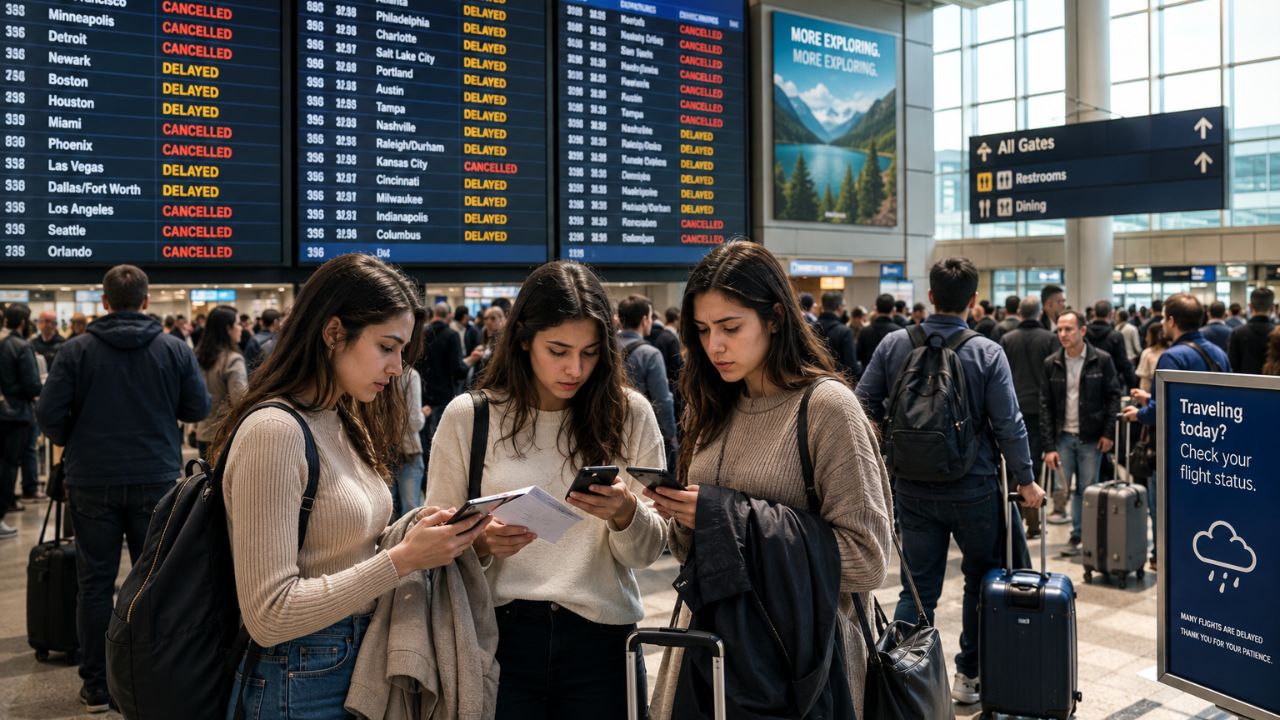
Image generated by AI
US Flight Disruption Index Rises with 141 Cancellations Across Chicago O'Hare, Southwest, and Delta Air Lines in July 2026
The United States aviation network faced severe pressure on July 16, 2026, recording 3,195 flight delays and 141 cancellations nationwide. Chicago O'Hare International Airport emerged as the most disrupted hub, while Southwest Airlines and Delta Air Lines led carrier-specific delays and cancellations.
The Core Transit Update
A systemic operational disruption impacted domestic and international flight corridors across the United States. Telemetry logs from July 16, 2026, indicate that air carrier networks registered a combined total of 3,195 flight delays and 141 cancellations nationwide. The schedule adjustments affected major metropolitan hubs and regional feeder lines, leaving thousands of passengers navigating rebooking queues.
According to data monitored by the Federal Aviation Administration (FAA), the highest volume of airport disruptions occurred at Chicago O'Hare International Airport (ORD) in Illinois. As a primary intersection for transcontinental routes, O'Hare recorded 283 delays alongside 18 cancellations. West Coast operations were similarly constrained, with San Francisco International Airport (SFO) logging 176 delays and 6 cancellations, while San Diego International Airport (SAN) reported 143 delays and 6 cancellations.
In the East, Hartsfield-Jackson Atlanta International Airport (ATL) recorded 167 delays and 8 cancellations. Mountain and mid-Atlantic transit corridors also faced operational strain, with Denver International Airport (DEN) reporting 150 delays and 7 cancellations, and Reagan National Airport (DCA) in Virginia registering 93 delays and 13 cancellations. New England and upper Midwest hubs also adjusted schedules; Boston Logan International Airport (BOS) logged 87 delays and 6 cancellations, while Milwaukee Mitchell International Airport (MKE) recorded 20 delays and 10 cancellations.
Among airlines, Southwest Airlines experienced the highest delay count, accumulating 594 delayed flights across its point-to-point network. American Airlines followed closely with 589 delays and 4 cancellations. Mainline legacy carriers and their regional partners absorbed the highest cancellation totals. Delta Air Lines led all operators in flight cancellations, reporting 26 cancellations and 234 delays.
Regional operations, which feed passengers into mainline networks, suffered significant scheduling cuts. SkyWest Airlines logged 251 delays and 21 cancellations, and PSA Airlines registered 111 delays and 19 cancellations. Low-cost carrier JetBlue Airways reported 80 delays and 10 cancellations, while United Airlines also faced notable delays across its key hubs.
Transit Schedule & Route Specifications
The airport-by-airport disruption metrics and carrier operational performance data for the US aviation corridor are outlined in the tables below:
US Flight Disruption Metrics by Airport (July 16, 2026)
| Airport Hub Name | IATA Code | Scheduled Flight Delays | Scheduled Flight Cancellations | Combined Daily Disruptions |
|---|---|---|---|---|
| Chicago O'Hare | ORD | 283 | 18 | 301 |
| San Francisco | SFO | 176 | 6 | 182 |
| Hartsfield-Jackson Atlanta | ATL | 167 | 8 | 175 |
| Denver International | DEN | 150 | 7 | 157 |
| San Diego International | SAN | 143 | 6 | 149 |
| Reagan National | DCA | 93 | 13 | 106 |
| Boston Logan | BOS | 87 | 6 | 93 |
| Milwaukee Mitchell | MKE | 20 | 10 | 30 |
Carrier Operational Disruption Metrics
| Operating Airline Brand | Flight Delays | Flight Cancellations | Primary Operational Focus |
|---|---|---|---|
| Southwest Airlines | 594 | 0 | Mainline Point-to-Point |
| American Airlines | 589 | 4 | Legacy Hub-and-Spoke |
| SkyWest Airlines | 251 | 21 | Regional Feeder Services |
| Delta Air Lines | 234 | 26 | Legacy Hub-and-Spoke |
| PSA Airlines | 111 | 19 | Regional Feeder Services |
| JetBlue Airways | 80 | 10 | Mainline / Low-Cost Hybrid |
Traveler Logistics Guide (Information Gain)
- Managing Tight Connections at Major Hubs:
- O'Hare (ORD) Layout: Chicago O'Hare is configured with four active passenger terminals (Terminals 1, 2, 3, and 5). Terminals 1, 2, and 3 are connected airside via pedestrian corridors. However, transiting to the international Terminal 5 requires exiting security and boarding the Airport Transit System (ATS) train.
- Connection Buffers: When booking domestic connections through O'Hare or Atlanta, passengers should schedule a minimum layover window of 90 minutes for domestic transfers and 2.5 hours if connecting to an international flight. This buffers against downstream gate holds and baggage transfer delays.
- Navigating Customs and Digital Transit Policies:
- Mobile Passport Control (MPC): Passengers returning to the United States from international destinations can utilize the official U.S. Customs and Border Protection Mobile Passport Control app. Submitting passport and customs declarations digitally via the app allows travelers to access dedicated express lanes, expediting re-entry and helping secure tight domestic connections.
- International Digital Credentials: For passengers connecting to international sectors, ensure digital travel authorizations, such as the European Travel Information and Authorization System (ETIAS) for European Union entry or Digi Yatra profiles for Indian transit points, are updated and active in your digital wallet before departure to prevent boarding delays.
- Ticketing and Self-Service Rebooking Options:
- Digital Rebooking: If your flight is canceled, bypass the physical customer service lines at the terminal. Open your carrier's mobile application to access automated rebooking tools, which often present alternative flight routes and seat selections faster than gate agents.
- Passenger Rights and Documentation: Under U.S. Department of Transportation (DOT) guidelines, passengers are entitled to a full refund if their flight is canceled and they choose not to travel. Keep digital copies of your boarding passes, cancellation alerts, and baggage receipts to support claims for rebooking costs or refunds.
Infrastructure Impact Assessment
The concentration of delays at key transit nodes like Chicago O'Hare and Hartsfield-Jackson Atlanta demonstrates the structural vulnerability of the hub-and-spoke aviation system. When a major hub faces operational bottlenecks, the delays quickly cascade across the country. Aircraft scheduled for subsequent rotations cannot depart, resulting in delayed arrivals and missed crew rotations at secondary destinations.
The data reveals that regional feeder carriers, such as SkyWest and PSA Airlines, absorb a disproportionate share of flight cancellations. Mainline carriers often prioritize legacy widebody routes, which carry higher passenger volumes and international cargo. Consequently, regional feeder routes are canceled to preserve gate space, air traffic control slots, and crew duty hours at major hubs. This operational prioritization minimizes international delays but isolates regional travelers who rely on feeder connections.
For regional tourism and business corridors, these recurring disruptions create scheduling uncertainty. Prolonged delays alter passenger travel behaviors, driving an increase in alternative ground transit usage for short-haul trips under 300 miles.
FAQ: US Flight Disruptions July 2026
Which airline recorded the highest number of flight delays on July 16, 2026?
Southwest Airlines recorded the highest number of delays, with 594 flights disrupted, followed closely by American Airlines with 589 delays.
What options do passengers have if a U.S. flight is canceled?
Under U.S. DOT rules, passengers can request a full refund to their original payment method or choose to be rebooked on the next available flight without additional fees.
Why did regional carriers like SkyWest face higher cancellation rates during the disruptions?
Legacy airlines prioritize mainline and long-haul flights to manage gate capacity and passenger volume, leading to higher cancellation rates for smaller regional feeder services.
Related Travel Guides
- Brazil Aviation Network Hit by 204 Delays and 45 Cancellations Across São Paulo and Rio de Janeiro Hubs Disrupting Major Carriers
- United Airlines Flight UA1507 From Houston to Phoenix Diverts to Las Vegas Harry Reid International Airport Following Unconfirmed Operational Disruption
- Chicago O'Hare Flight Delays and Cancellations Climb: Regional and Legacy Carriers Disrupted
Disclaimer
This article is for informational and educational purposes only. It does not constitute legal, financial, or professional advice. While we strive to provide accurate and up-to-date information, travel policies, regulations, and conditions change rapidly. Always verify information with official sources before making travel decisions. Nomad Lawyer makes no representations about the accuracy, reliability, completeness, or suitability of the information provided. Readers should consult qualified professionals for advice specific to their circumstances. The views expressed in this article are those of the author and do not necessarily reflect the views of Nomad Lawyer.
Kunal K Choudhary
Co-Founder & Contributor
A passionate traveller and tech enthusiast. Kunal contributes to the vision and growth of Nomad Lawyer, bringing fresh perspectives and driving the community forward.
Learn more about our team →