
Global Aviation Alert: United States Joins Australia, UK, Canada, and Japan to Review United Flight 1382 Engine Failure and Emergency Evacuation Chaos in Houston
An in-depth review of the United Airlines Flight 1382 emergency evacuation at Houston. Global aviation authorities from the US, UK, Australia, Canada, and Japan analyze the Airbus A319 engine failure and cabin chaos.

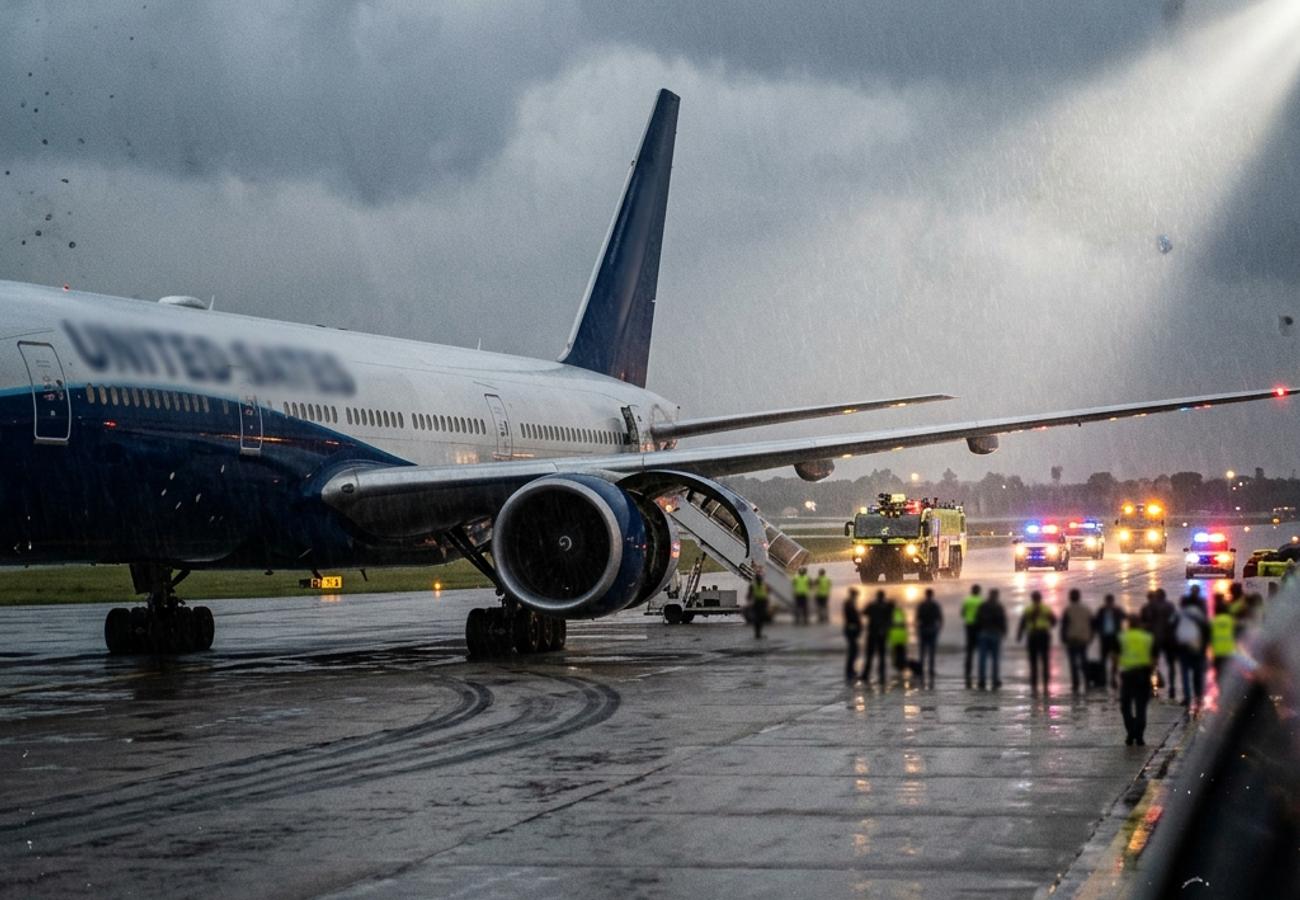
Image generated by AI
Global Aviation Alert: Navigating the profound safety implications, passenger chaos, and international regulatory response following the dramatic engine failure of United Airlines Flight 1382 at Houston’s George Bush Intercontinental Airport.
The global aviation sector is currently dissecting one of the most critical safety case studies of the year, as the United States officially joins forces with aviation authorities in Australia, the United Kingdom, Canada, and Japan to review the dramatic engine failure and subsequent emergency evacuation of United Airlines Flight 1382. On February 2, 2025, what began as a routine domestic departure violently transformed into a chaotic and volatile situation at Houston’s George Bush Intercontinental Airport. With 112 passengers and crew members thrust into a high-stakes emergency, the aborted takeoff of the Airbus A319 not only exposed sudden mechanical vulnerabilities but also highlighted a deeply concerning breakdown in cabin communication and passenger compliance. For international tourists, frequent flyers, and global travel professionals, the cascading events of this flight provide an indispensable lesson in airline safety, emergency preparedness, and the absolute necessity of rigorous operational protocols.
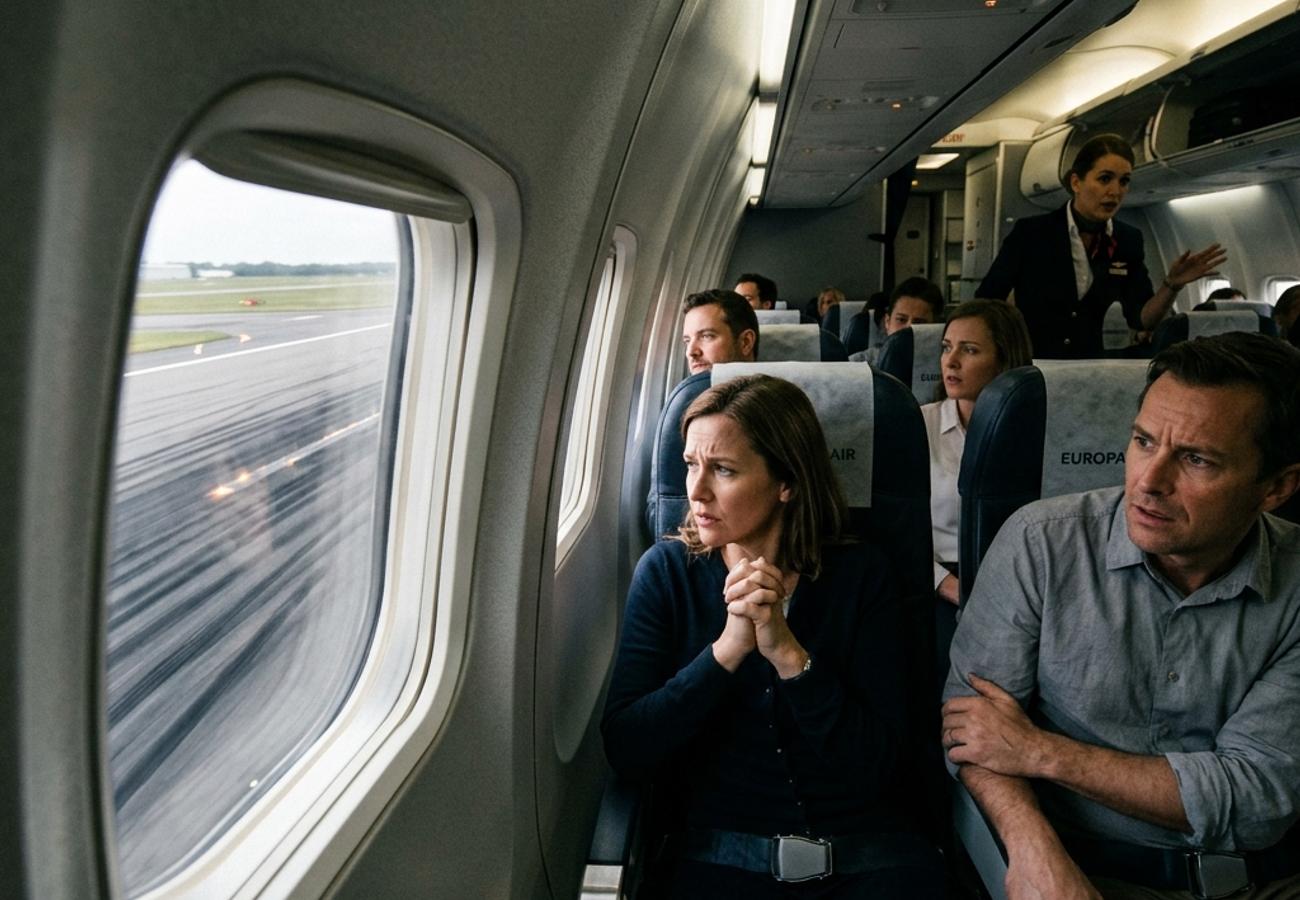 Image generated by AI
Expanded Overview: The Scale and Impact of the Crisis
When a commercial airliner aborts a takeoff at high speeds, the immediate transition from standard operations to emergency protocols must be flawless. However, the National Transportation Safety Board (NTSB) investigation into United Flight 1382 paints a starkly different reality—one where mechanical malfunction was instantly compounded by human panic. The sudden, deafening bang from the aircraft's right engine triggered immense fear throughout the cabin. Although there was no confirmed internal fire, the visceral perception of imminent danger overrode all logic.
The ensuing unplanned evacuation sequence created a highly dangerous environment where the flight deck and cabin crew lost vital synchronization. The failure to activate the aircraft’s primary evacuation alarm meant that pilots remained entirely unaware that passengers had unilaterally initiated a deplaning process while the jet engine was still actively running. This dramatic misalignment is now serving as a foundational case study for aviation authorities worldwide, fundamentally altering how airlines approach crisis management, crew communication, and real-time emergency responses across global travel networks.
Section-Wise Breakdown: The Houston Incident and Global Scrutiny
Houston George Bush Intercontinental Airport (IAH)
At the epicenter of this aviation event was Houston's George Bush Intercontinental Airport. As United Flight 1382 accelerated down the runway bound for New York, the sudden critical engine failure forced an immediate and aggressive rejected takeoff. The runway was temporarily paralyzed as the Airbus A319 ground to a halt. In the cabin, chaos reigned as passengers ignored remain-seated commands, forcefully retrieved carry-on luggage, and stormed the exits. The localized airport disruptions were significant, as emergency ground crews scrambled to secure the aircraft and manage the sprawling evacuation on the tarmac, setting the stage for an intense NTSB investigation.
International Regulatory Response (US, UK, Australia, Canada, Japan)
The ripple effects of the Houston incident have transcended American borders. Recognizing the universal vulnerability exposed by passenger non-compliance, regulatory bodies across the United Kingdom, Australia, Canada, and Japan have launched collaborative reviews alongside the United States. These international agencies are scrutinizing the event to mandate enhanced safety briefings, re-evaluate global cabin communication standards, and enforce stricter passenger management training for flight attendants. The consensus is clear: the psychological dynamics of an emergency evacuation require uniform, international regulatory upgrades to prevent future tragedies.
Flight Details and Operational Data
To fully comprehend the severity of the incident, a meticulous review of the operational data is required. Below is the precise breakdown of United Airlines Flight 1382, encapsulating the factual timeline and aircraft specifics that define this NTSB investigation.
| Metric | Detail |
|---|---|
| Airline & Flight Number | United Airlines Flight 1382 |
| Date of Incident | February 2, 2025 |
| Origin Airport | Houston George Bush Intercontinental Airport (IAH) |
| Destination Airport | New York LaGuardia Airport (LGA) |
| Aircraft Type | Airbus A319 |
| Total Souls on Board | 112 passengers and crew |
| Primary Incident Trigger | Right engine critical failure during takeoff roll |
| Operational Consequence | Rejected takeoff and unplanned emergency evacuation |
| Evacuation Status | Slide deployed toward operating exhaust; slide failure reported |
Passenger Impact: Misinterpreting Danger and Evacuation Chaos
The passenger impact during the United Flight 1382 incident was profound, illustrating the extreme volatility of human behavior during a perceived crisis. When the loud bang echoed through the Airbus A319, passengers immediately misinterpreted the mechanical noise as a catastrophic fire. Disregarding the vehement commands of flight attendants, a surge of travelers stood up, congested the narrow aisles with retrieved carry-on baggage, and compromised the orderly evacuation flow.
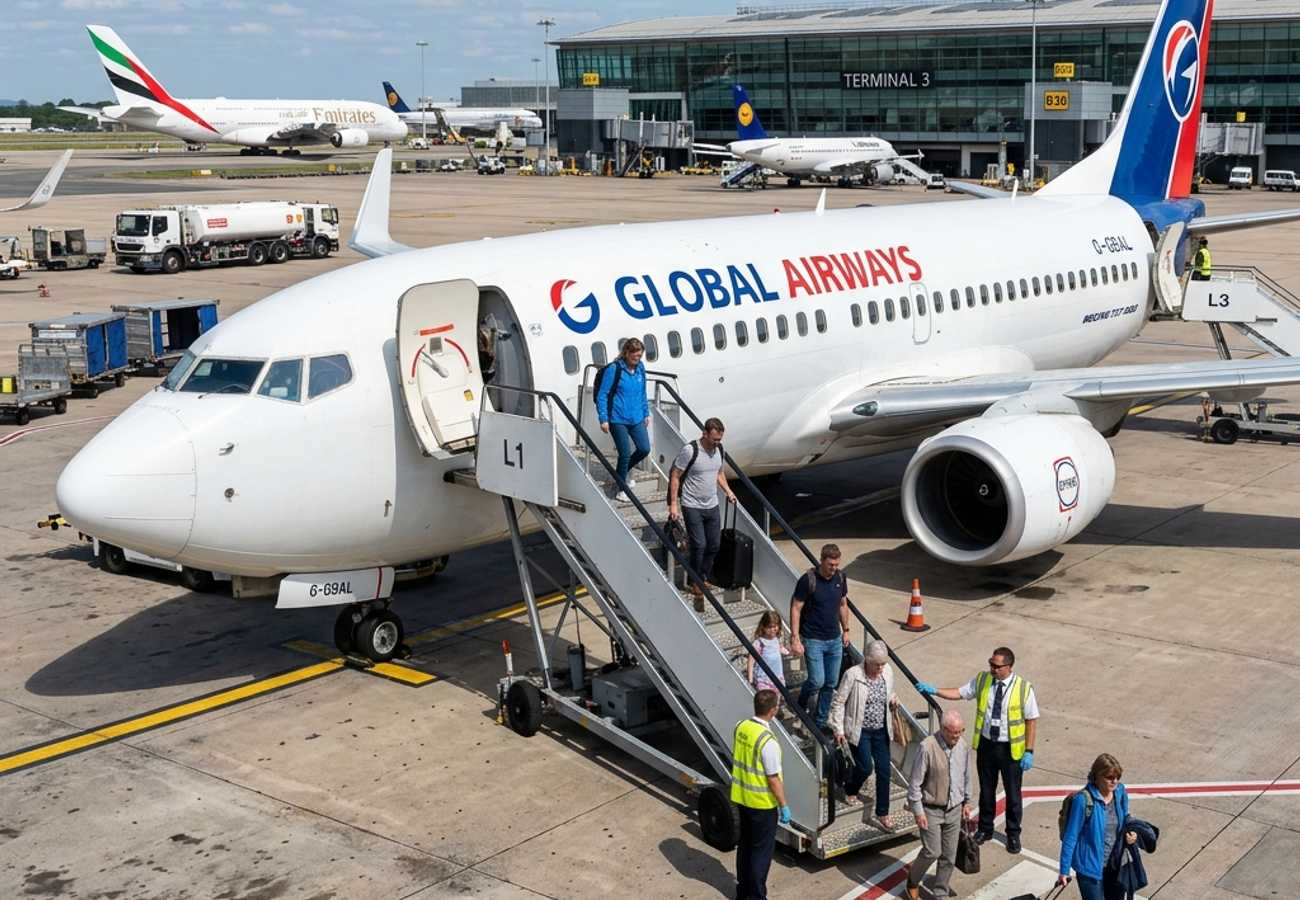 Passengers disembark from airplane after emergency evacuation. Image generated with AI.
The true danger materialized when a rear cabin door was opened prematurely. Because the flight deck was completely unaware of the rogue evacuation—due to the unactivated alarm—the right engine remained running. The deployed evacuation slide ballooned violently from the active engine blast and ultimately failed after just three passengers attempted to use it. This forced the cabin crew to rapidly block the compromised exit and aggressively redirect the panicked crowd to alternative doors. Beyond the immediate terror, the passengers faced severe travel delays, missed critical connections to New York, and dealt with the traumatic aftermath of a near-disastrous tarmac scramble.
Industry Analysis: Mechanical Failure and Communication Gaps
From an industry perspective, the root cause of the United Flight 1382 emergency is twofold: severe mechanical failure and catastrophic communication breakdowns. Aviation engineers and the NTSB have traced the right engine failure to a critical internal component malfunction during the high-stress takeoff roll, likely linked to high-cycle fatigue or latent maintenance considerations.
However, the mechanical failure alone did not cause the chaos; the operational disconnect did. The lack of a shared situational picture between the cockpit and the cabin crew exposed a glaring flaw in modern emergency execution. When triggers and alerts are not synchronized in real-time, misunderstandings escalate exponentially. The industry is now fiercely debating hardware and procedural enhancements to guarantee that the cockpit is instantaneously alerted the moment a cabin door is armed or opened during an aborted takeoff scenario.
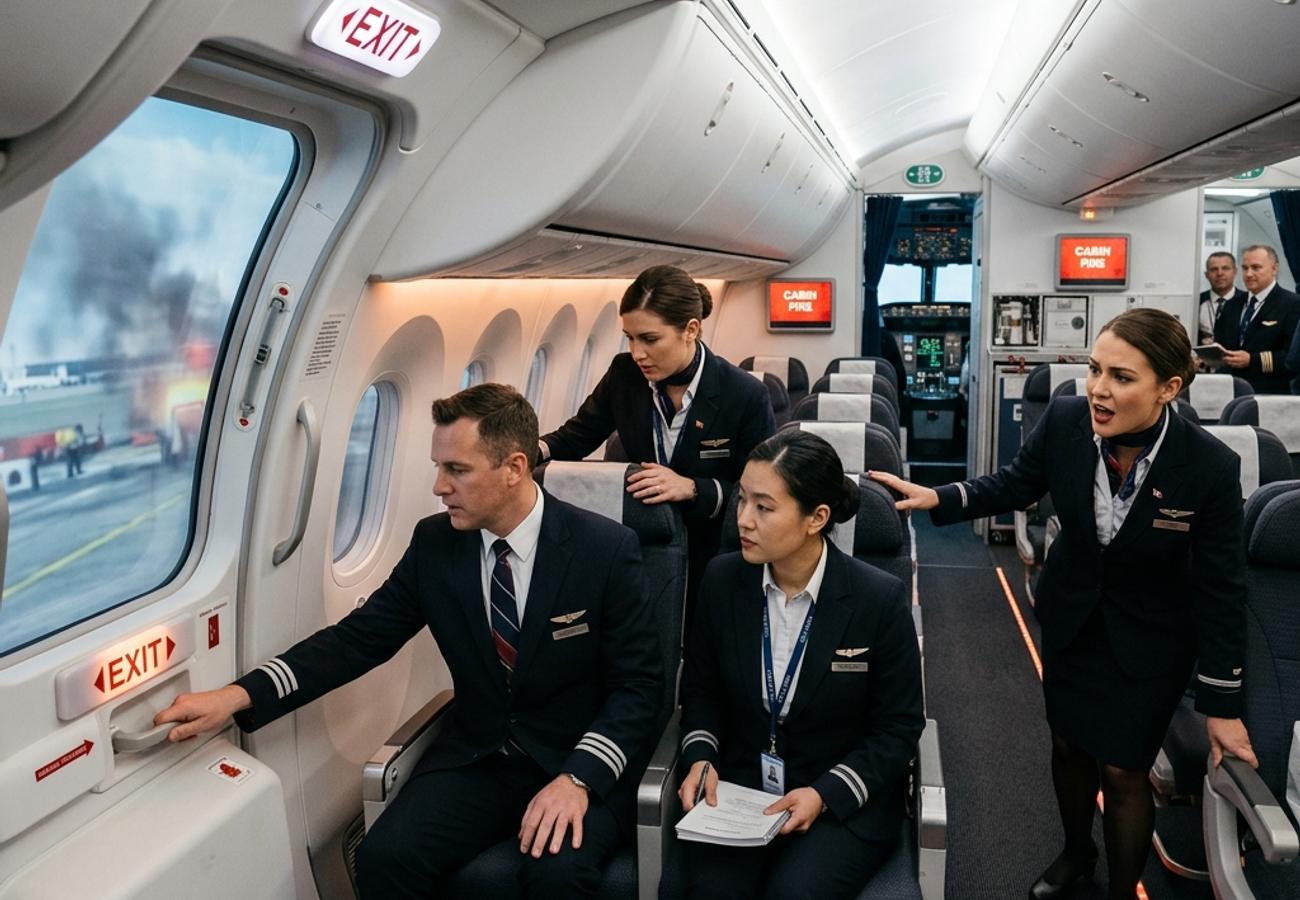 Emergency procedures training for airline crew during flight simulation. Image generated with AI.
Conclusion: A Global Catalyst for Aviation Safety Evolution
The emergency evacuation of United Airlines Flight 1382 stands as a monumental turning point for international airline safety. While the industry frequently praises modern aircraft like the Airbus A319 for their structural integrity and ability to safely abort a takeoff, the human element remains dangerously unpredictable. The collaborative global review by the United States, Australia, the United Kingdom, Canada, and Japan guarantees that the lessons learned from the Houston tarmac will fundamentally rewrite emergency protocols worldwide. For the traveling public, this incident is a sobering reminder that passive listening during pre-flight safety briefings is no longer acceptable. Active awareness, immediate compliance with crew directives, and an understanding of emergency dynamics are the true lifelines in modern commercial aviation.
Key Takeaways
- Critical Engine Failure: United Flight 1382 (an Airbus A319) suffered a violent right engine failure during its takeoff roll at Houston (IAH) on February 2, 2025.
- Rejected Takeoff Success: The flight crew successfully aborted the takeoff, preventing high-speed structural damage or a compromised airborne emergency.
- Passenger Panic: A complete breakdown in passenger compliance occurred, with travelers retrieving baggage and initiating an evacuation against direct crew orders.
- Communication Void: The aircraft's emergency evacuation alarm was never activated, leaving the pilots entirely unaware that passengers were deplaning near a running engine.
- Slide Failure: An evacuation slide deployed near the still-operating exhaust ballooned and failed after three passengers used it, creating a severe hazard.
- Global Review: Aviation authorities from the US, UK, Canada, Australia, and Japan are heavily utilizing this incident to overhaul global emergency communication and cabin training standards.
- Traveler Responsibility: The NTSB report emphasizes that passenger compliance with flight attendant commands is absolutely critical to surviving an aviation emergency without injury.
Related Travel Guides
Disclaimer
This article is for informational and educational purposes only. It does not constitute legal, financial, or professional advice. While we strive to provide accurate and up-to-date information, travel policies, regulations, and conditions change rapidly. Always verify information with official sources before making travel decisions. Nomad Lawyer makes no representations about the accuracy, reliability, completeness, or suitability of the information provided. Readers should consult qualified professionals for advice specific to their circumstances. The views expressed in this article are those of the author and do not necessarily reflect the views of Nomad Lawyer.
Kunal K Choudhary
Co-Founder & Contributor
A passionate traveller and tech enthusiast. Kunal contributes to the vision and growth of Nomad Lawyer, bringing fresh perspectives and driving the community forward.
Learn more about our team →