
United Airlines Signals Major Airfare Rise as Jet Fuel Surges Past $5 Per Gallon
United Airlines signals imminent airfare increases in 2026 as jet fuel surges above $5 per gallon amid Middle East oil shocks. Summer travel costs to climb sharply for U.S. passengers booking transatlantic and long-haul routes.

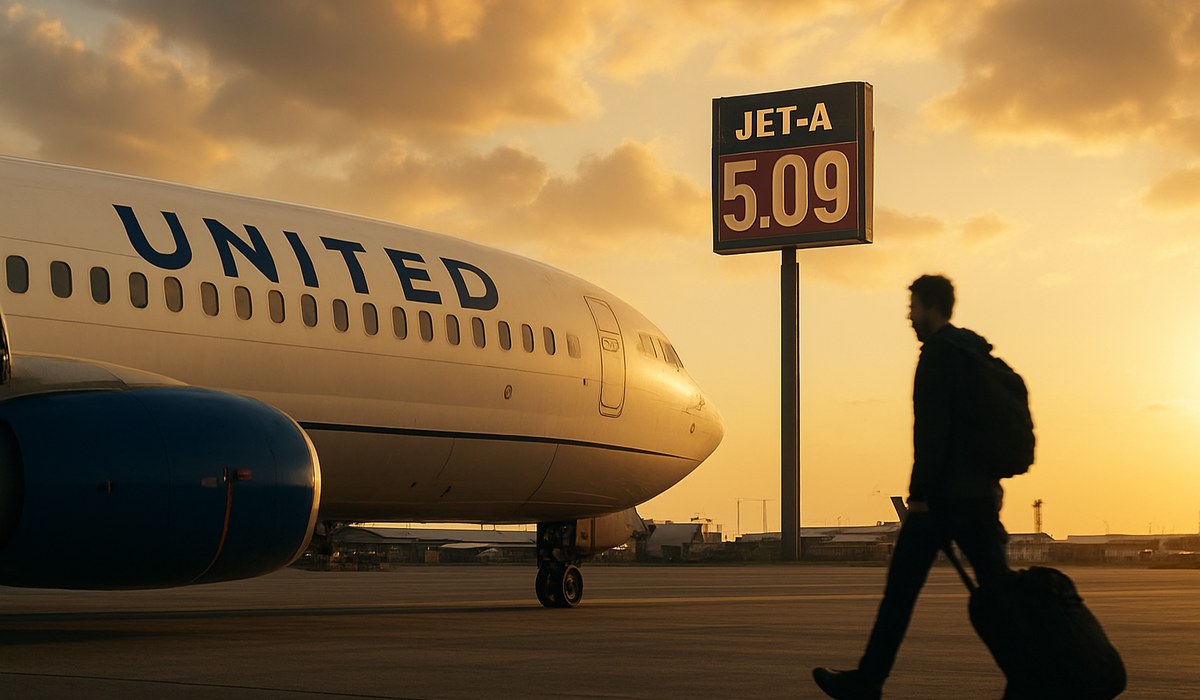
Image generated by AI
United Airlines is signaling steep airfare increases ahead as jet fuel expenses spike past $5 per gallon in response to escalating Middle East oil market disruptions. The Chicago-based carrier warned investors that fuel costs will force immediate price adjustments on both domestic and international routes. Airlines industry analysts expect fare hikes to accelerate through spring 2026 before summer peak season.
Global Oil Crisis Pushes Jet Fuel Costs to Multi-Year Highs
Brent crude oil briefly exceeded $100 per barrel this week after geopolitical tensions disrupted tanker traffic through critical shipping lanes. Jet fuel prices have climbed even faster than crude benchmarks, with U.S. refineries reporting costs jumping over $1 per gallon in just three weeks. Industry data shows refined jet fuel now trades at a historically wide premium to crude oil, amplifying the burden on carriers.
The Energy Information Administration confirms that Middle East supply disruptions have tightened global aviation fuel availability. Regional production cuts and reported attacks on energy infrastructure have created sustained upward pressure on wholesale prices. Airlines cannot hedge against these rapid spikes indefinitely, forcing immediate cost recovery strategies.
For context, fuel typically represents 22-26% of major U.S. carrier operating budgets. When jet fuel surges this dramatically, airlines must choose between absorbing losses or raising ticket prices. [Visit the FAA's aviation safety briefing page](https://www.faa.gov) for regulatory updates on fuel supply coordination.
United Airlines Signals Rapid Fare Increases Across All Markets
United's executive leadership warned investors that airfare increases will begin immediately across domestic, regional, and long-haul international markets. The carrier operates major hubs at Chicago O'Hare (ORD), Houston (IAH), Denver (DEN), and Newark (EWR), positioning it to apply fare hikes across the U.S. network quickly.
CEO communications indicate that United cannot absorb projected fuel bills exceeding $1.5 billion per quarter without raising revenues. The airline has signaled through multiple investor briefings that fare adjustments represent the primary lever for protecting operating margins. Unlike earlier fuel crises, United currently maintains minimal fuel hedging contracts, leaving it fully exposed to spot market volatility.
Strong booking demand for March through May 2026 travel gives United pricing power. Recent weeks have produced record booking volumes, particularly on premium transatlantic routes and domestic business travel segments. Load factors remain robust across the network, meaning United faces minimal competitive pressure to maintain discount fares. Check IATA guidance on airline fuel surcharge protocols for passenger communication standards.
Transatlantic and Long-Haul Routes Face Steepest Price Increases
United's extensive long-haul international network makes it especially vulnerable to jet fuel cost shocks. Flights from New York (EWR/JFK) to London (LHR), Paris (CDG), and Frankfurt (FRA) consume roughly four times the fuel of domestic cross-country flights. These routes already command premium pricing; additional fuel surcharges could push fares toward historically elevated levels.
Industry analysts expect United to implement selective capacity cuts on low-margin European routes while expanding frequencies on profitable business-class-heavy services. The carrier's strong presence in premium long-haul markets—where corporate and leisure travelers demonstrate lower price sensitivity—provides cover for significant fare increases.
Shorter domestic routes on competitive markets will see more modest hikes initially. Competing carriers like Southwest (DAL) and budget operators like Spirit and Frontier exert downward pricing pressure on core U.S. routes. United will likely prioritize fare increases on routes with fewer competitive alternatives.
What This Means for Travelers
Immediate actions for summer 2026 bookings:
-
Book domestic and short-haul flights within the next 7-10 days before United and competitors implement fuel surcharges officially.
-
Expect base fares to increase 10-15% on transatlantic routes by early May before peak summer season.
-
Monitor booking sites daily—use FlightAware's price tracking tools to identify optimal booking windows.
-
Consider premium economy options on international routes; United often absorbs some fuel cost into cabin-class pricing rather than base fares.
-
Lock in round-trip bookings together rather than separately; one-way fares will spike faster than round-trip bundles.
-
Evaluate alternative airports—flying from secondary hubs like Pittsburgh (PIT) or Kansas City (MCI) may offer cheaper alternatives as United prioritizes core hubs.
-
Review airline fuel surcharge policies at [U.S. Department of Transportation airline consumer protections](https://www.transportation.gov/airconsumer) for refund eligibility.
Airline Industry Fuel Cost Comparison
| Metric | Current Level (Mar 2026) | Previous Average (2025) | Impact on Fares |
|---|---|---|---|
| Brent Crude Per Barrel | $102 | $78 | +31% YoY |
| U.S. Jet Fuel Per Gallon | $5.23 | $4.12 | +27% YoY |
| United Estimated Quarterly Fuel Bill | $1.8 billion | $1.2 billion | +50% increase |
| Transatlantic Fuel Surcharge Estimate | $45-65 per ticket | $15-25 | Up to 300% increase |
| Domestic Fuel Surcharge Estimate | $10-20 per ticket | $0-5 | New or expanded |
| Expected Fare Increase Timeline | Immediate-May 2026 | Gradual | Accelerated |
FAQ: United Airlines Signals Airfare Increases
What does it mean when United Airlines signals higher fares coming? When United signals fare increases, executives publicly acknowledge that fuel costs will force immediate price adjustments on tickets. United signals through investor briefings and media interviews that ticket prices will rise within weeks, not months. This differs from gradual seasonal pricing; United signals emergency fuel-cost recovery measures specifically triggered by current oil market conditions.
How much will airfares increase due to jet fuel surges in 2026? Industry analysts project 10-15% increases on domestic routes and 15-25% increases on international flights if current fuel prices persist through summer 2026. Transatlantic fares could climb by $50-150 per round-trip ticket when fuel surcharges activate. United's long-haul network faces the largest increases since fuel consumption directly scales with flight distance and duration.
Which United Airlines routes will see the biggest price jumps first? Transatlantic flights from Newark (EWR) and Chicago (ORD) to London (LHR), Frankfurt (FRA), and Paris (CDG) face the steepest increases. Long-haul routes burning 40+ gallons per passenger require the most fuel cost recovery. Shorter domestic routes on competitive markets like New York-Los Angeles and Chicago-Dallas will see smaller increases initially.
When should travelers book flights to avoid United Airlines' fare increases? Travelers should book United flights within 7-10 days before fuel surcharges activate formally. Base fares typically increase 2-3 weeks after fuel cost announcements. Summer 2026 bookings (June-August travel) should be confirmed by early May to lock in pre-surge pricing. One-way tickets will spike faster than round-trip bookings.
Related Travel Guides
Disclaimer
This article is for informational and educational purposes only. It does not constitute legal, financial, or professional advice. While we strive to provide accurate and up-to-date information, travel policies, regulations, and conditions change rapidly. Always verify information with official sources before making travel decisions. Nomad Lawyer makes no representations about the accuracy, reliability, completeness, or suitability of the information provided. Readers should consult qualified professionals for advice specific to their circumstances. The views expressed in this article are those of the author and do not necessarily reflect the views of Nomad Lawyer.
Kunal K Choudhary
Co-Founder & Contributor
A passionate traveller and tech enthusiast. Kunal contributes to the vision and growth of Nomad Lawyer, bringing fresh perspectives and driving the community forward.
Learn more about our team →