
United Airlines Unveils 'Relax Row' for Boeing 787 and 777 Fleet Amid $200 Oil Shock and Strait of Hormuz Blockade: How US-Iran Conflict Volatility Accelerates Cabin-Comfort Revenue Revolution
As the $200 oil crisis and Strait of Hormuz blockade pressure global airline margins, United Airlines launches 'Relax Row' seating upgrades on over 200 widebody aircraft.

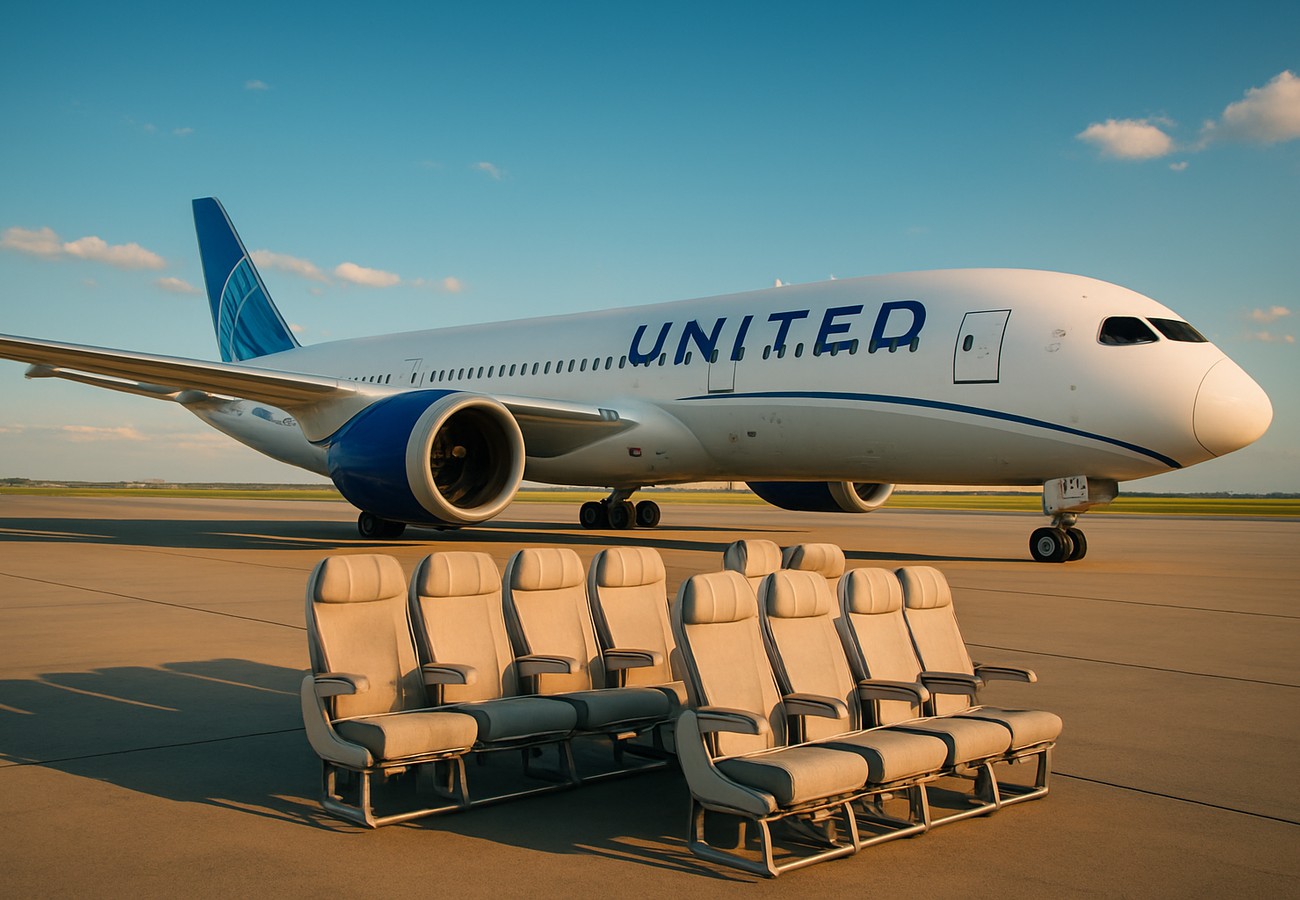
Image generated by AI
The global aviation sector is executing a major strategic reset. Confronted by an unprecedented $200 per barrel oil shock and the military blockade of the Strait of Hormuz, international airlines are under pressure to optimize cabin capacity, restructure routes, and capture high-value leisure traveler segments.
In response to these challenges, United Airlines has launched a groundbreaking passenger comfort initiative: the United Relax Row. This seating concept converts three adjacent economy seats into a lie-flat resting space equipped with custom adjustable leg rests, mattress pads, blankets, and pillows. Deployed across more than 200 Boeing 787 Dreamliner and Boeing 777 aircraft beginning next year, the program is designed to deliver a premium, sleep-focused experience on ultra-long-haul international flights. As the escalating US-Iran conflict drives jet fuel costs to historic heights and limits transcontinental flight capacities, United is leveraging its key international gateways—including Chicago O’Hare (ORD), San Francisco (SFO), and Newark Liberty (EWR)—to capture a growing segment of price-sensitive travelers seeking affordable luxury alternatives to business class. While major Gulf states like Saudi Arabia, the United Arab Emirates (UAE), and Qatar work to secure energy corridors in the Middle East, Chicago is redefining widebody fleet economics and long-haul traveler comfort.
Expanded Overview: Widebody Upgrades Defy Severe Fuel Squeezes
The ongoing global energy crisis has forced a complete reorganization of international trade and travel logistics. The naval blockade of the Strait of Hormuz—the world’s most critical maritime oil corridor, handling roughly 20% of global petroleum transit—has taken millions of barrels of crude off the market, sending fuel prices soaring.
For the international aviation and shipping sectors, this fuel crisis has led to significantly higher long-haul ticket prices and reduced flight capacities. To protect their margins, major carriers must find innovative ways to maximize passenger yields. United's Relax Row represents a bold answer. By transforming standard economy seating into a flexible sleep-focused area, the carrier is creating a high-yield hybrid cabin product that bridges the gap between standard economy and premium cabins, appealing directly to families, couples, and leisure tourists willing to pay a premium for comfort.
Geopolitical Context: Persian Gulf Volatility and the Drive for Fleet Optimization
The military standoff between the United States and Iran in the Persian Gulf has disrupted major trade corridors and airspace, keeping global energy markets highly volatile.
This conflict has directly impacted major Middle Eastern oil producers—including Saudi Arabia, the UAE, Qatar, Kuwait, Oman, and Bahrain—who are working hard to protect their energy supply lines and secure alternative shipping channels. In this climate of high volatility, airlines are forced to optimize fuel efficiency and fleet capacity. Widebody aircraft—such as the Boeing 787 and Boeing 777—are central to this strategy. By modernizing cabin configurations with adjustable, multi-functional seating like Relax Row, United can generate higher ancillary revenues per flight, offsetting high fuel surcharges without requiring massive changes to aircraft fuselage or weight.
Global Energy Impact: Squeezed Airlines and the Comfort Revolution
With oil prices firmly established at $200 per barrel, airlines are under intense pressure to optimize their operations. Jet fuel costs have forced carriers to raise airfares, prompting travelers to seek premium comfort experiences that justify the higher cost of long-distance flights.
| Key Product Metric | Value / Volume | Primary Hub Focus | Core Strategic Impact |
|---|---|---|---|
| Deploying Fleet | Boeing 787 & Boeing 777 | ORD, SFO, EWR | Premium widebody fleet modernization. |
| Fleet Coverage | Over 200 Aircraft | Key long-haul routes | Scaled international market footprint. |
| Seating Concept | 3 Connected Economy Seats | Conversion to lie-flat resting | Affordable alternative to business class. |
| In-Cabin Inventory | Up to 12 Rows per plane | High-demand scarcity | Maximizing ancillary booking yields. |
| Passenger Amenities | Mattress pad, blankets, pillows | Wellness-focused flying | Targets families, luxury-leisure tourists. |
By offering up to 12 dedicated Relax Rows per widebody aircraft, United Airlines is capitalizing on the high demand for in-flight sleep solutions, giving price-sensitive international travelers a reason to choose United over competitors.
Shipping & Trade Impact: Capacity Bottlenecks and Localized Material Sourcing
The ongoing Strait of Hormuz blockade has forced cargo fleets to bypass the Suez Canal and route around Africa’s Cape of Good Hope, sending maritime insurance rates soaring by over 500% and delaying global shipments of luxury resort supplies.
For airlines executing major cabin overhauls, these supply chain delays could impact the delivery of custom seat components, high-end upholstery, and sleep amenities. To mitigate these risks, United is working with regional domestic manufacturers and localized suppliers across the United States to source raw materials, mattress fabrics, and memory foam pads. This focus on localized manufacturing protects the airline's fleet modernization timeline from global shipping disruptions, ensuring the Relax Row rollout remains on schedule for next year.
Regional Impact: Strategic Gateway Upgrades in major US Transit Hubs
The large-scale cabin comfort revolution is centered around three of United's most critical international gateways:
- Chicago O'Hare International Airport (ORD): Serving as a primary hub for transatlantic flights, ORD will connect premium European travelers to the new lie-flat economy options.
- San Francisco International Airport (SFO): As United's primary transpacific gateway, SFO will leverage the Relax Row to attract business and leisure travelers on ultra-long-haul routes to Asia and Oceania.
- Newark Liberty International Airport (EWR): Serving as a critical East Coast gateway, EWR will use the upgraded widebody fleet to strengthen its highly competitive transatlantic premium travel market share.
Meeting Changing Expectations: Wellness and Family Air Travel in 2026
The launch of the United Relax Row directly addresses major changes in passenger behavior, with travelers increasingly prioritizing wellness, comfort, and recovery during long-haul transit:
- In-Flight Sleep Quality: Providing travelers with a mattress pad, soft blankets, and two pillows to facilitate deep sleep and reduce jet lag.
- Family-Friendly Amenities: Offering flexible seating space that allows parents and young children to relax comfortably together, complete with a plush toy.
- Affordable Luxury Demand: Giving travelers a middle-ground choice between standard economy and premium business class, making long-distance travel more accessible.
- Ancillary Revenue Growth: Allowing airlines to monetize unused economy space by charging a premium for adjacent seat conversions, maximizing flight profitability.
Industry Analysis: A Masterclass in Auxiliary Product Design
North American aviation and economic analysts emphasize that United's widebody fleet upgrade is a masterclass in cabin design and passenger comfort monetization during a global energy crisis.
By actively leveraging its existing Boeing 787 and Boeing 777 fleets, optimizing regional gateway operations, and targeting wellness-conscious and family travelers, United has successfully created a highly profitable, high-yield hybrid cabin product that insulates its travel sector from the economic pressures of high fuel surcharges.
What Happens Next: Future Scenarios and Fleet Outlook
- Prolonged Fuel Crises: If Middle Eastern tensions remain high and oil prices stay at $200/bbl, other global airlines are expected to follow United's lead, accelerating investments in hybrid cabin designs and sleep-focused economy travel options.
- Diplomatic De-escalation: If international diplomatic efforts successfully resolve the US-Iran conflict and stabilize global fuel prices, the state-of-the-art widebody cabins, localized supply networks, and elevated passenger comfort standards developed during this crisis will continue to provide United with a major competitive advantage.
Conclusion
United Airlines' widebody cabin comfort revolution represents a major milestone for the international aviation industry. As the Strait of Hormuz blockade and $200 oil prices continue to disrupt traditional travel economics, the airline has shown that investing in high-yield, flexible, and passenger-centric design is the ultimate defense against global economic volatility. By modernizing widebody fleets, upgrading key international hubs, and focusing on traveler wellness, United is successfully redefining the future of long-haul travel, proving that adaptability, comfort, and strategic design are the ultimate keys to economic resilience.
Key Takeaways
- United Relax Row Launch: United Airlines is launching the innovative "Relax Row" seating concept to convert three adjacent economy seats into a lie-flat sleeping area.
- Widebody Fleet Deployment: The product will debut across more than 200 Boeing 787 Dreamliner and Boeing 777 aircraft starting next year.
- Targeting Key Hubs: The rollout is centered around primary international gateways, including Chicago O'Hare (ORD), San Francisco (SFO), and Newark Liberty (EWR).
- Affordable Luxury Segment: The product bridges standard economy and business class, offering mattress pads, blankets, and pillows for a fraction of the cost of business class.
- Yield Optimization Strategy: Participating aircraft will feature up to 12 Relax Rows, creating high-yield ancillary revenue streams to offset high fuel surcharges.
FAQ: United Relax Row & Travel Volatility 2026
What are the main amenities included with the United Relax Row? Passengers booking a Relax Row will receive a mattress pad, a soft blanket, two pillows, adjustable leg rests, and a child-friendly plush toy for families.
Which aircraft and routes will feature the new seating? The Relax Row will be introduced on United's widebody Boeing 787 Dreamliner and Boeing 777 fleets operating ultra-long-haul international routes.
How does the energy crisis affect United's seating strategy? With oil prices at $200/bbl, the Relax Row helps United optimize fuel efficiency and passenger yield, generating higher ancillary revenues from existing cabin spaces to offset high fuel costs.
Related Travel Guides
Disclaimer
This article is for informational and educational purposes only. It does not constitute legal, financial, or professional advice. While we strive to provide accurate and up-to-date information, travel policies, regulations, and conditions change rapidly. Always verify information with official sources before making travel decisions. Nomad Lawyer makes no representations about the accuracy, reliability, completeness, or suitability of the information provided. Readers should consult qualified professionals for advice specific to their circumstances. The views expressed in this article are those of the author and do not necessarily reflect the views of Nomad Lawyer.
Kunal K Choudhary
Co-Founder & Contributor
A passionate traveller and tech enthusiast. Kunal contributes to the vision and growth of Nomad Lawyer, bringing fresh perspectives and driving the community forward.
Learn more about our team →