
United Airlines Expands Widebody Fleet Strategy with 364-Seat Boeing 777s Across Global Network
Breaking airline news and aviation industry updates for 2026.

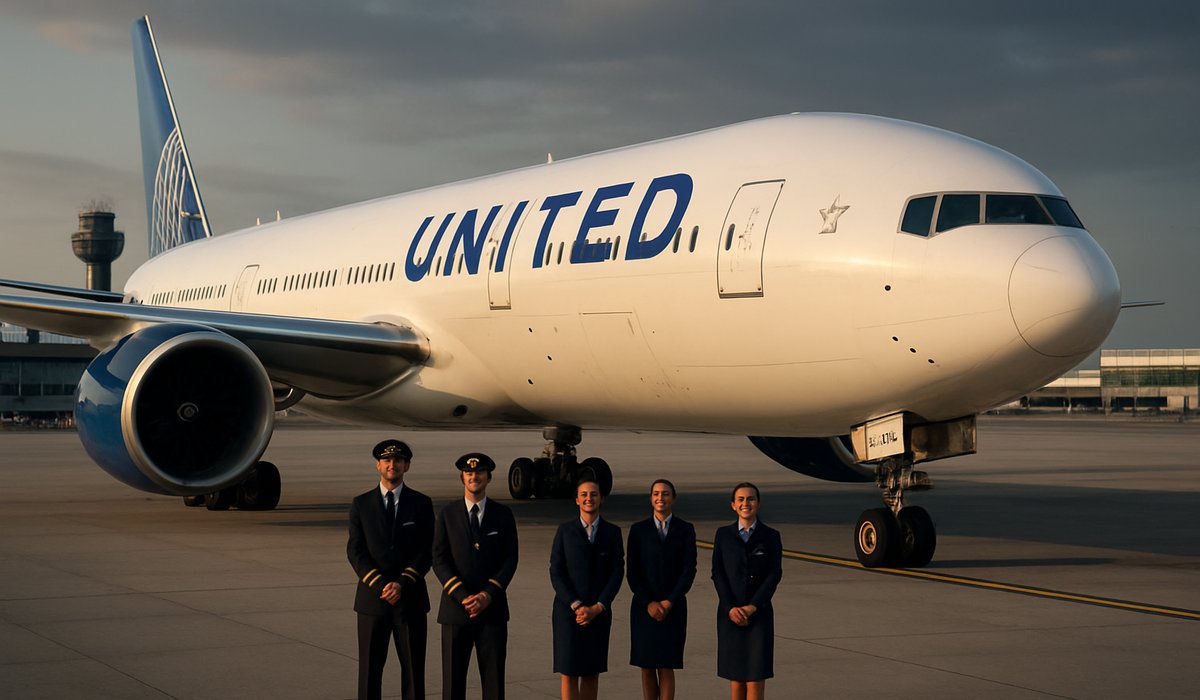
Image generated by AI
United Airlines Expands Widebody Fleet Strategy with 364-Seat Boeing 777s Across Global Network
The carrier's 234-strong long-haul aircraft operation signals major shift in capacity deployment and route profitability
United's Massive Widebody Portfolio Reshapes Long-Haul Operations
United Airlines is leveraging one of the aviation industry's most substantial widebody fleets to transform its international and transcontinental operations, with 234 twin-aisle aircraft now forming the backbone of its long-haul strategy. The Chicago-based carrier's diverse fleet composition reflects a calculated approach to managing jet fuel costs, seat capacity, and route economics in an increasingly competitive global aviation market.
The carrier's widebody inventory comprises exclusively Boeing equipment, underscoring a strategic commitment to single-manufacturer operations. This concentration includes 55 Boeing 777-200 Extended Range variants, 52 state-of-the-art 787-9 Dreamliners, 37 767-300 Extended Range models, and 22 Boeing 777-300 Extended Range aircraft—each offering distinct operational advantages for specific route profiles.
Fleet Composition and Strategic Capacity Planning
United's supplementary widebody assets include 21 Boeing 787-10 Dreamliners, 19 non-extended range 777-200 variants, 16 767-400ER aircraft, and 12 787-8 models. Collectively, these aircraft represent a sophisticated capacity management framework designed to optimize fuel efficiency, reduce airline fees associated with operational redundancy, and maximize revenue across varied market conditions.
The 777-family aircraft, which includes both the 777-200ER and 777-300ER variants, represents United's premium capacity solution for high-traffic international corridors. The 364-seat configuration of select 777 models enables the carrier to deploy substantial passenger volume on competitive routes while maintaining competitive pricing structures and managing jet fuel price volatility.
Industry-Wide Implications for Aviation Economics
The widebody sector now represents 21% of United's mainline aircraft fleet—a proportion that reflects broader industry trends favoring long-haul connectivity over regional hub-and-spoke operations. This widebody concentration directly influences airline fees, baggage charge structures, and seat allocation strategies as carriers compete for premium cabin revenue.
United's dual reliance on both the fuel-efficient 787 Dreamliner family and the proven 777 platform demonstrates how major carriers are navigating fluctuating jet fuel prices and geopolitical supply chain disruptions. The strategic deployment of these aircraft across United's route network—from domestic transcontinental flights to European, Asian, and Latin American markets—illustrates how aviation industry capacity planning responds to post-pandemic travel demand and yield management pressures.
The carrier's investment in this modern, efficient fleet positions United to maintain competitive advantage in an increasingly cost-conscious travel market while maintaining operational flexibility across its international network.
FAQ: Understanding United Airlines' Widebody Fleet Strategy
What aircraft comprise United Airlines' widebody fleet? United operates 234 widebody twin-aisle aircraft exclusively from Boeing, including 777-200ERs, 787-9s, 767-300ERs, 777-300ERs, and newer 787-10 models, among others.
How does widebody fleet size affect airline fees and baggage charges? Larger widebody aircraft like the 364-seat 777s enable carriers to distribute operating costs across more passengers, potentially offsetting increases in jet fuel prices and stabilizing baggage fee structures.
Why does United focus exclusively on Boeing widebody aircraft? Single-manufacturer operations reduce maintenance complexity, improve crew training efficiency, and streamline spare parts inventory—all critical factors in managing aviation industry operating costs.
What percentage of United's fleet consists of widebody aircraft? Widebody twin-aisle aircraft represent 21% of United's mainline fleet, reflecting the carrier's emphasis on long-haul international and transcontinental operations.
How do modern aircraft like the 787 Dreamliner address jet fuel price concerns? Advanced fuel-efficient engines and aerodynamic designs on 787 models consume approximately 20% less fuel than comparable legacy widebody aircraft, providing significant protection against volatile jet fuel price fluctuations.
Related Travel Guides
Flight Delay Compensation Guide 2026
Understanding Airline Route Changes
Airport Security Process Updated (2026)
External Resources
Disclaimer
This article is for informational and educational purposes only. It does not constitute legal, financial, or professional advice. While we strive to provide accurate and up-to-date information, travel policies, regulations, and conditions change rapidly. Always verify information with official sources before making travel decisions. Nomad Lawyer makes no representations about the accuracy, reliability, completeness, or suitability of the information provided. Readers should consult qualified professionals for advice specific to their circumstances. The views expressed in this article are those of the author and do not necessarily reflect the views of Nomad Lawyer.
Raushan Kumar
Founder & Lead Developer
Full-stack developer with 11+ years of experience and a passionate traveller. Raushan built Nomad Lawyer from the ground up with a vision to create the best travel and law experience on the web.
Learn more about our team →