
United Airlines Flight UA1510 from Denver to Philadelphia Diverts to Richmond International Airport in 2026
United Airlines flight UA1510 diverted to Richmond International Airport after facing operational challenges while attempting to land in Philadelphia on July 5, 2026.

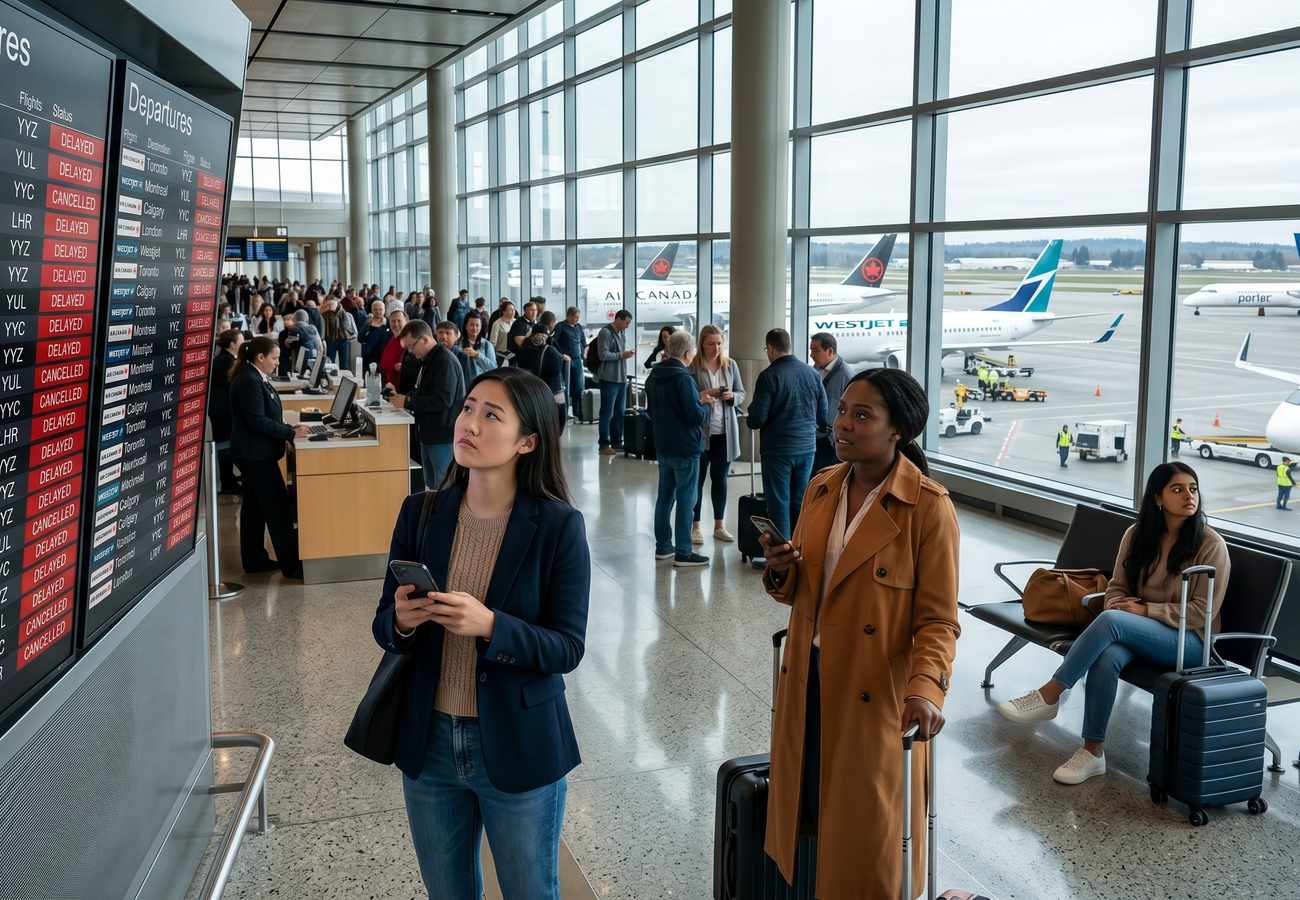
Image generated by AI
[Richmond, VA] — A United Airlines flight traveling from Colorado to Pennsylvania was forced to divert to Virginia on July 5, 2026, after encountering significant operational hurdles in the congested airspace of the U.S. East Coast. Flight UA1510, operated by a Boeing 737-800, landed at Richmond International Airport instead of its intended destination at Philadelphia International Airport, resulting in substantial delays for all passengers on board.
The incident underscores the volatility of the Northeast aviation corridor, where high traffic density and shifting operational conditions often necessitate rapid rerouting to ensure flight safety.
Flight UA1510 Route and Operational Timeline
The journey began at Denver International Airport (DEN), where the aircraft, registered as N14242, was scheduled to depart for Philadelphia International Airport (PHL). According to flight tracking data, the Boeing 737-800 pushed back from Gate B59 and took off at 5:53 PM MDT, nearly coinciding with its scheduled 5:54 PM MDT departure time.
While the initial leg of the transcontinental journey proceeded without incident, the aircraft encountered difficulties as it approached the East Coast. Rather than touching down in Philadelphia as planned, the flight was redirected to Richmond International Airport (RIC). The aircraft eventually landed in Virginia at 12:42 AM EDT on July 6, approximately 78 minutes behind its original scheduled arrival time of 11:30 PM EDT.
Operational Factors Prompting the Richmond Diversion
Industry observers indicate that the decision to divert UA1510 was driven by operational conditions that made a safe and timely arrival in Philadelphia untenable. While United Airlines has not released a specific technical or meteorological cause, diversions of this nature are typically triggered by a combination of air traffic management restrictions, sudden airport congestion, or localized weather disruptions.
Philadelphia International Airport is a critical node in the Northeast corridor, an area characterized by some of the most saturated airspace in the world. When capacity drops at a primary hub, air traffic controllers and airline dispatchers must coordinate alternate landing sites to prevent dangerous holding patterns or fuel exhaustion. In this instance, Richmond International Airport was identified as the most viable alternative to accommodate the Boeing 737-800.
Passenger Impact and Logistical Disruptions
The diversion created immediate logistical challenges for the passengers traveling from Denver. Because the aircraft landed in Richmond, Virginia, rather than Philadelphia, Pennsylvania, travelers were displaced from their final destination, requiring the airline to implement contingency plans for ground transportation and re-accommodation.
Late-night diversions are particularly disruptive as they often occur when hotel availability is limited and replacement flight options are scarce. Reports suggest that United Airlines operations teams had to coordinate closely with Richmond airport staff to manage baggage handling and passenger assistance. Standard protocol in these scenarios involves providing passengers with updated itineraries or ground transport to move them from the diversion point to their original destination.
Analysis of Northeast Corridor Airspace Complexity
The diversion of UA1510 highlights the systemic pressures facing the U.S. Northeast aviation network. This region encompasses a dense cluster of major hubs, including Philadelphia, Newark Liberty, and the New York City airports (JFK and LaGuardia).
Flights arriving from western hubs like Denver must navigate a complex sequence of arrivals. Any disruption—be it a ground stop, a runway closure, or a sudden weather front—can create a ripple effect. When one airport in this network reaches a saturation point, aircraft are often diverted to secondary airports like Richmond to maintain the overall flow of traffic and ensure that aircraft do not remain in the air longer than their fuel reserves safely allow.
Role of Richmond International Airport in Network Resilience
Richmond International Airport acted as a critical safety valve in this operational chain. By providing a safe landing site for the Boeing 737-800, RIC enabled United Airlines to remove a stressed aircraft from the crowded Philadelphia approach path.
The infrastructure at Richmond is designed to handle domestic diversions, offering the necessary ramp space and passenger facilities to support unexpected arrivals. This capability is a fundamental component of national aviation resilience, allowing airlines to maintain safety standards even when primary destinations become inaccessible.
Frequency and Safety of Domestic Flight Diversions
While a diversion can be stressful for passengers, aviation experts note that these events are a planned part of safety protocols. Every commercial flight carries enough fuel to reach its destination and then continue to a designated alternate airport.
On high-volume routes between major hubs like Denver and Philadelphia, the probability of a diversion increases slightly due to the sheer volume of traffic and the likelihood of encountering weather disruptions across multiple time zones. The diversion of UA1510 is viewed by industry analysts as a successful execution of safety procedures, prioritizing the secure landing of the aircraft over the convenience of the original schedule.
Flight UA1510 Diversion Summary Data
| Detail | Flight Information |
|---|---|
| Flight Number | UA1510 |
| Aircraft Type | Boeing 737-800 |
| Aircraft Registration | N14242 |
| Departure Airport | Denver International (DEN) |
| Intended Destination | Philadelphia International (PHL) |
| Actual Landing Site | Richmond International (RIC) |
| Departure Time | 5:53 PM MDT (July 5) |
| Arrival Time (RIC) | 12:42 AM EDT (July 6) |
| Total Delay | 1 Hour 12 Minutes (Approx.) |
Why This Matters: The Broader Aviation Perspective
The diversion of UA1510 is more than a simple delay; it is a case study in the fragility of the "hub-and-spoke" aviation model. When a primary hub like Philadelphia experiences operational friction, the impact is felt thousands of miles away in Denver.
This incident demonstrates that as air traffic returns to or exceeds pre-pandemic levels, the margin for error in the Northeast corridor is shrinking. The reliance on alternate airports like Richmond indicates that the system is operating near maximum capacity. For the travel industry, this suggests a growing need for more flexible routing and perhaps a diversification of arrival hubs to mitigate the impact of single-point failures in the airspace. Furthermore, it emphasizes the critical role of "fuel planning" and "alternate selection" in modern flight management systems to ensure that a diversion is a controlled safety measure rather than an emergency.
Safe landings remain the priority, even when the destination changes.
Related Travel Guides
Disclaimer
This article is for informational and educational purposes only. It does not constitute legal, financial, or professional advice. While we strive to provide accurate and up-to-date information, travel policies, regulations, and conditions change rapidly. Always verify information with official sources before making travel decisions. Nomad Lawyer makes no representations about the accuracy, reliability, completeness, or suitability of the information provided. Readers should consult qualified professionals for advice specific to their circumstances. The views expressed in this article are those of the author and do not necessarily reflect the views of Nomad Lawyer.
Preeti Gunjan
Contributor & Community Manager
A passionate traveller and community builder. Preeti helps grow the Nomad Lawyer community, fostering engagement and bringing the reader experience to life.
Learn more about our team →