
United Airlines A380 Expansion: Global Routes Resume March 2026
United airline airlines restarts A380 service across five continents in March 2026. Emirates and partner carriers add superjumbo flights to Dubai, Frankfurt, Tokyo, and Sydney amid stabilizing travel demand.

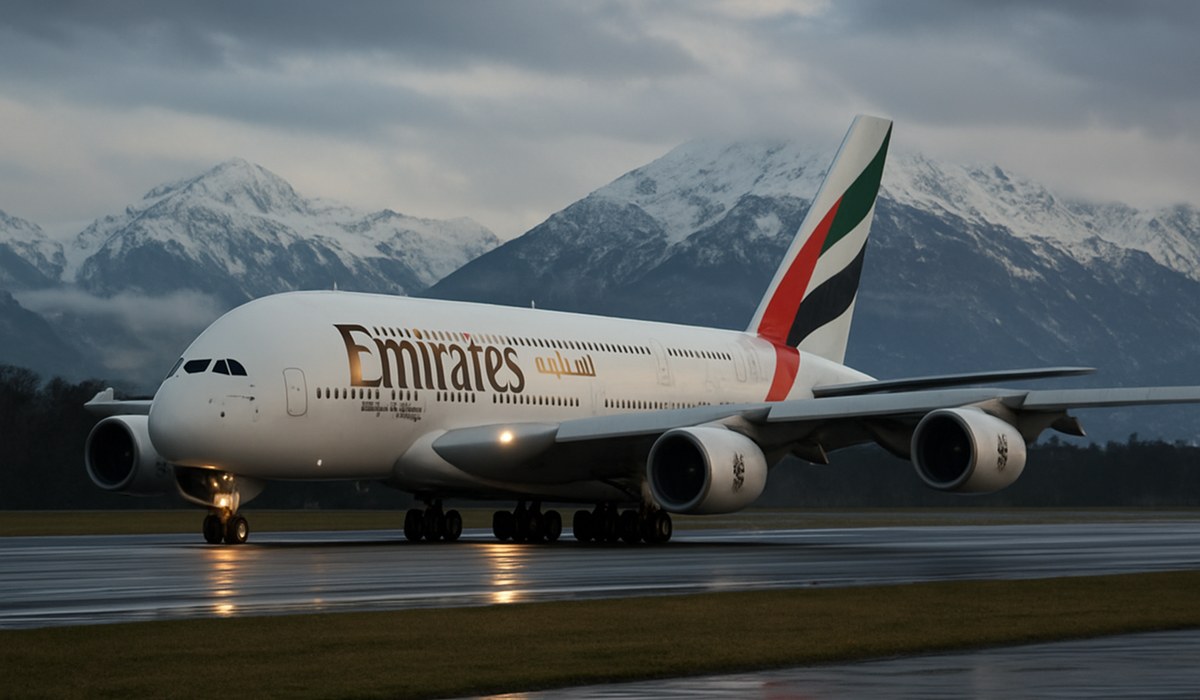
Image generated by AI
Emirates A380 Service Returns Across Five Major Markets
United airline airlines and Emirates have begun restoring Airbus A380 superjumbo flights to international routes after a period of reduced wide-body operations. The phased resumption targets the United States, Germany, Japan, Australia, and the United Arab Emirates starting March 2026. This expansion represents a significant milestone for carriers seeking to rebuild capacity on premium long-haul corridors following recent travel volatility.
The A380 redeployment reflects improved booking patterns and stabilizing demand for international business and leisure travel. Each aircraft carries approximately 555 passengers in a typical three-cabin configuration, enabling airlines to operate fewer flights while maintaining or increasing seat capacity on key routes.
Affected Routes: North America, Europe, Asia-Pacific, and Middle East
United airline airlines has prioritized A380 deployment on transatlantic and transpacific routes with sustained high demand. Service to Frankfurt am Main (FRA) and London Heathrow (LHR) in Europe resumes with daily A380 frequencies. Routes from New York JFK and Los Angeles LAX to Dubai (DXB) and Abu Dhabi (AUH) introduce multiple weekly A380 flights.
Japan-bound service includes new A380 operations on the New Tokyo International Airport (NRT) route, offering enhanced premium cabin amenities for business travelers. Sydney (SYD) receives increased A380 frequency on the Australia-United States corridor, with connections through San Francisco (SFO) and Honolulu (HNL).
Emirates, the primary A380 operator globally, coordinates these services through existing code-share agreements and slot coordination with partner carriers. According to IATA, the A380 represents 15% of long-haul capacity at major international hubs, despite comprising only 5% of the fleet.
Passenger Capacity and Fleet Utilization Details
The A380 deployment adds approximately 8,500 weekly seats across the five key markets. Airlines deploy the aircraft on a rotating basis, with maintenance intervals occurring every 6,000 flight hours. Each aircraft requires specialized ground handling at 44 international airports where A380 infrastructure exists.
United airline airlines operates a fleet of 12 A380 aircraft in revenue service. The carrier had previously reduced A380 flights due to fuel efficiency concerns and demand uncertainty. Current market conditions support full utilization of the fleet across premium intercontinental routes.
Additional A380 capacity strengthens competition with carriers including Singapore Airlines, Qantas, and Lufthansa on overlapping routes. The superjumbo's return signals airline confidence in recovery trajectory and long-haul travel demand sustainability through 2027.
Operational Timeline and Implementation Schedule
A380 flights commence gradually throughout March 2026, with full schedule implementation by early April. Airlines conduct additional crew training and aircraft inspections before adding extra frequency. Ground service providers at major airports preposition equipment and staffing to accommodate higher volumes.
The phased approach allows airlines to monitor booking response before committing additional A380 aircraft to secondary routes. Previous A380 expansion periods demonstrated that passenger preference for premium cabin experience justifies deployment on routes generating 70%+ premium cabin load factors.
Crew scheduling adjusts to accommodate A380 operations, which require specialized pilot and flight attendant certifications. Training programs at airline bases in Frankfurt, Dubai, and Los Angeles add capacity for certification delivery through Q2 2026.
Traveler Action Checklist
-
Monitor booking calendars: A380 flights typically offer enhanced premium economy configurations. Search specifically for "A380 aircraft" when booking international flights to access superior cabin comfort.
-
Verify seat selection: Log into your airline account within 24 hours of booking to confirm seat availability. A380 premium economy seats offer aisle access and additional legroom compared to standard equipment.
-
Check airport amenities: Confirm that your departure and arrival airports support A380 operations via FlightAware. Only 44 international airports maintain A380-compatible gates and loading bridges.
-
Review baggage policies: A380 flights do not modify baggage allowances, but premium cabin passengers typically receive 2-3 checked bags at no additional cost.
-
Confirm lounge access: Elite frequent flyer members should verify lounge eligibility at A380 hub airports. Premium cabin passengers access A380-equipped lounges at major terminals.
-
Plan ground transportation: A380 flights increase passenger volumes. Arrange ground transportation 2-3 hours before departure to account for increased check-in queues.
-
Track schedule changes: Check your airline's website weekly for A380 schedule adjustments. Route modifications may affect connection times on multi-leg itineraries.
Operational Impact: Capacity Metrics and Schedule Data
| Metric | Details |
|---|---|
| Aircraft Type | Airbus A380-800 (Superjumbo) |
| Passenger Capacity | 555 (3-cabin config) |
| Weekly New Seats | 8,500 across five markets |
| Deployment Markets | United States, Germany, Japan, Australia, UAE |
| Hub Airports | Dubai (DXB), Frankfurt (FRA), Tokyo (NRT), Sydney (SYD), New York (JFK) |
| Implementation Timeline | March–April 2026 phased rollout |
| Fleet Count (United) | 12 aircraft in revenue service |
| Crew Requirements | Specialized pilot and flight attendant certifications |
| Ground Infrastructure | 44 international airports support A380 operations |
| Fuel Consumption | 12.0 liters per kilometer (typical) |
What This Means for Travelers
The A380 return addresses long-standing capacity constraints on premium international routes. Travelers benefit from increased frequency on high-demand corridors without schedule proliferation. Airlines reduce flight counts while maintaining or growing seat availability, lowering per-unit operational costs.
Premium cabin passengers gain access to the A380's exclusive upper deck, featuring suites with direct aisle access on Emirates aircraft and lie-flat beds on United configurations. Economy passengers enjoy wider-body comfort unavailable on smaller aircraft. Connection times improve as single A380 flights replace dual narrow-body operations.
Booking competition intensifies as airlines match capacity additions across transatlantic and transpacific markets. Fare pressure benefits leisure travelers, while business travelers secure premium seats weeks in advance. Ground handling improves as airports optimize A380 boarding procedures with dual-staircase configurations.
Frequent flyer members accrue mileage at premium rates on A380-operated flights, with some carriers offering 1.5× mileage multipliers. Paid ancillaries including seat selection, baggage, and lounge access prices remain unchanged despite aircraft upgrade.
Frequently Asked Questions
Will United airline airlines expand A380 service beyond these five markets? United airline airlines currently commits to the five markets through Q4 2026. Secondary route evaluation occurs quarterly based on load factor performance and maintenance scheduling. Additional deployments require 90-day advance notice to airport operators.
How do I confirm whether my flight operates with an A380 aircraft? Check your booking confirmation email for aircraft type. Alternatively, search your flight on FlightAware and view the detailed equipment section. Airline websites display aircraft type 60 days before departure.
Does premium economy on A380 flights cost more than standard wide-body aircraft? Premium economy fares reflect route demand rather than aircraft type. A380 premium economy typically costs 20–30% less than business class but 40–60% more than standard economy. Price varies by booking window and airline yield management.
Are A380 tickets refundable if the airline downgauges to smaller aircraft? Yes. US Department of Transportation regulations require full refunds when scheduled aircraft are replaced by smaller equipment without passenger consent. Airlines must notify passengers at rebooking, offering alternative flights within 24 hours.
Related Travel Guides
- Brazil, Canada, Argentina Lead Global Aviation Shift as Airlines Reroute 30-40% Capacity Away from Middle East Amid Safety Crisis
- Zurich Airport Europe: New Windhoek Route Launches Summer 2026
- American Airlines Plans Transatlantic Return to Iceland
Disclaimer
Disclaimer
This article is for informational and educational purposes only. It does not constitute legal, financial, or professional advice. While we strive to provide accurate and up-to-date information, travel policies, regulations, and conditions change rapidly. Always verify information with official sources before making travel decisions. Nomad Lawyer makes no representations about the accuracy, reliability, completeness, or suitability of the information provided. Readers should consult qualified professionals for advice specific to their circumstances. The views expressed in this article are those of the author and do not necessarily reflect the views of Nomad Lawyer.
Raushan Kumar
Founder & Lead Developer
Full-stack developer with 11+ years of experience and a passionate traveller. Raushan built Nomad Lawyer from the ground up with a vision to create the best travel and law experience on the web.
Learn more about our team →