
United Airlines A321XLR Replaces Boeing 757s: Direct Flights to Barcelona, Milan, Paris Launch 2026
United Airlines modernizes transatlantic fleet with Airbus A321XLR, burning 30% less fuel. New direct routes to Barcelona, Milan, Paris democratize European travel.

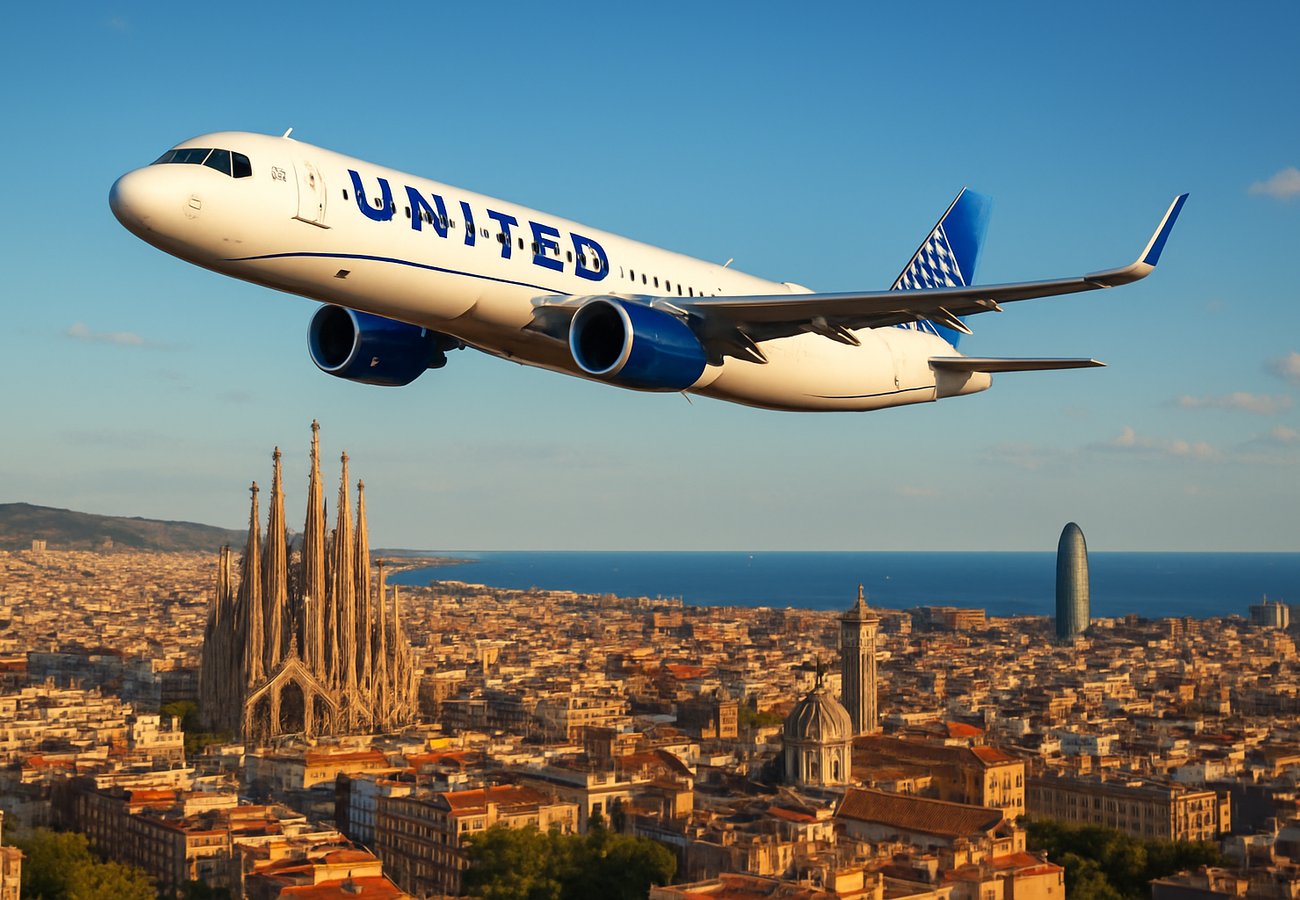
Image generated by AI
United Airlines is replacing its aging Boeing 757 fleet with the advanced Airbus A321XLR, launching direct flights from New York to Barcelona, Newark to Milan, and Chicago to Paris starting in 2026. This strategic modernization democratizes premium transatlantic travel while opening underserved European regions to millions of new travelers.
Why This Matters
The shift from widebody to narrowbody long-haul aircraft represents a fundamental industry transformation. United Airlines is betting that the A321XLR—with its impressive range of up to 5,400 nautical miles—can profitably serve routes previously dominated by larger, less efficient aircraft. This decision reflects post-pandemic recovery momentum and growing demand for direct access to European destinations beyond major hubs.
The A321XLR burns up to 30% less fuel per seat compared to Boeing 757 models, according to Airbus official specifications. Lower operating costs translate directly to more competitive fares, making European travel accessible to a broader demographic of leisure and business travelers. For regional economies in Spain, France, and Italy, this means unprecedented tourism growth opportunities.
Destinations in the Spotlight
The initial A321XLR deployment targets three cornerstone routes, each unlocking access to secondary airports and underserved regions:
| Route | Departure Hub | Destination | Airport Code | Launch Year |
|---|---|---|---|---|
| New York to Barcelona | New York (JFK/LGA) | Barcelona, Costa Brava, Basque Country | BCN | 2026 |
| Newark to Milan | Newark (EWR) | Milan, Florence, Northern Italy | MXP | 2026 |
| Chicago to Paris | Chicago (ORD) | Paris, French Countryside | CDG/ORY | 2026 |
Beyond major city centers, the A321XLR's efficiency enables United Airlines to serve secondary airports that larger widebody jets cannot profitably access. Travelers can now reach Barcelona and explore the Costa Brava and Basque Country directly. From Milan, connections to Florence and Sicily become seamless. Paris routes open pathways to the French Mediterranean coast and wine regions.
This regional connectivity addresses a critical gap: millions of European tourists concentrate in major cities, leaving cultural and economic benefits untapped in smaller destinations. The A321XLR reverses this pattern by making secondary airports economically viable for U.S. carriers.
What Travelers Get
- Direct flights without connections: New York, Newark, and Chicago passengers reach Barcelona, Milan, and Paris nonstop—eliminating layovers and reducing total travel time by 4-6 hours compared to connecting itineraries.
- 30% fuel efficiency gains: Lower operating costs enable United Airlines to offer competitive pricing on premium narrowbody cabins, with business-class seating and enhanced economy configurations.
- Access to underserved regions: The A321XLR's 5,400 nautical mile range opens secondary airports in Spain (Valencia, Bilbao), Italy (Bologna, Naples), and France (Nice, Lyon), reducing domestic connections and train transfers.
- Sustainability alignment: Reduced fuel consumption per seat supports United Airlines' carbon reduction commitments while offering eco-conscious travelers a lower-emission transatlantic option.
- Premium cabin experience: Modern narrowbody design includes lie-flat business seating, enhanced IFE systems, and improved galley/lavatory configurations—bridging the comfort gap between regional and widebody aircraft.
What This Means for Travelers
Book United Airlines A321XLR flights 8-12 weeks in advance to secure optimal pricing on these newly launched routes. The shift from Boeing 757 to A321XLR means more frequent departures on popular routes, increasing schedule flexibility for both leisure and business travel. Monitor United Airlines investor relations announcements for exact launch dates and seat inventory releases. Consider exploring secondary destinations—Costa Brava, Basque Country, Florence, Sicily, and French wine regions—now accessible via direct flights without expensive domestic connections. Early adopters will benefit from promotional fares as United Airlines builds market share on these routes.
FAQ: United Airlines A321XLR Transatlantic Routes 2026
Q: What is the A321XLR's maximum range, and why does it matter for transatlantic flights? A: The A321XLR covers up to 5,400 nautical miles, enabling nonstop flights from U.S. East Coast and Midwest hubs to Western European destinations. This range eliminates the need for refueling stops, reducing flight time and operational complexity compared to older narrowbody aircraft.
Q: How much fuel does the A321XLR save compared to the Boeing 757? A: The A321XLR burns up to 30% less fuel per seat than Boeing 757 models. This efficiency reduction lowers United Airlines' operating costs, enabling competitive pricing and supporting sustainability goals aligned with post-pandemic industry standards.
Q: Which secondary European airports will benefit from A321XLR service? A: Beyond Barcelona (BCN), Milan (MXP), and Paris (CDG/ORY), the A321XLR enables service to secondary airports in Valencia, Bilbao, Bologna, Naples, Nice, and Lyon—previously underserved by major U.S. carriers due to widebody aircraft economics.
Related Travel Guides
Disclaimer
This article is for informational and educational purposes only. It does not constitute legal, financial, or professional advice. While we strive to provide accurate and up-to-date information, travel policies, regulations, and conditions change rapidly. Always verify information with official sources before making travel decisions. Nomad Lawyer makes no representations about the accuracy, reliability, completeness, or suitability of the information provided. Readers should consult qualified professionals for advice specific to their circumstances. The views expressed in this article are those of the author and do not necessarily reflect the views of Nomad Lawyer.
Kunal K Choudhary
Co-Founder & Contributor
A passionate traveller and tech enthusiast. Kunal contributes to the vision and growth of Nomad Lawyer, bringing fresh perspectives and driving the community forward.
Learn more about our team →