
United Airlines Boeing 737-900 Returns to Washington Dulles After Nose Gear Malfunction With 179 Aboard
A United Airlines 737-900 executing Flight UA1535 experienced a nose landing gear failure-to-retract incident on June 9, 2026, forcing pilots to execute a controlled return to Washington Dulles with all 179 passengers and crew safely aboard.

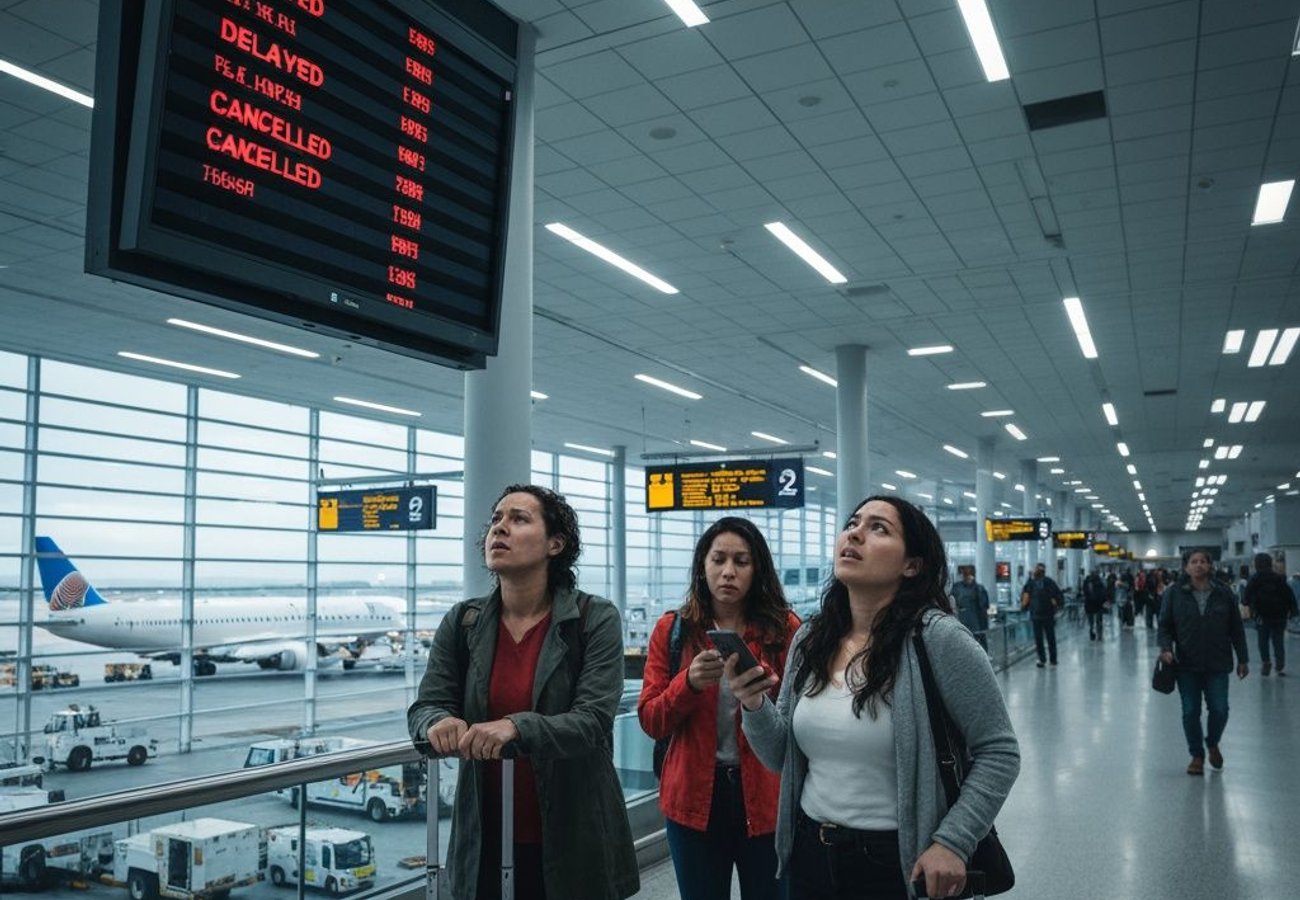
Image generated by AI
The Crisis That Wasn't: How 179 Passengers Avoided Disaster
It's the moment every airline passenger dreads—that subtle vibration, the captain's voice crackling through the intercom, the realization that something has gone catastrophically wrong at 4,000 feet. But on June 9, 2026, United Airlines Flight UA1535 became a masterclass in aviation safety, not tragedy.
A Boeing 737-900 carrying 179 passengers and crew members departed Washington Dulles International Airport (IAD) bound for Houston George Bush Intercontinental (IAH) when pilots detected an abnormal indication in the aircraft's nose landing gear system. What unfolded next was a textbook response to an in-flight emergency—one that saved lives through training, procedure, and nerves of steel.
Reddit: "Nose gear issues used to terrify me. Then I learned how well these systems are engineered. Respect to the crew on UA1535." — r/aviation
What Went Wrong at 4,000 Feet
The trouble began during the initial climb phase. Pilots identified an abnormal indication involving the nose gear shortly after rotation from runway 19L. This wasn't a catastrophic failure—it was something far more insidious: the nose landing gear had failed to retract fully.
According to air traffic control communications, the crew requested additional time to troubleshoot the issue while remaining in the climb. The aircraft was handed off to departure control and leveled off at approximately 4,000 feet. Pilots conducted systematic troubleshooting procedures, assessing every variable of the landing gear assembly.
The decision they made next proved decisive. Rather than risk the structural integrity of the fuselage or the aerodynamic complications of extended landing gear at altitude, the crew determined that an immediate return to Washington Dulles was the safest course of action.
The Controlled Return
Despite the abnormal condition, the 737-900 pilots informed air traffic control that the nose gear was locked down—a critical distinction. There was no need to declare an emergency, no requirement for foam trucks and emergency responders lining the runway. The aircraft was fundamentally stable.
The crew remained in a holding pattern while completing critical checklists and coordinating with ground personnel. Air traffic control provided seamless vectoring for a smooth approach sequence. Approximately 50 minutes after departure, the aircraft descended and touched down safely on runway 19R at Washington Dulles.
No injuries. No structural damage. No evacuation. Just 179 people who walked off the aircraft without ever knowing how close they came to an aviation incident that could have dominated headlines worldwide.
Why This Mattered: The FAA Steps In
The Federal Aviation Administration (FAA) confirmed the event and announced a formal investigation into the circumstances. Investigators are reviewing maintenance records, flight data, and crew reports to determine what triggered the nose gear malfunction.
This isn't bureaucratic theater. Landing gear failures remain a critical safety concern, and understanding root causes prevents future incidents. Was it a mechanical linkage failure? An electrical malfunction? A sensor giving false readings? The answer matters for every 737-900 in the global commercial fleet.
What's remarkable is how these investigations have driven continuous improvement across aviation. Commercial aircraft are now equipped with multiple redundant systems and sophisticated troubleshooting protocols that allow crews to manage failures that would have been catastrophic thirty years ago.
Back in Service: The Aftermath
Following inspections and maintenance checks at Washington Dulles, the aircraft was cleared to resume revenue operations. The Boeing 737-900 later departed and successfully completed its journey to Houston—delayed approximately two and a half hours from its original schedule, but intact.
Flight tracking data confirmed the safe arrival, a footnote in the aircraft's operational history that few passengers would ever know about. This is how modern aviation works: failures are managed, contained, and resolved before they become disasters.
What This Tells Us About Modern Air Travel
The UA1535 incident exemplifies why commercial aviation remains the safest form of transportation. The crew didn't panic. They followed established protocols. They communicated transparently with air traffic control. They prioritized safety over schedule pressure.
Reddit: "People complain about airlines, but moments like this remind me that the system works. It actually works." — r/flying
The National Transportation Safety Board's investigation database shows that modern aircraft design and crew training have made in-flight emergencies increasingly manageable. What would have been a headline-grabbing crisis in previous decades is now handled as a routine diversion.
The bottom line: 179 people boarded a flight, experienced a mechanical failure, and arrived safely because of human expertise, redundant engineering, and systems designed not for perfection, but for survival.
The skies remain among the safest places on Earth—not because nothing goes wrong, but because everything is designed to handle it when it does.
Related Travel Guides
Disclaimer
This article is for informational and educational purposes only. It does not constitute legal, financial, or professional advice. While we strive to provide accurate and up-to-date information, travel policies, regulations, and conditions change rapidly. Always verify information with official sources before making travel decisions. Nomad Lawyer makes no representations about the accuracy, reliability, completeness, or suitability of the information provided. Readers should consult qualified professionals for advice specific to their circumstances. The views expressed in this article are those of the author and do not necessarily reflect the views of Nomad Lawyer.
Raushan Kumar
Founder & Lead Developer
Full-stack developer with 11+ years of experience and a passionate traveller. Raushan built Nomad Lawyer from the ground up with a vision to create the best travel and law experience on the web.
Learn more about our team →