
United Airlines' Epic 7-Hub Challenge: 60 Frequent Flyers Race Across America in Under 24 Hours
United Airlines frequent flyers completed an ambitious 7-hub cross-country sprint connecting Newark to San Francisco in a single day, defying operational delays and showcasing the airline's domestic network resilience.

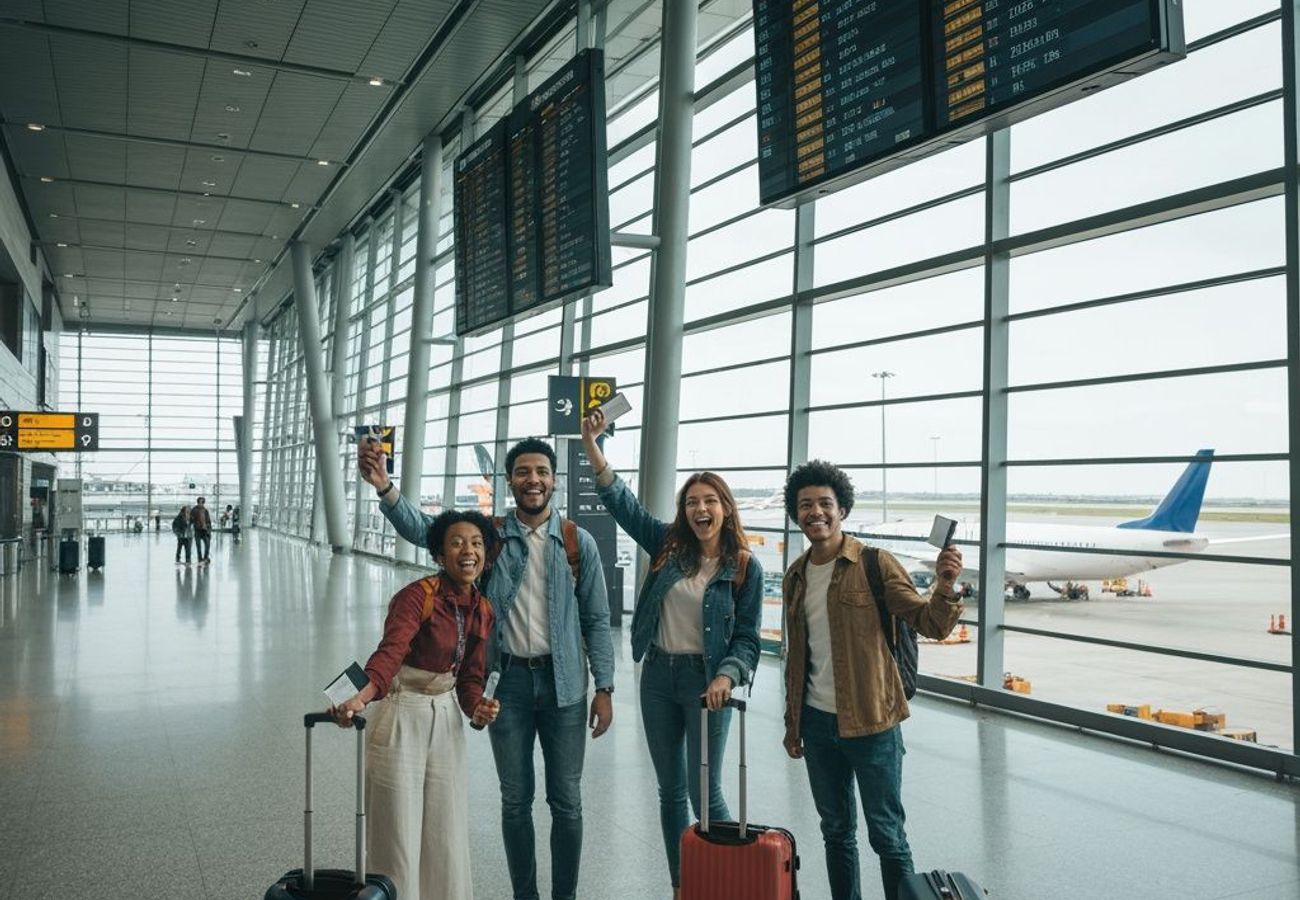
Image generated by AI
The Challenge Nobody Thought They'd Actually Finish
Picture this: 60 determined United Airlines frequent flyers attempting to touch down at seven major hub airports across America—all within a single calendar day. The United 7 Hub Run kicked off at Newark Liberty International Airport (EWR) in New Jersey and was supposed to conclude at San Francisco International Airport (SFO) in California. What unfolded was part logistical chess match, part aviation endurance test, and entirely unpredictable.
The ambitious itinerary required participants to connect through Washington Dulles (IAD), Chicago O'Hare (ORD), Houston George Bush Intercontinental (IAH), Denver International (DEN), and Los Angeles International (LAX). By the numbers, this meant covering multiple regions of the continental United States, crossing time zones, and executing five separate connections in roughly 16 hours of actual travel time.
Against mounting odds—including delayed departures, extended gate holds, and compressed connection windows—the group managed to reach San Francisco with just 42 minutes remaining before the challenge deadline expired. Not a minute to spare.
When Perfect Planning Meets Operational Reality
The morning started cleanly enough. Participants boarded their first flights with the confidence that comes from meticulous planning and familiarity with United's network. But commercial aviation operates in the real world, where weather conditions, aircraft rotations, and crew scheduling can unravel even the most carefully constructed itineraries.
Delays cascaded early. The ripple effect began at Washington Dulles, where early disruptions created a domino chain that threatened subsequent connections throughout the day. Gate holds extended. Departure schedules shifted. Participants found themselves racing against an invisible clock, calculating whether they could make tight connections that kept shrinking by the minute.
Reddit: "The real challenge isn't the flying—it's the airports. Every delay compounds. One 20-minute hold in Chicago could mean missing Denver, which kills everything after." — r/aviation
What made this day particularly instructive for travel industry observers was how it exposed the fragility of precision scheduling. In an industry where margin for error is measured in minutes, dozens of passengers navigating interconnected hubs simultaneously created an operational puzzle that required both human judgment and technological intervention.
Technology Stepped In When the Clock Started Ticking
United Airlines' Connection Saver system became the unsung hero of this narrative. This predictive technology evaluates connecting traffic and departure timing in real-time, determining whether holding a flight for tight connections might prevent larger downstream disruptions across the network.
With nearly 60 participants traveling together on coordinated itineraries, maintaining connectivity wasn't just a passenger service consideration—it was an operational necessity. The system allowed United's operations team to assess whether short flight holds would preserve the entire chain of connections or whether early departure made strategic sense.
For anyone tracking how airlines integrate artificial intelligence into operational management, the United 7 Hub Run provided a real-world case study. Instead of relying solely on manual gate agents making individual decisions, modern airlines now use predictive algorithms to evaluate network-wide consequences. The technology transformed what could have been a catastrophic cascade of missed connections into a managed operational challenge.
The Mileage Running Culture: Still Alive and Well
The event underscores something many casual travelers don't fully grasp: mileage running remains a serious strategic practice within the frequent flyer community. These aren't random aviation enthusiasts. They're calculated loyalty program participants pursuing elite status, premium cabin access, and airline recognition.
Each hub connection accumulated qualifying miles. Each flight segment counted toward elite tier thresholds. The challenge weaponized the airline's own hub network, turning it into a mileage accumulation machine while simultaneously testing network efficiency.
Why participants actually care about this challenge:
- Elite status qualification delivers enhanced travel perks and priority boarding
- Mileage accumulation unlocks future premium cabin redemptions
- Aviation achievement builds status within frequent flyer communities
- Network exploration deepens understanding of airline operations
- Shared experience creates genuine community bonds
The United 7 Hub Run isn't frivolous. For these travelers, it's strategic—a way to maximize loyalty benefits while participating in something genuinely distinctive.
The Broader Shift: Experiential Aviation Is Becoming Real
What's happening here reflects a fundamental shift in how travelers construct meaning around their journeys. The destination used to be everything. Now increasingly, the journey itself—the logistics, the connections, the achievement of moving rapidly through complex systems—constitutes the experience.
Airlines have noticed. As loyalty programs mature and competitive differentiation narrows, carriers are investing in experiences that celebrate network capabilities. Challenges like the 7 Hub Run create storytelling opportunities. They generate social media engagement. They deepen emotional connection to brands.
For United Airlines specifically, the event demonstrated something strategic: their domestic network's genuine capability to move passengers across continental distances in compressed timeframes. It's not marketing fiction. Sixty people actually did it, despite operational headwinds.
The Unexpected Lesson: Modern Air Travel Still Works
Despite the industry's reputation for delays, cancellations, and frustration, the successful completion of the United 7 Hub Run speaks to something often overlooked: the underlying resilience of modern airline operations.
Yes, there were delays. Yes, connection windows tightened. But a network of aircraft, crews, ground handlers, and technology managed to move 60 people across seven major hubs in a single day while staying operational. That's genuinely impressive when you think about the complexity involved.
The fact that participants arrived in San Francisco with 42 minutes to spare—rather than missing the deadline entirely—suggests that even when systems get stressed, they often absorb pressure better than we expect.
The journey proved that in aviation, the story isn't always about how things fail—sometimes it's about how they barely, magnificently, hold together.
Related Travel Guides
Disclaimer
This article is for informational and educational purposes only. It does not constitute legal, financial, or professional advice. While we strive to provide accurate and up-to-date information, travel policies, regulations, and conditions change rapidly. Always verify information with official sources before making travel decisions. Nomad Lawyer makes no representations about the accuracy, reliability, completeness, or suitability of the information provided. Readers should consult qualified professionals for advice specific to their circumstances. The views expressed in this article are those of the author and do not necessarily reflect the views of Nomad Lawyer.
Preeti Gunjan
Contributor & Community Manager
A passionate traveller and community builder. Preeti helps grow the Nomad Lawyer community, fostering engagement and bringing the reader experience to life.
Learn more about our team →