
Ukraine EU Transport Agreement Extended to March 2027 to Bolster Road Freight and Trade
The European Union has extended its critical road transport agreement with Ukraine until March 31, 2027, removing permit requirements for freight to stabilize war-time trade.

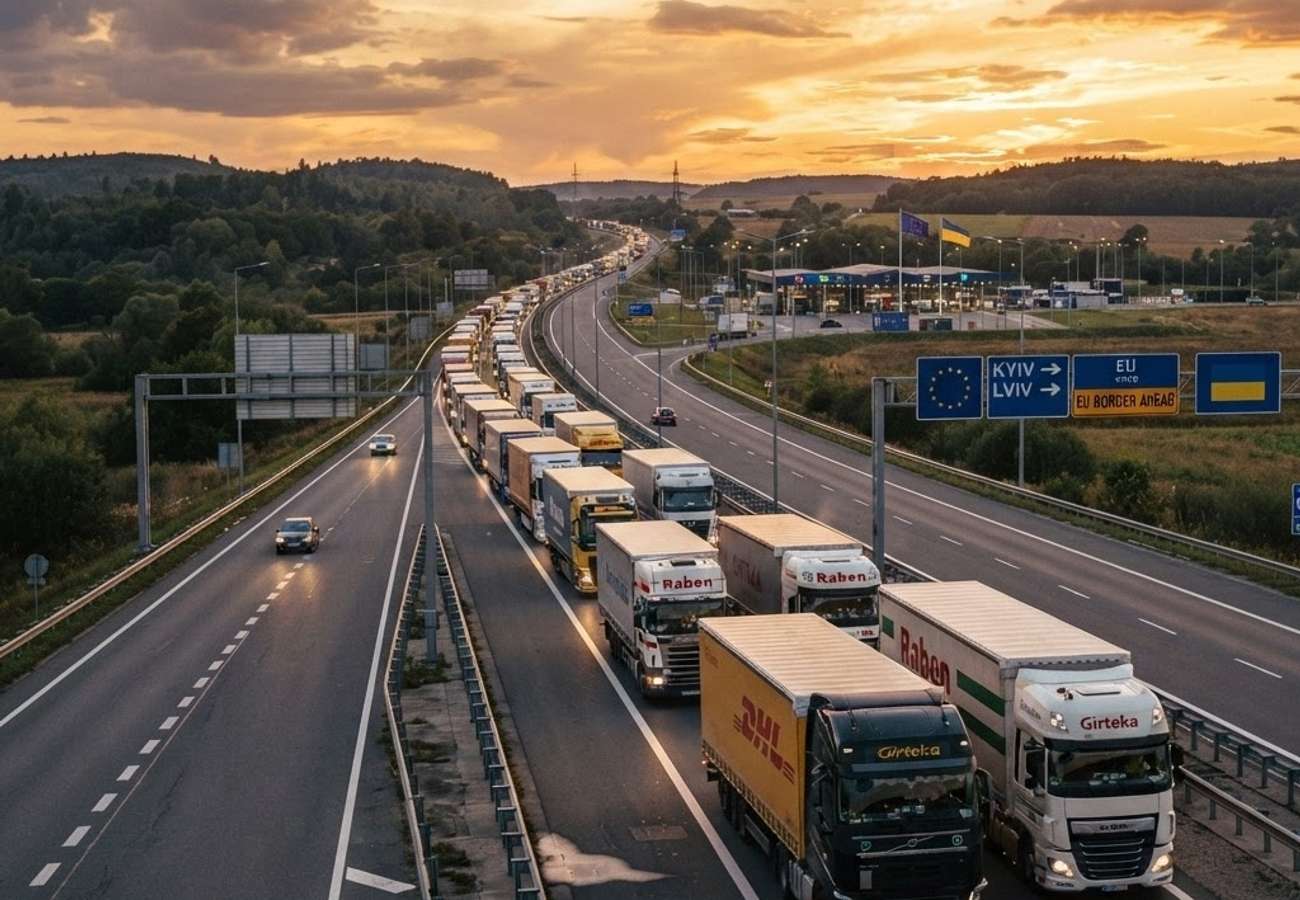
Image generated by AI
The European Union has officially extended its road transport agreement with Ukraine through March 31, 2027, ensuring that bilateral and transit freight operations remain exempt from permit requirements. This strategic move provides critical stability for European road carriers and secures the flow of essential goods amidst ongoing conflict.
The arrangement, which has evolved from a temporary emergency measure into a cornerstone of regional economic resilience, allows for the seamless movement of goods across borders by removing significant administrative hurdles. Since its inception, this framework has been vital for maintaining Ukraine's export capabilities and ensuring the steady import of humanitarian and industrial supplies.
Evolution of the Road Freight Framework
The partnership between Ukraine and the European Union regarding road freight began in June 2022. At that time, the primary objective was urgent and practical: Russia's full-scale invasion had decimated traditional transport infrastructure and blocked primary maritime trade routes, leaving Ukraine isolated from many of its traditional markets.
In response, the EU and Ukraine established a specialized framework to streamline the movement of goods. This agreement granted expanded rights for the carriage of freight between Ukraine and EU member states, as well as for transit operations moving through EU territory.
While often referred to in industry circles as a transport "visa-free" regime, it is important to clarify that this term applies strictly to the administrative requirements for freight carriers. It does not grant Ukrainian citizens visa-free passenger travel into the EU. For logistics firms and exporters, however, this "visa-free" freight status means a drastic reduction in bureaucracy and a more predictable operational horizon.
Operational Changes and Regulatory Compliance
The primary mechanism of the agreement is the removal of the need for permits for covered bilateral and transit freight operations. In the world of international logistics, permit requirements often act as a bottleneck, requiring extensive paperwork and long waiting periods that can stifle trade during a crisis.
By eliminating these requirements, the agreement allows logistics companies to:
- Organize transport journeys with significantly more flexibility.
- Reduce the administrative lead time for cross-border shipments.
- Create more predictable scheduling for the movement of time-sensitive goods.
Despite the removal of permits, the agreement does not grant a total exemption from law. Carriers must still adhere to all existing road-safety regulations, customs protocols, and vehicle standards. Furthermore, the EU continues to strictly enforce rules regarding driver rest periods and maximum driving times. This alignment ensures that while the administrative burden is lowered, safety and legal standards remain consistent with European norms.
Integration with EU-Ukraine Solidarity Lanes
The road transport deal is a critical component of the broader EU-Ukraine Solidarity Lanes, launched in May 2022. These lanes were designed as a multi-modal response to the blockade of Black Sea shipping, utilizing rail, inland waterways, and roads to keep Ukraine connected to global markets.
Without the liberalization of road transport, the Solidarity Lanes would lack the "last-mile" flexibility required to move goods from inland hubs to international destinations. This synergy has allowed Ukraine to maintain its economic viability even when maritime ports were compromised.
Quantifying the Economic Impact on Trade
The data indicates that the liberalization of road freight has yielded substantial economic gains. According to reports from Ukraine’s Ministry for Development of Communities and Territories in April 2025, road-based trade saw a dramatic surge:
- Road exports to the EU increased by 42%
- Road imports into Ukraine increased by 37%
These statistics highlight why both Kyiv and Brussels viewed the extension until 2027 as a necessity. The ability to move value-added goods out of the country and bring in essential machinery and fuel is fundamental to Ukraine's economic sustainability.
The scale of this trade relationship is further evidenced by 2025 data from the European Commission, which identified the EU as Ukraine's largest trading partner, accounting for roughly 65% of its total trade in goods.
EU-Ukraine Trade Volume (2025)
| Trade Category | Value (Euros) |
|---|---|
| Total Goods Trade | €68.2 Billion |
| EU Imports from Ukraine | €21.7 Billion |
| EU Exports to Ukraine | €46.5 Billion |
The composition of this trade underscores the strategic nature of the transport deal. Ukraine primarily exported cereals, iron, steel, and vegetable oils, while the EU provided mineral fuels, electrical machinery, and arms and ammunition.
Logistics Scale of the Solidarity Lanes
The impact of the combined transport strategy is most visible in the total tonnage moved. According to European Commission figures published in March 2026, the Solidarity Lanes have facilitated a massive volume of trade since May 2022:
- Total Exports from Ukraine: Approximately 214 million tonnes.
- Total Imports to Ukraine: Approximately 100 million tonnes (including fuel, fertilizers, and military aid).
- Estimated Total Trade Value: Approximately €270 billion.
- Export Value: Approximately €72 billion.
- Import Value: Approximately €198 billion.
The Strategic Role of Agriculture and Industry
Agriculture remains a primary driver for these road links. While the Black Sea remains the dominant route—handling roughly 85% of grain and oilseed exports as of February 2026—the Solidarity Lanes handled the remaining 15%. This 15% represents a critical safety valve; if maritime routes are blocked, the road and rail network provides the only viable alternative to prevent total economic collapse in the agricultural sector.
Beyond farming, the network is essential for Ukraine's industrial sector. The transport of ores and steel products ensures that Ukrainian heavy industry remains integrated with European supply chains, preventing the total erosion of its industrial base during the conflict.
Why This Matters: The Logistics Perspective
For the global logistics provider and the legal professional, this extension signifies that the "emergency" phase of the conflict has transitioned into a "sustained" phase. The shift from short-term extensions to a multi-year agreement (until 2027) allows companies to invest in fleet expansions and long-term contracts without the fear of sudden regulatory reversals.
From a legal standpoint, the gradual alignment of Ukrainian transport legislation with EU standards is a precursor to deeper integration. This is not merely about moving trucks; it is about the systemic integration of Ukraine into the European Single Market. For the traveler or business owner, this means that the border regions are becoming more formalized hubs of trade rather than chaotic checkpoints.
The extension of this agreement ensures that the arteries of Ukrainian trade remain open, providing a vital economic shield against the disruptions of war.
Related Travel Guides
Disclaimer
This article is for informational and educational purposes only. It does not constitute legal, financial, or professional advice. While we strive to provide accurate and up-to-date information, travel policies, regulations, and conditions change rapidly. Always verify information with official sources before making travel decisions. Nomad Lawyer makes no representations about the accuracy, reliability, completeness, or suitability of the information provided. Readers should consult qualified professionals for advice specific to their circumstances. The views expressed in this article are those of the author and do not necessarily reflect the views of Nomad Lawyer.
Raushan Kumar
Founder & Lead Developer
Full-stack developer with 11+ years of experience and a passionate traveller. Raushan built Nomad Lawyer from the ground up with a vision to create the best travel and law experience on the web.
Learn more about our team →