
UK Tourism Connectivity Rises As LNER Introduces Multilingual Onboard Travel Technology
UK Tourism Connectivity Rises As LNER Introduces Multilingual Onboard Travel Technology

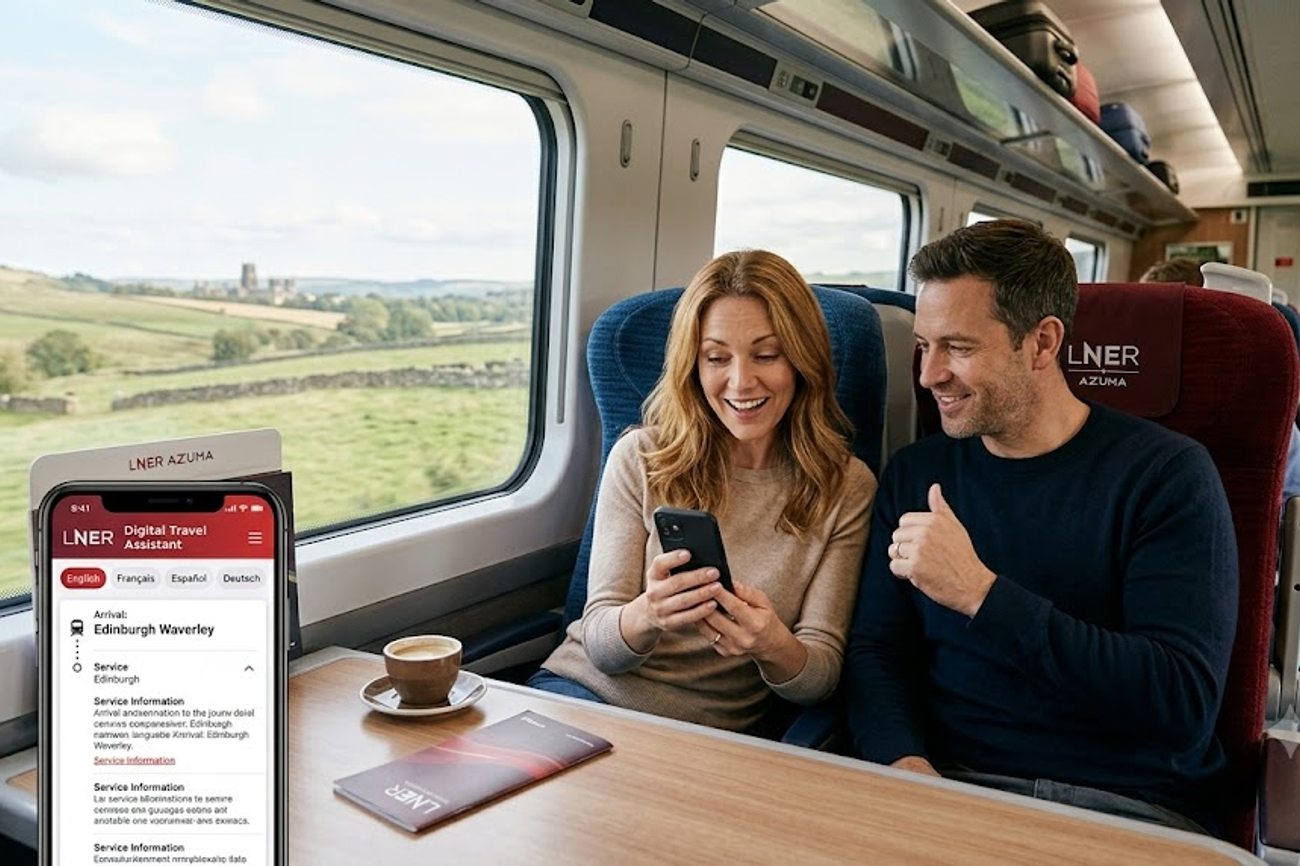
Image generated by AI
Seven distinct languages now anchor the upgraded "All Onboard" digital portal, marking a strategic shift by London North Eastern Railway (LNER) to dismantle linguistic barriers for international visitors traversing the UK. This deployment of multilingual technology—covering German, French, Spanish, Italian, Polish, Simplified Chinese, and English—transforms the onboard experience from a static transit period into a digitally managed journey for global tourists.
The Digital Pivot on the East Coast Main Line
The integration of these services arrives as a calculated move to synchronize rail infrastructure with the demands of modern international tourism. LNER, which manages the critical artery of the East Coast Main Line, serves as the primary rail link between London and major northern hubs, including York, Newcastle, and Edinburgh. By deploying a QR-code-based system located on the rear of every seat, the operator has effectively bypassed the need for physical brochures or multilingual staffing at every carriage, shifting the burden of information delivery to the passenger's own device.
This rollout coincides with the global observance of World Tourism Day on September 27, signaling an industry-wide recognition that "connectivity" no longer refers solely to tracks and signals, but to the digital interface between the service provider and the consumer. For a network that handles millions of international arrivals annually, the transition to a multilingual digital ecosystem is a response to the friction often associated with navigating the UK's complex rail geography.
Infrastructure of the "All Onboard" Ecosystem
The technical architecture of the upgraded portal is designed to function as a comprehensive journey management tool. Rather than serving as a simple translation layer, the portal integrates real-time data feeds and curated content to reduce traveler anxiety.
| Feature | Functionality | Target User Benefit |
|---|---|---|
| Multilingual Interface | 7 Languages (incl. Simplified Chinese, Polish) | Reduced navigation errors for non-English speakers |
| Live Travel Updates | Real-time journey status tracking | Immediate awareness of delays or platform changes |
| Journey Planning | Integrated route mapping tools | Ability to book and plan subsequent legs of a trip |
| "Routes" Podcast | Destination-specific audio content | Cultural enrichment and regional discovery |
| LNER Kids Club | Dedicated children's entertainment | Improved family travel logistics and comfort |
By leveraging the International Air Transport Association (IATA) standards for seamless travel—though applied here to rail—LNER is mirroring the "digital identity" and "seamless journey" trends seen in global aviation. The move aligns with broader goals seen in the UK Government's tourism strategies, which emphasize the necessity of making regional destinations outside of London more accessible to high-spending international demographics.
Expert Analysis: The Geopolitics of Rail Accessibility
For the seasoned traveler, the inclusion of Simplified Chinese and Polish alongside the traditional European languages (French, Spanish, Italian, German) is the most revealing data point. This is not a random selection; it is a targeted response to shifting tourism demographics and labor migration patterns within the UK.
The inclusion of Simplified Chinese speaks directly to the recovery and growth of the East Asian travel market, where digital-first interactions are the baseline expectation. For these travelers, a QR-code-driven interface is a familiar UX pattern, reducing the "cultural shock" of navigating a foreign transit system. Similarly, the addition of Polish acknowledges the significant Eastern European population and visitor base that utilizes the East Coast Main Line for both leisure and familial visits.
For travelers booking routes to Edinburgh or York, the direct consequence of this upgrade is a reduction in "transit friction." When a passenger can verify a connection in Newcastle in their native tongue via a real-time feed, the psychological barrier to exploring secondary cities drops. This creates a ripple effect: as the "fear of the unknown" decreases, international tourists are more likely to venture beyond the London bubble, distributing tourism spend more evenly across the North of England and Scotland.
The introduction of multilingual onboard travel technology by LNER is expected to significantly enhance the travel experience for international visitors, providing them with seamless access to information and services in their native languages. This development is in line with the UK government's efforts to boost tourism, as outlined on the Visit Britain website, which offers a wealth of information on traveling to and within the UK. By improving connectivity and accessibility, LNER aims to increase passenger numbers and contribute to the growth of the UK's tourism industry.
The pricing pressure this creates is indirect but potent. By making the rail experience more "premium" and accessible, LNER positions itself against domestic flight options and private hire. When the digital experience is seamless, the perceived value of the rail ticket increases, allowing the operator to maintain competitive pricing while improving the passenger experience.
Key Takeaways
- Linguistic Expansion: The "All Onboard" portal now supports seven languages, including Simplified Chinese and Polish, specifically to aid non-English speaking international tourists.
- Hardware Integration: Access is standardized via QR codes on every seat, removing the need for dedicated hardware or app downloads for basic information.
- Beyond Logistics: The platform has evolved into a content hub, offering the "Routes" podcast for destination discovery and the LNER Kids Club for family demographics.
- Strategic Geography: The upgrade specifically targets the East Coast Main Line, facilitating easier movement between London, York, Newcastle, and Edinburgh.
- Timing: The launch is strategically aligned with World Tourism Day (September 27) to highlight UK tourism inclusivity.
FAQ: LNER International Travel 2024
How do I access the multilingual services on LNER trains? Passengers can scan the QR code located on the back of their seat using any smartphone. This opens the "All Onboard" portal, where you can select your preferred language from the seven available options.
Which languages are supported on the LNER digital portal? The portal currently supports English, French, German, Spanish, Italian, Polish, and Simplified Chinese.
Can I use the portal to check for train delays in real-time? Yes, the upgraded portal provides live travel updates, allowing international passengers to monitor their journey status and connection timings in their own language.
Is there entertainment available for children on the portal? Yes, LNER has integrated the "LNER Kids Club" podcast into the digital platform to provide entertainment for younger travelers during long-haul journeys.
The shift from bilingual to multilingual digital interfaces marks the end of the 'English-only' era for UK rail, turning the train carriage into a global gateway.
Tags: LNER, East Coast Main Line, UK Rail Technology, London-Edinburgh Route, Multilingual Travel Services 2024
Related Travel Guides
- UK Tourism Connectivity Gets A Digital Boost As LNER Launches Seven Language Travel Portal Across London, York, Newcastle And Edinburgh Routes
- LNER Launches Multilingual Digital Portal for International Passengers on East Coast Main Line 2026
- Interrail Unveils Massive 50% Savings on European Rail Passes for 2026 Multi-Country Journeys
Disclaimer
This article is for informational and educational purposes only. It does not constitute legal, financial, or professional advice. While we strive to provide accurate and up-to-date information, travel policies, regulations, and conditions change rapidly. Always verify information with official sources before making travel decisions. Nomad Lawyer makes no representations about the accuracy, reliability, completeness, or suitability of the information provided. Readers should consult qualified professionals for advice specific to their circumstances. The views expressed in this article are those of the author and do not necessarily reflect the views of Nomad Lawyer.
Kunal K Choudhary
Co-Founder & Contributor
A passionate traveller and tech enthusiast. Kunal contributes to the vision and growth of Nomad Lawyer, bringing fresh perspectives and driving the community forward.
Learn more about our team →