
UK and Ireland Launch Massive Light Rail Expansion to Redefine Urban Connectivity
Major transport upgrades hit the UK and Ireland in 2026. From the Washington Metro extension to Dublin Luas shifts, discover how urban travel is changing.

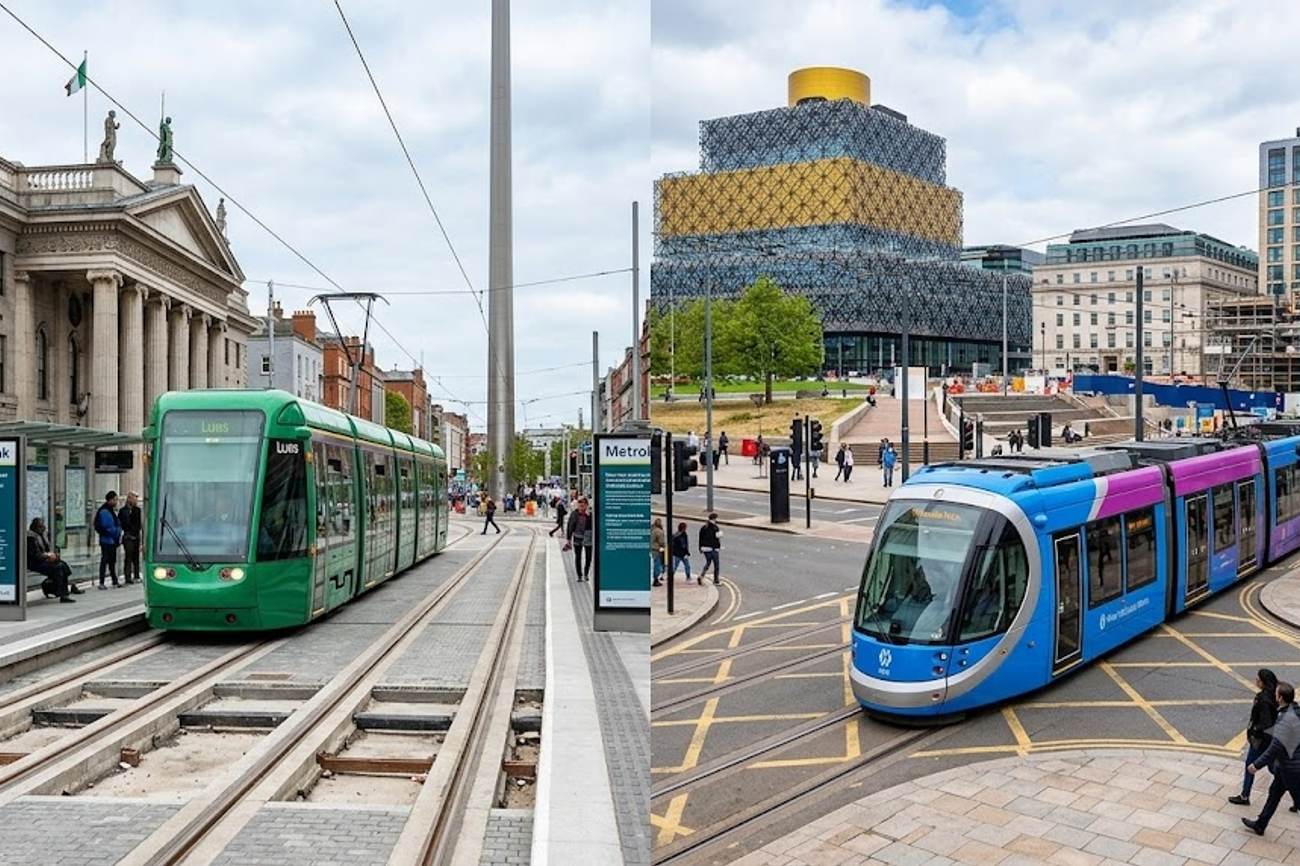
Image generated by AI
Urban Mobility Shifts Toward Sustainable Light Rail
The landscape of sustainable urban transit in the United Kingdom and Ireland is undergoing a systemic transformation. Starting in 2026, a series of coordinated infrastructure projects are launching across Washington, Manchester, Nottingham, Dublin, and Glasgow to reduce carbon emissions and alleviate road congestion. These initiatives range from the installation of entirely new trackage to the modernization of legacy subway systems, ensuring that residents and international business travelers can move through city centers with greater efficiency.
By prioritizing light rail, these municipalities are attempting to decouple urban growth from private vehicle dependency. The strategic expansion of these networks serves a dual purpose: fostering economic regeneration in underserved outskirts and enhancing the fluidity of movement between tourism hubs and commercial districts.
North East England Gains Connectivity via Washington Metro Extension
In one of the most ambitious regional projects, Nexus is moving forward with the extension of the Tyne and Wear Metro into Washington. This project addresses a long-standing infrastructure gap, as Washington has historically remained one of the largest residential hubs in the region without direct access to the Metro network.
The proposed expansion involves the construction of a 13-kilometer light rail link that will integrate Washington into the broader transit corridor connecting Sunderland and Newcastle. By linking with the existing system at South Hylton, the project creates a seamless transit artery across North East England.
The extension is centered around three strategic new stations:
| Proposed Station | Travel Importance |
|---|---|
| Follingsby | Improves access to employment and development areas |
| Washington North | Provides a new connection for local communities |
| Washington South | Strengthens links between Washington and the wider Metro network |
From a logistical perspective, this extension removes the reliance on cars for thousands of commuters and opens the region to increased tourism. By providing a direct rail link to commercial centers, the project is expected to stimulate local investment and increase the attractiveness of the area for new businesses.
Dublin Luas Enters New Operational Phase Under KeolisAmey
Across the Irish Sea, Dublin is redefining its approach to light rail management. The Luas network, a cornerstone of the capital's transport infrastructure, has transitioned to the management of KeolisAmey Luas. This shift in operation and maintenance marks a strategic effort to modernize the passenger experience across the city's residential and commercial zones.
The new operational mandate focuses on four primary pillars:
- System Reliability: Reducing delays and improving headway consistency.
- Infrastructure Maintenance: Proactive upkeep of tracks and rolling stock.
- Passenger Experience: Enhancing the daily interaction between the user and the network.
- Operational Longevity: Implementing long-term performance benchmarks.
Specific attention is being directed toward the Connolly Luas stop, a critical interchange for those arriving in Dublin. To improve the flow of passengers, officials are implementing enhanced security protocols, updated wayfinding signage, and new hoarding arrangements to facilitate future redevelopment. In a nod to the city's transit history, the area now features archival photography from Iarnród Éireann and the CIÉ archive, blending the city's rail heritage with its future-facing mobility goals.
Nottingham Express Transit Prioritizes Infrastructure Resilience
In the English Midlands, the Nottingham Express Transit (NET) has successfully executed a comprehensive track renewal program. Because the network faces intense daily pressure from a diverse demographic of students, professionals, and tourists, the physical degradation of rails is a constant challenge.
The recent investment focuses on strengthening the network's resilience to prevent service interruptions. The outcomes of this infrastructure push are categorized as follows:
| Improvement | Passenger Benefit |
|---|---|
| Rail replacement | Smoother journeys |
| Infrastructure strengthening | Greater reliability |
| Maintenance investment | Reduced future disruption |
| Network resilience | Better service continuity |
For the visitor, these technical upgrades translate to more predictable travel times when accessing the city's universities, shopping districts, and cultural landmarks.
Manchester Metrolink Integrates Transit with Civic Identity
While other cities focus on steel and concrete, Manchester is leveraging its Metrolink network to enhance social connectivity. During the Manchester Pride events from August 28 to 31, 2026, the city deployed specialized trams and buses featuring the slogan “Love Connects Everyone.”
This initiative demonstrates a shift in how transit authorities view their assets; the Metrolink is no longer just a utility for movement but a canvas for community engagement. During high-traffic events, the ability to move thousands of people from hotels to event venues without gridlocking the city center is essential for the city's reputation as a global event destination.
Why This Matters: The Impact on the Modern Traveler
For the traveler, these developments signal a transition toward "frictionless" urban mobility. The expansion of the Washington Metro and the upgrades in Dublin and Nottingham mean that the "last mile" of a journey—the gap between a major transport hub and the final destination—is shrinking.
From a logistical standpoint, the shift toward light rail reduces the stress of navigating foreign or unfamiliar city centers. For business travelers, the increased reliability in Nottingham and Dublin means fewer missed appointments due to traffic. For tourists, the integration of heritage elements at stops like Connolly transforms a simple commute into a cultural experience.
Furthermore, the move toward sustainable rail options aligns with the growing demand for "green travel." Passengers are increasingly choosing destinations based on the ease of car-free exploration. By investing in these networks, the UK and Ireland are not just moving people; they are future-proofing their cities against the environmental and logistical costs of urban sprawl.
Related Travel Guides
- JR Group Launches Nationwide Unlimited Autumn Ride Pass for ¥7,850 Covering Three Days of Regional Rail Travel Across Japan in October 2026
- Great Western Railway Issues Travel Warnings Following Overhead Power Failure Disrupting London Paddington to Reading Train Services in September 2026
- Great Western Railway Disruption: London Paddington to Reading Overhead Power Failure, Ticket Acceptance, and Delay Repay Guide
Disclaimer
This article is for informational and educational purposes only. It does not constitute legal, financial, or professional advice. While we strive to provide accurate and up-to-date information, travel policies, regulations, and conditions change rapidly. Always verify information with official sources before making travel decisions. Nomad Lawyer makes no representations about the accuracy, reliability, completeness, or suitability of the information provided. Readers should consult qualified professionals for advice specific to their circumstances. The views expressed in this article are those of the author and do not necessarily reflect the views of Nomad Lawyer.
Preeti Gunjan
Contributor & Community Manager
A passionate traveller and community builder. Preeti helps grow the Nomad Lawyer community, fostering engagement and bringing the reader experience to life.
Learn more about our team →