
UK Holidaymakers Face New TUI Warning As Airport Currency Exchange Mistakes Could Raise Travel Costs Abroad
UK Holidaymakers Face New TUI Warning As Airport Currency Exchange Mistakes Could Raise Travel Costs Abroad

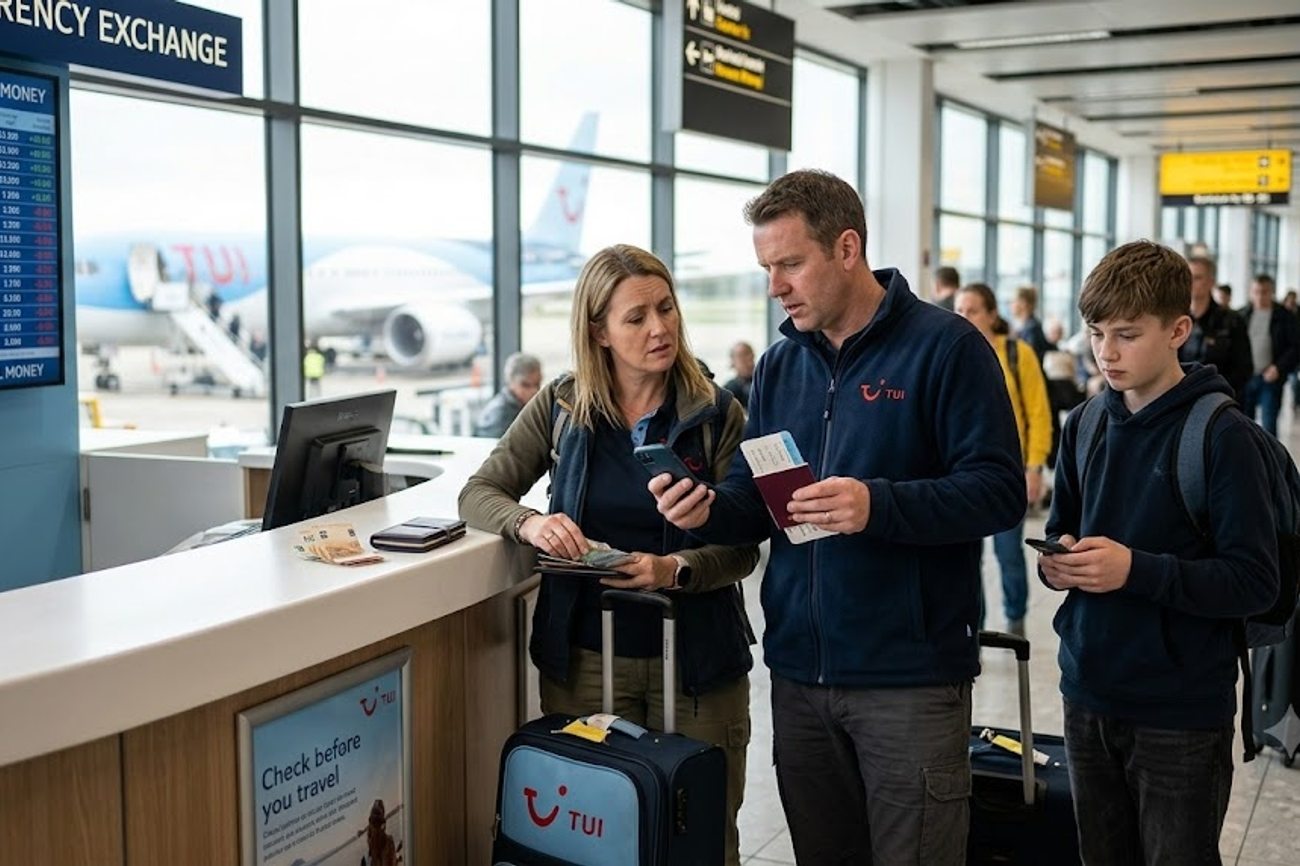
Image generated by AI
[London, October 2023] — TUI has issued a formal alert to UK holidaymakers warning that relying on airport currency exchange services can significantly inflate travel expenses and reduce the overall value of holiday budgets.
The travel giant is urging passengers to abandon the convenience of last-minute airport transactions in favor of early financial planning. According to TUI, the lack of time to compare exchange rates and the limited selection of providers available within airport terminals often lead to suboptimal rates that drain funds intended for experiences, shopping, and daily necessities.
The High Cost of Convenience
The primary trigger for this warning is the systemic reliance of many UK travelers on "on-the-fly" currency exchanges. While the proximity of these kiosks to security checkpoints and boarding gates makes them attractive, TUI asserts that this convenience comes at a steep financial premium.
Travellers who wait until they are inside the terminal lose the ability to cross-shop multiple providers or utilize digital fintech alternatives. Because exchange rates fluctuate constantly, those who fail to monitor the market before departure are more likely to accept unfavorable rates during the high-stress environment of the departure process. TUI emphasizes that arranging funds before arriving at the airport allows for a more calculated approach to budgeting and a reduction in unnecessary airport stress.
Markets and Travelers Impacted
The warning applies to all UK-based travelers heading to international destinations, though the impact varies based on the destination's economic infrastructure.
- Short-Haul European Travelers: Those visiting major hubs may find high card acceptance, but often overlook the "hidden" fees associated with bank-led overseas transactions.
- Long-Haul & Emerging Market Visitors: Travelers heading to regions where cash is king—specifically independent markets, rural transport services, and small-scale vendors—are at the highest risk if they fail to secure local currency in advance.
- Family Groups: Larger parties are particularly susceptible to budget erosion, as small, unplanned daily expenses compound quickly over the duration of a trip.
- Budget-Conscious Tourists: Those operating on a strict financial plan may find their available spending power diminished by the poor margins offered at Heathrow Airport or Gatwick Airport kiosks.
Practical Traveler Advisory and Strategic Insights
For the average passenger, this alert translates to a need for a diversified financial strategy. TUI is effectively advising against a "single-source" approach to travel money.
The "Cash vs. Digital" Balance While the global trend is shifting toward contactless payments, TUI warns that a total reliance on cards is a strategic error. Many destinations still require physical banknotes for "micro-transactions." If a card system fails or a vendor refuses electronic payment, a traveler without cash is left stranded or forced to use emergency airport ATMs, which often carry the highest fees in the industry.
The Budgeting Gap There is a recurring trend of holidaymakers underestimating "invisible costs." TUI notes that travelers often budget for hotels and flights but ignore the cumulative cost of local transport, tips, and incidental purchases. By planning the budget early, travelers can set aside a dedicated "emergency fund" that prevents them from dipping into their primary spending money when unexpected costs arise.
Banking Fee Awareness Travelers are encouraged to audit their banking terms before departure. Many standard UK bank accounts charge a percentage fee for every transaction made in a foreign currency or a flat fee for ATM withdrawals abroad. These costs can be mitigated by using specialized travel cards or digital banks that offer mid-market exchange rates.
Strategic Financial Planning for 2024
Moving forward, TUI suggests a three-tier approach to managing holiday finances to ensure maximum value and security.
First, travelers should conduct a "Payment Culture Audit" of their destination. This involves researching whether the target country is predominantly cash-based or digitally integrated. For instance, while Scandinavia is nearly cashless, other regions still rely heavily on physical currency for basic services.
Second, the company recommends the "Hybrid Payment Method." This involves carrying a small amount of local currency for immediate needs upon landing (such as taxis or snacks), a travel-specific debit card for larger purchases, and a backup credit card for emergencies.
Third, TUI suggests monitoring exchange rates in the weeks leading up to the flight. By using tools provided by the Bank of England, travelers can identify favorable windows to exchange their GBP, rather than being forced into whatever rate is displayed on an airport screen.
FAQ: TUI Travel Money Guidance 2023
Why is airport currency exchange considered a mistake? Airport kiosks prioritize convenience over value. Because they operate in high-traffic, low-competition environments, they often offer poorer exchange rates and higher commissions than high-street providers or digital banking apps.
Should I rely entirely on my credit card abroad? No. TUI warns that many independent businesses, local markets, and rural transport services do not accept cards. Carrying a mix of local cash and digital payment methods ensures you aren't stranded if technology fails.
How can I avoid hidden bank fees while traveling? Check your bank's international transaction policy before leaving. Consider using travel-specific cards or digital banks that offer fee-free withdrawals and competitive exchange rates compared to traditional high-street banks.
When is the best time to organize travel money? Ideally, several weeks before departure. This allows you to monitor exchange rate fluctuations and arrange a balanced mix of cash and digital funds without the pressure of the airport environment.
Stop paying the convenience tax on your next getaway.
Related Travel Guides
- Minneapolis Saint Paul International Airport Prepares for 2026 MEA Travel Rush Amid Reduced Airline Seat Capacity
- Middle East Airports Face Massive Travel Disruptions as 895 Flight Delays and 67 Cancellations Impact Dubai, Doha, and Regional Hubs
- Kolkata Airport Expands Winter Schedule with Emirates Airbus A350 Deployment and New International Routes from October 25
Disclaimer
This article is for informational and educational purposes only. It does not constitute legal, financial, or professional advice. While we strive to provide accurate and up-to-date information, travel policies, regulations, and conditions change rapidly. Always verify information with official sources before making travel decisions. Nomad Lawyer makes no representations about the accuracy, reliability, completeness, or suitability of the information provided. Readers should consult qualified professionals for advice specific to their circumstances. The views expressed in this article are those of the author and do not necessarily reflect the views of Nomad Lawyer.
Kunal K Choudhary
Co-Founder & Contributor
A passionate traveller and tech enthusiast. Kunal contributes to the vision and growth of Nomad Lawyer, bringing fresh perspectives and driving the community forward.
Learn more about our team →