
UK Air Traffic Control Failure Leaves Travelers Facing Thousands in Unrecoverable Losses
A four-hour UK air traffic control failure triggered widespread cancellations, leaving independent travelers facing huge financial losses on non-refundable book

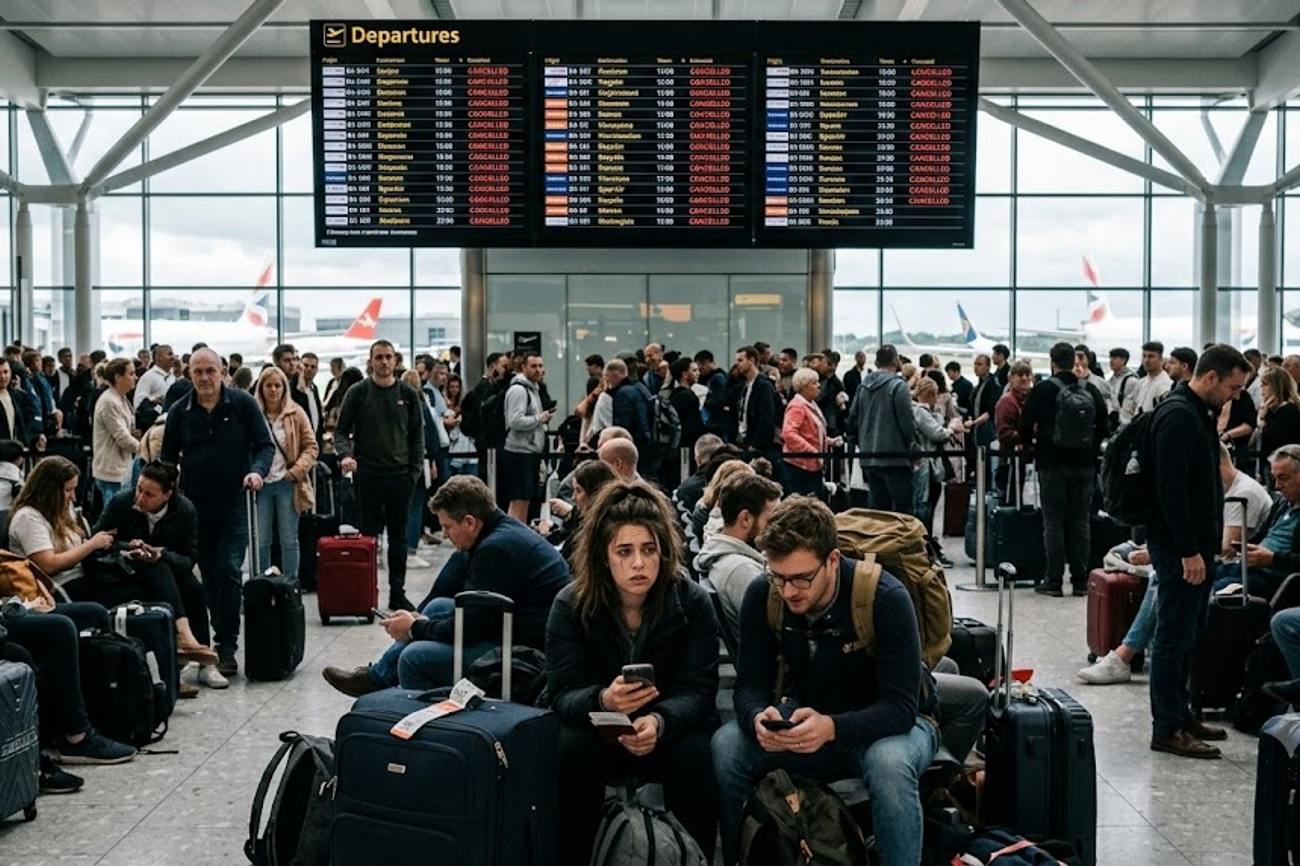
Image generated by AI
UK Aviation Crisis Triggers Financial Fallout
[London, September 10, 2026] — A systemic four-hour failure within the United Kingdom's air traffic control infrastructure has paralyzed flight schedules, resulting in a wave of cancellations and delays that have cost passengers far more than just their time. While the immediate operational crisis involved grounded aircraft and congested terminals, the secondary financial impact is now becoming clear as travelers struggle to recoup losses from independently booked travel services.
For many, the disruption has exposed a dangerous gap in consumer protection. Industry reports indicate that while flight refunds are standard, the "ripple effect" on accommodation, car rentals, and pre-paid activities is leaving some holidaymakers with bills totaling over £1,000 with no clear path to reimbursement.
The High Cost of Independent Itineraries
The financial vulnerability of the modern "DIY" traveler was highlighted by a couple whose trip to Slovenia was scrapped due to the ATC failure. Although the airline provided a refund for the flight and the associated vehicle hire, the couple faced a loss of approximately £1,300. This deficit stemmed from separately booked hotel stays and local activities that were subject to strict, non-refundable cancellation policies.
This scenario underscores a critical distinction in travel law: the difference between an airline's statutory obligations and the private contractual terms of third-party vendors. When travelers bypass package deals to save money upfront, they effectively assume the financial risk of any systemic failure. If a flight is cancelled shortly before departure, hotel providers and tour operators are often legally entitled to retain the full payment, regardless of the reason for the traveler's absence.
Comparing Recovery Options for Travel Expenses
The ability to recover funds depends entirely on how the trip was structured. Those who bundled their services face a different reality than those who booked a la carte.
| Travel Expense | Potential Outcome After Flight Cancellation |
|---|---|
| Cancelled flight | Refund or alternative transport may be available |
| Separately booked hotel | Depends on the property’s cancellation terms |
| Excursions | Depends on the provider’s refund policy |
| Car hire booked through airline | May be refunded under relevant arrangements |
| Package holiday | Broader protection can apply |
| Meals during qualifying disruption | Reasonable expenses may potentially be recoverable |
| Overnight accommodation | May be covered where the airline has a duty of care |
Package Holidays vs. Independent Bookings
The recent chaos has reignited the debate over the value of package holidays. Under package regulations, the organizer is typically responsible for the entire itinerary. If a flight—a core component of the package—is cancelled, the provider often has a broader mandate to ensure the traveler is compensated or the entire trip is refunded.
Conversely, independent travelers enter into multiple, isolated contracts. A failure in the aviation sector does not legally compel a hotel in a foreign country to waive its cancellation fee. From a logistical standpoint, this means the "savings" found by booking independently can be wiped out instantly by a single point of failure in the transport chain.
The "Extraordinary Circumstances" Compensation Gap
A common misconception among stranded passengers is that any cancellation entitles them to cash compensation. However, aviation regulations distinguish between airline-led errors and "extraordinary circumstances."
Air traffic control failures are generally classified as events outside the airline's reasonable control. Consequently, while airlines must still provide refunds or rerouting and fulfill their "duty of care," they are often exempt from paying additional financial compensation. This creates a frustrating paradox for the passenger: they are entitled to the cost of the ticket back, but they cannot claim extra damages to cover the £1,300 lost on a hotel or a missed cruise.
Duty of Care and Airport Survival
During the height of the ATC failure, the surge in demand for local accommodation led to a crisis at UK airports. With hotels reaching full capacity, many passengers were forced to spend extended periods in terminals.
Under passenger rights rules, airlines are required to provide "care and assistance," which includes reasonable meals, refreshments, and hotel accommodation if an overnight stay is mandatory. However, the effectiveness of this support varied. Industry observers note that passengers who paid for their own food and hotels during the disruption must maintain meticulous records. Reimbursement is typically limited to "reasonable" costs; luxury hotel upgrades or expensive dining are rarely covered by airlines.
The Limitations of Travel Insurance
Even those with comprehensive travel insurance found themselves in a gray area. Not all policies cover air traffic control failures, and many have specific exclusions regarding the cause of the disruption or the timing of the claim.
Insurance providers often require proof that the event was unforeseen and that the traveler attempted to mitigate losses. Furthermore, those relying on credit card travel insurance may find the coverage is significantly more limited than a standalone policy. Experts advise that passengers should prioritize reading the "Exclusions" section of their policy rather than relying on general marketing claims of "full coverage."
Why This Matters: The Reality for the Modern Traveler
For the traveler, this incident serves as a stark warning that the "cheapest" way to book a trip is not always the most economical. The shift toward independent booking—driven by apps and comparison sites—has stripped away the safety net provided by traditional travel agents and package operators.
From a legal standpoint, the burden of proof and the burden of recovery now sit squarely on the consumer. When a systemic failure occurs, the traveler is no longer dealing with one company, but a fragmented web of global suppliers. To protect themselves, travelers must now treat travel insurance not as an optional add-on, but as a mandatory risk-management tool, and carefully vet the "force majeure" clauses in hotel contracts.
Related Travel Guides
Disclaimer
This article is for informational and educational purposes only. It does not constitute legal, financial, or professional advice. While we strive to provide accurate and up-to-date information, travel policies, regulations, and conditions change rapidly. Always verify information with official sources before making travel decisions. Nomad Lawyer makes no representations about the accuracy, reliability, completeness, or suitability of the information provided. Readers should consult qualified professionals for advice specific to their circumstances. The views expressed in this article are those of the author and do not necessarily reflect the views of Nomad Lawyer.
Raushan Kumar
Founder & Lead Developer
Full-stack developer with 11+ years of experience and a passionate traveller. Raushan built Nomad Lawyer from the ground up with a vision to create the best travel and law experience on the web.
Learn more about our team →