
UAE and More Middle Eastern Countries Transform Gulf Travel with Unified Visas and Digital Border Security

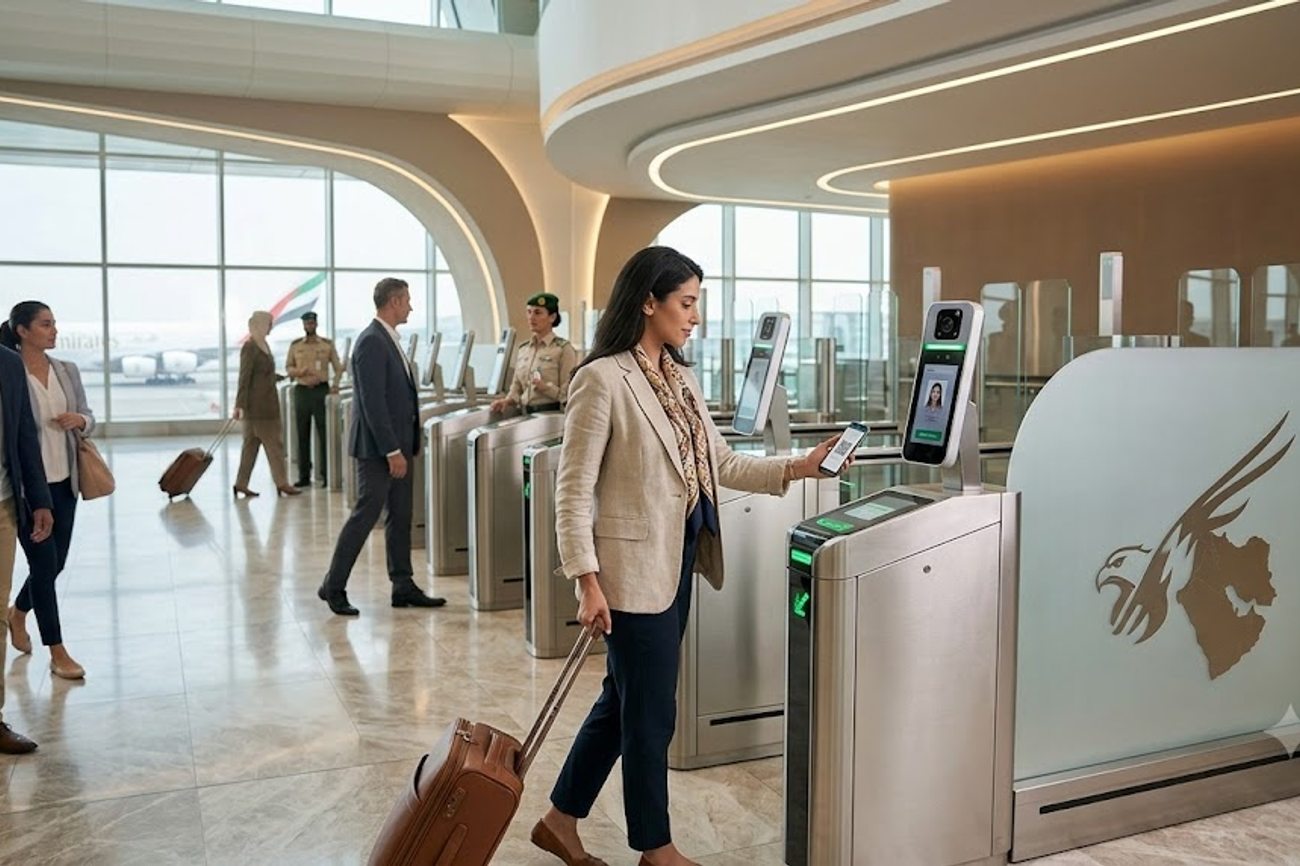
Image generated by AI
Travel across the Arabian Peninsula is being reshaped by a transformative border architecture. While manual screening and administrative hurdles are escalated by Western gateways, a sophisticated dual-track immigration strategy is being executed by Gulf nations. A historic leap towards borderless regional connectivity, mirroring the European Schengen model, is represented by the imminent rollout of the GCC Unified Tourist Visa. Simultaneously, national security is fortified through the deployment of automated biometric surveillance, unified law enforcement databases, and uncompromising visa compliance mandates by regional authorities. An unprecedented global benchmark is established by this strategic synthesis of frictionless visitor access and rigorous digital vetting, positioning the Middle East as an integrated, resilient, and highly dynamic powerhouse.
The Geopolitical and Economic Impetus for Gulf Border Reform
Across the member states of the Gulf Cooperation Council (GCC)—comprising the United Arab Emirates, the Kingdom of Saudi Arabia, the State of Qatar, the Sultanate of Oman, the State of Kuwait, and the Kingdom of Bahrain—national economic master plans are being converged on non-oil economic diversification. Tourism, aviation, and cross-border commerce have been identified as critical economic engines by national visions, notably Saudi Vision 2030, UAE Tourism Strategy 2031, and Kuwait Vision 2035. However, the dismantling of decades of fragmented immigration protocols that historically treated each Gulf state as an isolated destination is required for the realization of these national ambitions.
A crucial juncture for global and regional tourism has been reached as the drive toward borderless travel arrives. A modest year-on-year expansion in international tourist arrivals during the first half of 2026 was reported by the United Nations Tourism World Tourism Barometer, with approximately 690 million arrivals being reached by global travel. While steady expansion was recorded by regions such as Africa and Europe, a drop in international arrivals across the broader Middle East was observed during the same six-month window, being severely impacted by regional geopolitical conflicts and commercial flight reroutings. The full-year 2026 global growth forecast was subsequently revised downward by UN Tourism.
In response to these macroeconomic headwinds and air connectivity disruptions, it was recognized by Gulf policymakers that the insulation of their tourism economies requires procedural barriers to be reduced for international visitors. By enabling seamless cross-border travel between regional hubs, individual market volatility can be mitigated, average visitor lengths of stay can be maximized, and tourist expenditure can be dramatically increased by the GCC states.
Yet, leisure mobility cannot be liberalised in a security vacuum. Operations are conducted by Gulf governments under the imperative of preserving domestic stability, safeguarding civic order, and managing demographic balances. Consequently, border security is not dismantled by the regional strategy; rather, it is elevated into the digital and automated realm. High-speed automated border control is balanced with comprehensive, background digital vetting within the resulting framework, fundamentally reshaping how sovereign frontiers in the Middle East are interacted with by international travellers.
The GCC Unified Tourist Visa: Architecture and Operational Mechanics
The flagship initiative within this regional transformation is represented by the GCC Unified Tourist Visa, widely dubbed the “GCC Grand Tours Visa”. Having been formally approved by GCC interior ministers under the leadership of GCC Secretary General Jasem Al Budaiwi, the initiative was developed to function analogously to Europe’s Schengen Area, granting single-permit access to all six member states to eligible international tourists.
The UAE has introduced a unified visa system, making it easier for travelers to explore the region. According to the General Directorate for Residency Affairs, this new system allows for a more streamlined process, reducing wait times and increasing efficiency. This development is expected to boost tourism in the UAE and surrounding countries.
Live cross-border passenger queries were tested before scaling to Saudi Arabia, Qatar, Oman, and Kuwait through bilateral trial initiatives involving the UAE and Bahrain during the phased operational rollout. Four operational pillars underpin the institutional architecture of this unified tourist visa: centralised digital intake, standardized validity tiers, harmonised financial solvency baselines, and real-time backend inter-ministerial screening.
Digital Application Channels and Validity Tiers
The unified system is accessed by travellers through a single centralized online visa portal, eliminating the administrative friction of preparing six distinct national applications. A selection between single-country entry or a multi-state GCC Grand Tour is made by applicants.
Standardized validity tiers are established by the regulatory framework:
Short-Stay Tier: Valid for 30 days, tailored for short-haul business travel, regional stopovers, and major events. Extended Multi-Destination Tier: Valid for up to 90 days, designed for inter-state regional exploration, heritage circuits, and seasonal tourism.
Passenger logistics are also being revamped, with the implementation of digital border security measures. The Dubai Airports website provides information on the new biometric technology being used to enhance security and speed up the travel process. This technology is expected to reduce wait times and make travel more convenient for passengers.
Verified digital passport scans, biometric photographs, proof of regional health and travel insurance coverage, verified return or onward travel tickets, and proof of accommodation bookings across intended stops must be submitted by applicants.
Harmonised Financial Proof and Fee Standardisation
To prevent exploitation of the tourist visa channel for illicit employment or undocumented settlement, common baseline requirements for financial solvency were established by GCC interior ministries. Adequate financial means pegged to an operational standard per day of planned stay across the Gulf must be proven by applicants. A single, consolidated electronic fee payment is required by the application, settling visa administrative costs, processing charges, and integrated health insurance coverage across all member territories through secure digital banking gateways.
Inter-Ministerial Database Integration and GCCPOL
Backend data synchronisation is required for the operational viability of the GCC Unified Tourist Visa. Respective national immigration databases, civil registries, and border control management systems have been interconnected by the six member states through the Gulf Cooperation Council Police (GCCPOL) infrastructure. Headquartered in Abu Dhabi, the central node for regional criminal intelligence and transnational security cooperation is provided by GCCPOL.
When an application is filed on the unified portal by a prospective traveller, real-time cross-checks against active travel bans, deportation orders, and national security watchlists across all six GCC interior ministries are instantly executed by automated Application Programming Interfaces (APIs). The unified criminal data-exchange registry administered by GCCPOL is queried by the system while civil status and biometric registries that detect identity fraud, biometric alterations, and previously documented immigration breaches are simultaneously referenced.
The introduction of unified visas and digital border security is expected to have a significant impact on tourism in the region. The Saudi Tourism Authority website offers insights into the various tourist attractions and experiences available in Saudi Arabia, from historic sites to natural wonders. As the region continues to develop its tourism infrastructure, it is likely that the introduction of unified visas and digital border security will attract even more visitors to the area.
It is ensured by this inter-ministerial automation that security clearances, which historically required weeks of diplomatic back-and-forth, are resolved computationally within minutes. Swift digital entry approvals are received by legitimate travellers, while individuals flagged for security infractions or legal violations in any single member state are automatically intercepted prior to boarding.
Operational Parameter Single-State National E-Visa (Legacy) GCC Unified Tourist Visa (“GCC Grand Tours”) Geographic Scope Single sovereign territory All six GCC nations (UAE, KSA, Qatar, Bahrain, Kuwait, Oman) Application Touchpoint Multiple, disparate national ministry portals Single consolidated GCC digital portal Validity Duration Nation-dependent (typically 14 to 30 days) Structured 30-day and 90-day validity tiers Security Vetting Engine Isolated nat
FAQ: UAE and More Middle Eastern Countries Travel 2026
What is the unified visa? A single visa for multiple Gulf countries.
How does digital border security work? Biometric data and online checks for faster entry.
Which countries are participating? UAE, Saudi Arabia, Bahrain, and others in the Gulf.
When will the system be implemented? Phased rollout starting in mid-2026.
Related Travel Guides
This article is for informational purposes. Flight routes, passenger regulations, visa rules, and transit advisories are subject to change by airlines and aviation authorities. Readers are advised to verify schedules and travel documentation with relevant carriers and border agencies before departure.
Related Stories

European Mass Protests Disrupt Travel Across France, Italy, Belgium, and Turkey in 2026

Israel Tourism Recovery 2026: North American Flight Restorations and New ETA-IL Entry Rules