
Turkey Issues Travel Alert After NATO Downs Iran Missile
Turkey heightens security warnings for travelers following NATO's interception of an Iranian ballistic missile over its airspace. Popular destinations like Istanbul, Antalya, Bodrum, and Izmir face elevated risks amid regional tensions from the Iran war. Here's what visitors must know as of March 18, 2026.

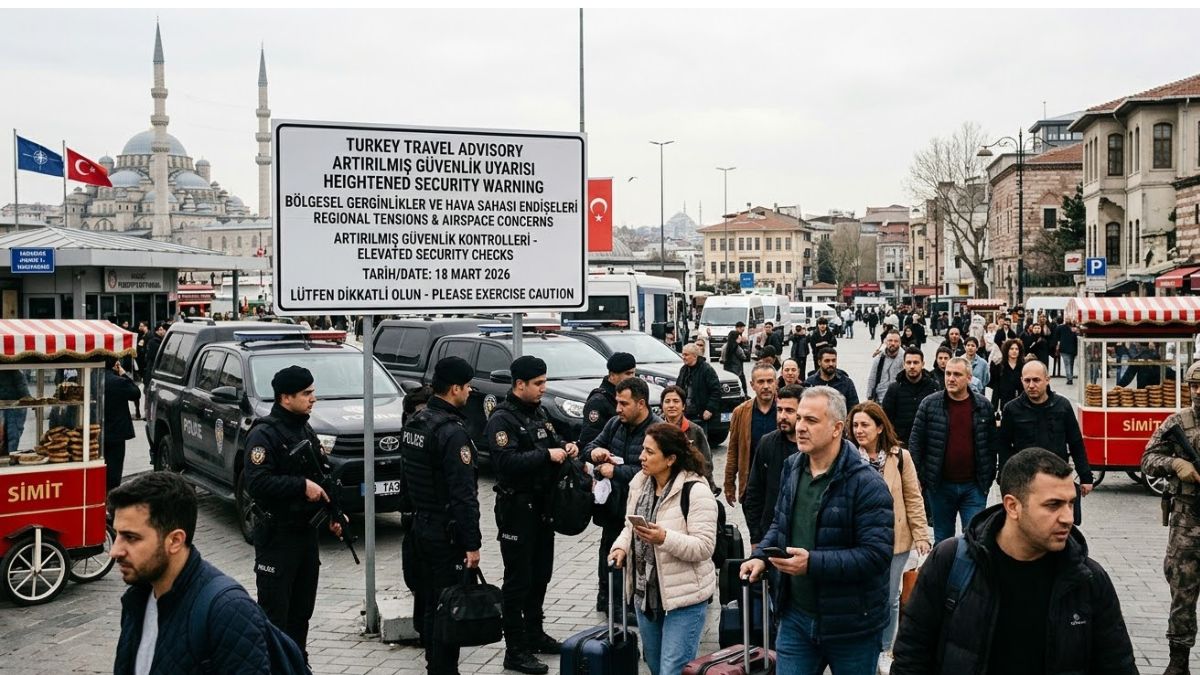
Image generated by AI
Quick Summary
- Turkey Security Alert: NATO intercepted an Iranian ballistic missile over Gaziantep on March 9, 2026, with debris falling in empty fields—no casualties reported.
- Affected Areas: Heightened risks in Istanbul, Antalya, Bodrum, Izmir, Gaziantep, Hatay, and near Incirlik Air Base.
- Traveler Impact: Check Turkish Foreign Ministry advisories; US suspended Adana consulate operations.
- What's Next: Turkey deploys F-16s and new defense directorates; monitor for further Iran war escalations.
Turkey has issued urgent security warnings for travelers after NATO defenses shot down an Iranian ballistic missile that entered its airspace. The interception occurred on March 9, 2026, marking the second such event since U.S. and Israeli strikes on Iran began on February 28. Debris landed in empty fields in Gaziantep province, southern Turkey, with no reported damage or injuries.
The Turkish Defense Ministry confirmed NATO units in the eastern Mediterranean downed the missile. Turkey stressed it prioritizes regional stability but will respond decisively to threats against its territory or airspace. Travelers to popular spots like Istanbul, Antalya, Bodrum, and Izmir should heed these alerts amid ongoing tensions.
Missile Interceptions in Turkey
NATO and Turkish forces have intercepted multiple Iranian missiles over Turkish airspace during the Iran war. The first occurred on March 4, 2026, when a ballistic missile bound for Turkey was downed near Dörtyol in Hatay province. Officials noted it launched from Iran, passing through Iraq and Syria before interception by a U.S. Navy Arleigh Burke-class destroyer using an RIM-161 Standard Missile 3, with Spanish MIM-104 Patriot support.
The latest event on March 9 targeted Gaziantep, a city of two million residents. Security services cleared the debris swiftly, confirming no casualties. A third missile fell to NATO defenses near Incirlik Air Base on March 13.
Turkey summoned the Iranian ambassador after the first incident, with Iran denying involvement. The Defense Ministry reiterated its firm stance post-second interception.
Turkey's Defense Response
In reaction, Turkey established "Directorates of Emergency Situations and Defense Planning" via presidential decree on March 7, 2026. These offices, under cabinet ministries except National Defense, handle civil defense and war preparedness, accelerated by missile threats.
Turkey deployed six F-16 Fighting Falcon jets to the Turkish Republic of Northern Cyprus following the attacks. This came after drones targeted British bases in Akrotiri and Dhekelia, prompting Greek F-16 positioning on Cyprus.
NATO added a MIM-104 Patriot battery in Malatya, while Turkey implemented national-level air defense upgrades. The U.S. suspended its Adana consulate near Incirlik Air Base, evacuating staff and families, though Ankara and Istanbul operations continue uninterrupted.
Diplomatic Tensions
Foreign Minister Hakan Fidan deemed Iran's airspace violations "unacceptable" in talks with Iran's Abbas Araghchi. President Erdogan warned Iran on March 10 to cease "wrong and provocative steps" after the second interception.
Despite historical frictions, Fidan earlier called Iranian actions legitimate self-defense amid the war. Turkey, NATO's sole Middle Eastern member since 1952, hosts missile defense systems installed since 2011, once sparking Iran diplomatic crises.
Key Facts at a Glance
| Detail | Data |
|---|---|
| First Interception | March 4, 2026, Dörtyol, Hatay province |
| Second Interception | March 9, 2026, Gaziantep province (empty fields) |
| Third Interception | March 13, 2026, near Incirlik Air Base |
| Interceptors | NATO (U.S. RIM-161 SM-3, Spanish Patriot), Turkish/NATO defenses |
| Casualties/Damage | None reported across all events |
| New Turkish Measures | F-16 squadron in Northern Cyprus; Emergency Directorates (March 7) |
| U.S. Actions | Adana consulate suspended |
| Popular Destinations | Istanbul, Antalya, Bodrum, Izmir[Reference] |
What This Means for Travelers
Visitors to Turkey face elevated security risks, especially in southern and eastern regions like Gaziantep and Hatay. Major tourist hubs—Istanbul, Antalya, Bodrum, Izmir—remain operational but warrant caution[Reference].
Air travel continues, but check FlightAware for disruptions near Incirlik or southern airports. Regional instability from the Iran war could lead to sudden airspace closures or enhanced screenings.
The U.S. State Department and equivalents urge reconsidering non-essential travel. Diplomatic missions in Ankara and Istanbul function normally.
Challenges and Risks
Missile threats persist amid the Iran war, with potential for escalation. Turkey's deployments signal readiness, but debris risks and military movements could affect roads near Gaziantep or Hatay.
Tourism may see dips in southern areas, though western coasts like Antalya and Bodrum report no direct impacts yet. Travelers should monitor FAA notices for flight restrictions.
Traveler Action Checklist
- Check your flight status via airline app or FlightAware before heading to the airport.
- Contact your airline directly to rebook — activate disruption waivers proactively via app.
- Know your rights — US DOT mandates full cash refunds on cancelled flights, not just vouchers; see US DOT Aviation Consumer Protection.
- Keep all receipts for meals, hotels, or alternative transport — may be reimbursable.
- Consider alternative airports — e.g., switch to Athens (ATH) or Cyprus (LCA) if southern Turkey routes affected.
Frequently Asked Questions
Is it safe to travel to Turkey after the NATO missile interceptions?
Turkey warns of significant security risks following three Iranian missile interceptions in March 2026, including over Gaziantep on March 9. No casualties occurred, but elevated alerts apply to Istanbul, Antalya, Bodrum, Izmir, and southern areas. Reassess plans via official advisories[Reference].
Which parts of Turkey are most affected by the security alerts?
Gaziantep, Hatay (Dörtyol), and Incirlik Air Base saw direct interceptions. Tourist spots like Antalya, Bodrum, Izmir, and Istanbul face general warnings due to regional Iran war tensions. Western areas remain lower risk[Reference].
What are traveler rights if flights to Turkey are disrupted?
Under US DOT rules, passengers get full refunds for cancellations, not just vouchers. EU travelers claim under EC 261/2004. Keep receipts for expenses.
Will there be more missile threats or travel restrictions in Turkey?
Turkey deployed F-16s and new defense units after March events; NATO added Patriots. Erdogan warned Iran—monitor for escalations. No new dates set, but check IATA for updates.
Related Travel Guides
Safe Alternatives to Turkey Amid Regional Tensions Istanbul Travel Tips for Uncertain Times Antalya and Bodrum: What Changed in 2026
Disclaimer
This article is for informational and educational purposes only. It does not constitute legal, financial, or professional advice. While we strive to provide accurate and up-to-date information, travel policies, regulations, and conditions change rapidly. Always verify information with official sources before making travel decisions. Nomad Lawyer makes no representations about the accuracy, reliability, completeness, or suitability of the information provided. Readers should consult qualified professionals for advice specific to their circumstances. The views expressed in this article are those of the author and do not necessarily reflect the views of Nomad Lawyer.
Raushan Kumar
Founder & Lead Developer
Full-stack developer with 11+ years of experience and a passionate traveller. Raushan built Nomad Lawyer from the ground up with a vision to create the best travel and law experience on the web.
Learn more about our team →