
Turkey Blocks LGBT-Themed Cruise Ship in Mediterranean, Forcing Emergency Route Overhaul and Sparking Global Tourism Regulation Crisis
Turkish authorities deny port entry to Virgin Voyages' Scarlet Lady, triggering Mediterranean cruise rerouting and intensifying debate over destination sovereignty versus global tourism accessibility.

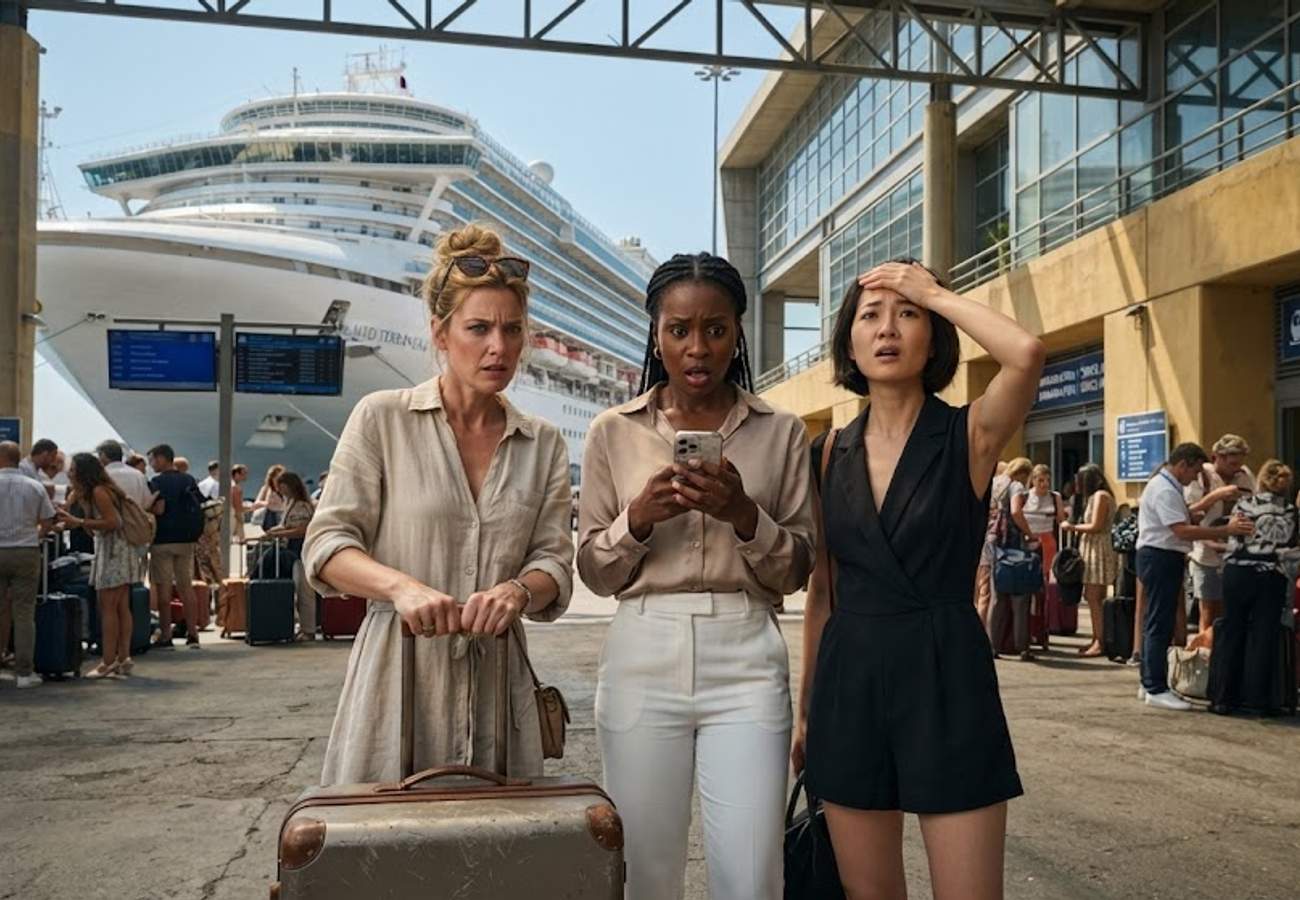
Image generated by AI
When Port Authority Says No: How One Cruise Industry Decision Exposed a Massive Global Tourism Vulnerability
A luxury Mediterranean cruise has been forced into emergency rerouting after Turkish authorities abruptly denied docking permissions to an LGBT-themed voyage, exposing a critical flaw in how international cruise operators manage geopolitical risk across multi-country itineraries.
The decision, communicated through official port agency channels, effectively blocked Virgin Voyages' Scarlet Lady, chartered by Atlantis Events, from accessing planned Turkish stops including Istanbul and Kuşadası. The stated reason: the vessel's charter profile conflicted with domestic "moral values" and public order standards.
What unfolded next reveals how fragile modern cruise tourism logistics actually are.
The Abrupt Denial That Changed Everything
The cruise was meticulously planned. Months of advance bookings. Full marketing campaigns. A complete Athens-to-Venice corridor mapped across Greece, Turkey, Croatia, and Italy. Then came the port refusal.
Turkish provincial authorities invoked regulatory authority over their territorial waters—a move entirely within their sovereign rights, but one that caught operators off-guard despite being commercially booked and ticketed.
Reddit: "This is why I book with cancellation insurance now. One government decision and your entire trip gets rewritten." — r/cruise
The denial wasn't a technical issue. It was a policy statement. Port agencies, acting as intermediaries between cruise companies and maritime authorities, communicated that Turkish destinations were off-limits for this specific voyage.
The Emergency Reroute: Contingency Planning Under Pressure
Cruise organisers activated backup protocols immediately. Turkish ports were struck from the itinerary. Alternative Mediterranean stops in Egypt and Greece were substituted, allowing the voyage to continue without legal interruption.
But here's the uncomfortable truth: passengers didn't get a choice. They booked an itinerary that no longer exists.
Shore excursions changed. Cultural programming shifted. Local tourism partnerships collapsed. Revenue that Turkish port cities expected simply evaporated. The cruise continued, but the experience fundamentally altered.
This operational vulnerability highlights a critical industry blind spot: even after full commercial confirmation, itineraries remain conditional on final state-level clearance.
Why This Matters Beyond One Cruise
The cruise industry depends on multi-jurisdictional approvals spanning entire regions. Each sovereign state maintains distinct regulatory frameworks governing passenger entry and port access. While cruise tourism is positioned as neutral leisure travel, ports remain subject to unilateral national discretion.
For operators, this introduces operational uncertainty at scale:
- Financial risk absorption from last-minute cancellations or reroutes
- Rapid contingency planning under commercial and reputational pressure
- Passenger communication management with limited advance notice
- Regional partner disruption when destinations lose scheduled revenue
Turkey's decision, grounded in its interpretation of public morality standards, demonstrates how geopolitical and cultural policy alignment directly influences tourism access. This isn't unique to Turkey—it's a structural risk across the entire cruise sector.
The Passenger Experience Collapse
Travellers booked specific destinations. They chose excursions in Istanbul. They planned museum visits in Turkish coastal towns. They anticipated Mediterranean diversity across four countries.
Instead, they got a revised itinerary. Continuity of service? Yes. The experience they paid for? No.
Shore excursion logistics suffered. Port-based revenue distribution shifted. Passenger expectation management became a damage control exercise. The cruise maintained its "Mediterranean identity," operators claimed, but the identity had fundamentally changed.
This tension between what passengers book and what they actually receive reveals a deeper industry problem: cruise contracts contain fine print allowing operators to modify itineraries unilaterally, but passengers have limited recourse.
The Bigger Picture: Destination Sovereignty Meets Global Mobility
This incident has ignited debate within the global travel industry over how destination countries regulate tourism flows based on cultural and social policy frameworks.
Turkey's regulatory interpretation reflects its domestic approach to public morality and social cohesion standards. These frameworks extend across public life—including large-scale group tourism operations.
However, international cruise passengers operate within different expectations. Travellers anticipate unrestricted access based on commercial booking agreements, not group identity classifications or cultural compatibility assessments.
This creates a structural divide: destination sovereignty versus global tourism liberalisation trends. One assumes national governments should control who enters their ports. The other assumes international commerce supersedes local regulation.
International maritime law technically supports state sovereignty in port access decisions, but global tourism frameworks increasingly emphasize non-discriminatory access. These frameworks conflict.
Mediterranean Routes Reimagined for Geopolitical Volatility
The rerouting signals a broader operational shift: itinerary flexibility is now a core requirement rather than a contingency option.
Mediterranean cruise operators are actively factoring in:
- Political and regulatory volatility
- Port access unpredictability
- Regional policy divergence
- Alternative destination readiness
Egypt and Greek island destinations have emerged as immediate substitutes, reinforcing their strategic importance in regional cruise networks. As cruise tourism demand continues expanding globally, operators expect further route diversification to reduce dependence on single jurisdictions.
This reflects a hard lesson: the cruise industry can no longer assume predictable multi-country access. Political risk assessment is now embedded in route planning.
What This Means for Future Cruise Travellers
The blocking of a planned Turkish cruise stop demonstrates a fundamental reality: modern cruise travel is no longer purely logistical—it is geopolitical.
Operators must adjust routes. Passengers must adapt expectations. The Mediterranean cruise sector is entering a phase where flexibility, compliance awareness, and destination diversification define operational resilience.
For travellers booking cruises in 2026 and beyond, this means asking harder questions: Which destinations might deny port entry? What's my actual recourse if itineraries change? Should I book refundable fares given regulatory unpredictability?
The cruise industry will absorb this shock and adapt. But passengers are the ones living with the consequences of geopolitical decisions made far beyond the booking confirmation email.
The only certainty in cruise tourism is now uncertainty itself.
Related Travel Guides
Disclaimer
This article is for informational and educational purposes only. It does not constitute legal, financial, or professional advice. While we strive to provide accurate and up-to-date information, travel policies, regulations, and conditions change rapidly. Always verify information with official sources before making travel decisions. Nomad Lawyer makes no representations about the accuracy, reliability, completeness, or suitability of the information provided. Readers should consult qualified professionals for advice specific to their circumstances. The views expressed in this article are those of the author and do not necessarily reflect the views of Nomad Lawyer.
Raushan Kumar
Founder & Lead Developer
Full-stack developer with 11+ years of experience and a passionate traveller. Raushan built Nomad Lawyer from the ground up with a vision to create the best travel and law experience on the web.
Learn more about our team →