
US Travelers Face Massive Airport Security Shake-Up as TSA Gold+ Program Triggers New Screening Rules and Privatization Debate to Prevent Travel Chaos and Airport Disruptions: New Aviation Updates
The Transportation Security Administration introduces TSA Gold+ to modernize US airport security checkpoints and reduce funding-related travel disruptions.

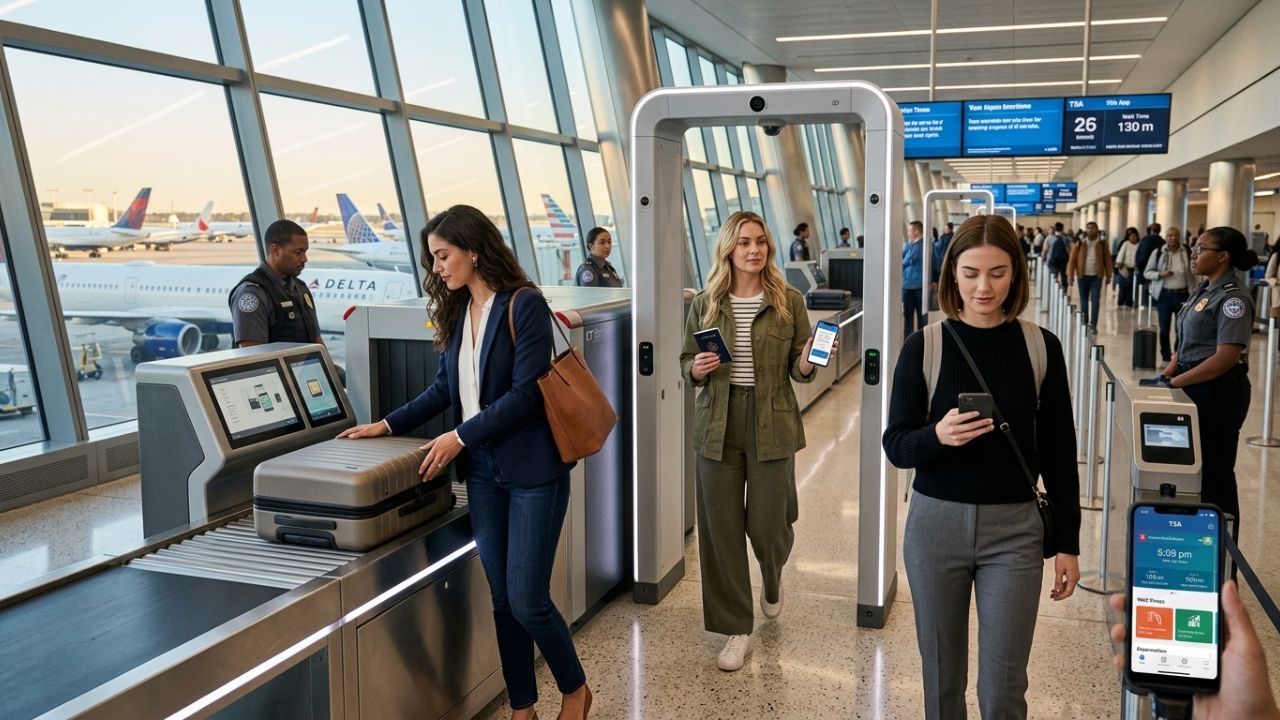
Image generated by AI
In a dramatic policy shift that is set to redefine the passenger experience at airports across the United States, federal authorities have announced a major modernization of checkpoint screening systems. The Transportation Security Administration (TSA) has officially introduced TSA Gold+, a next-generation security program designed to upgrade passenger screening technology and reduce terminal congestion. This latest airline news update reports that the new hybrid model—introduced to help travelers bypass standard travel chaos, checkpoint delays, and localized airport disruptions—has triggered a major debate regarding airport security privatization, labor standards, and federal passenger safety.
Subheading: Transportation Security Administration's Next-Generation Screening Partnership Program Aims to Streamline Checkpoints, Absorb Infrastructure Costs, and Mitigate Federal Budget Crises
Aviation analysts note that federal budget disputes, staffing shortages, and high passenger volumes frequently lead to long security lines and localized airport disruptions at major travel hubs. By expanding private-sector participation under federal oversight, the TSA aims to modernize security infrastructure and reduce the risk of checkpoint delays. The program was officially outlined to personnel through a memorandum on May 14, 2026, describing TSA Gold+ as a key step in preparing the aviation sector for future passenger growth and emerging security threats, as detailed in the latest regional aviation updates.
Under this new framework, participating airports can establish customized security partnerships tailored to their specific terminal layouts, passenger traffic patterns, and operational requirements.
Section-Wise Breakdown: Strategic Security & Policy Narratives
The introduction of TSA Gold+ highlights several important developments in the modernization and funding of airport security:
The TSA Gold+ Public-Private Framework
The new initiative builds upon and expands existing airport security programs:
- Screening Partnership Program (SPP): TSA Gold+ acts as an extension of the SPP, where private contractors conduct passenger screening under federal oversight, currently active at 20 U.S. airports.
- Hybrid Operational Model: The system maintains federal TSA standards and oversight while private operators manage screening logistics and terminal staffing.
- Customized Checkpoint Layouts: Allows participating airports to design flexible security checkpoints that align with local facility requirements and passenger flows.
Fiscal Instability and Checkpoint Crisis Impacts
The timing of the program's rollout follows significant financial challenges that recently impacted the U.S. aviation system:
- Shutdown Financial Impact: A partial government shutdown earlier in 2026 left approximately 61,000 TSA personnel working without pay, missing nearly one billion dollars in collective wages.
- Checkpoint Instability: The resulting staffing shortages led to long passenger lines and growing concerns over checkpoint security.
- Emergency Funding Intervention: To stabilize operations, President Donald Trump signed an emergency executive order on March 27, 2026, to maintain compensation for airport security personnel.
- Improving Resilience: TSA Gold+ is designed to protect airport checkpoints from future federal funding interruptions by leveraging private-sector operational support.
Labor Unions and the Privatization Debate
The expansion of private-sector screening has faced significant opposition from labor organizations representing airport workers:
- National Security Concerns: The Association of Federal Government Employees (AFGE), representing the TSA workforce, argues that passenger screening must remain a federal responsibility to protect national security.
- Accountability and Standards: Opponents suggest that private firms may prioritize operational cost savings over thorough security procedures and passenger safety.
- Workforce Protections: Labor unions have expressed concern regarding job security, benefits, and workplace protections for personnel transitioning to private contractors.
Passenger Experience and Checkpoint Improvements
The TSA aims to streamline checkpoint procedures and reduce passenger stress at participating airports:
- Upgraded Screening Technology: Private partners are expected to absorb checkpoint upgrade costs, helping airports install advanced screening equipment more quickly.
- Reduced Terminal Wait Times: Streamlined layouts and flexible staffing are designed to accelerate passenger processing times and prevent terminal delays.
- April 16, 2026 Testimony: During a congressional hearing, TSA Deputy Administrator Ha Nguyen McNeill indicated that expanded public-private partnerships could help insulate airport operations from future federal funding disruptions.
TSA Gold+ Program and Chronology Matrices
The rollout of TSA Gold+ represents a coordinated effort to modernize security checkpoints at participating airports across the country.
The following tables summarize the program frameworks, operational guidelines, key dates, and policy developments established for the 2026 rollout:
TSA Gold+ Program and Screening Partnership Profiles
| TSA Security Initiative | Primary Operations Framework | Active Airport Deployments | Core Infrastructure Funding Model | Strategic Policy Rationale | Operational & Labor Perspectives |
|---|---|---|---|---|---|
| TSA Gold+ (2026) | Public-Private Hybrid Partnership | Selective rollout phase | Private operators absorb all capital & upgrade costs | Prevents checkpoint disruptions during federal funding shutdowns | Promotes high efficiency; face concerns from public service unions |
| Screening Partnership (SPP) | Privatized screening under federal oversight | 20 U.S. airports | Joint federal & airport terminal agreements | Provides operational layout and staffing flexibility | Subject to strict federal standards; audited regularly |
TSA Funding Crises & Emergency Responses (2026)
| Strategic Event Chronology | Impacted Operational Metrics | Government & Administrative Responses | Strategic Policy Outcome |
|---|---|---|---|
| 2026 Partial Shutdown | 61,000 TSA personnel missed nearly $1 billion in wages | Extreme checkpoint lines, staff instability, security gaps | Accelerated structural reforms and privatization debates |
| March 27, 2026 Order | National airport checkpoint continuity | Emergency order signed by President Donald Trump | Rerouted federal funds to maintain TSA compensation |
| April 16, 2026 Hearing | TSA Deputy Administrator Ha Nguyen McNeill | Testimony regarding public-private airport screening | Highlighted SPP expansion to mitigate future funding crises |
| May 14, 2026 Memo | Internal TSA personnel communications | Outlined TSA Gold+ modernization framework | Shifted policy toward design-led, private-funded checkpoints |
Passenger Impact: Navigating Modernized Security Checkpoints
For everyday passengers, the introduction of TSA Gold+ is designed to improve the airport experience over the long term. Travelers passing through participating airports can expect modern checkpoint layouts, faster processing times, and advanced screening technology. Additionally, by utilizing private-sector operational support, these checkpoints are designed to remain fully staffed and operational during future federal funding disputes, helping passengers avoid unexpected delays, missed flights, and terminal disruptions.
Industry Analysis: Public-Private Partnerships and Airport Infrastructure
Aviation policy experts note that the success of TSA Gold+ highlights major changes in airport infrastructure management:
- Private-Sector Capital Absorption: Allowing private partners to fund checkpoint upgrades helps airports modernize their facilities without shifting costs onto local taxpayers.
- Operational Staffing Flexibility: Private security contractors can adjust staffing levels quickly to accommodate seasonal passenger spikes, reducing bottleneck risks.
- Maintaining Federal Oversight: A hybrid model that keeps TSA federal standards in place ensures that national security and passenger safety remain prioritized.
Conclusion: A New Era of Airport Security Modernization
The launch of the TSA Gold+ program represents a significant development in the management of airport security across the United States. By combining strict federal safety standards, private-sector capital investment, and flexible checkpoint staffing, the initiative aims to protect airport checkpoints from federal funding disputes and improve operational efficiency. As more airports choose to adopt these public-private partnerships, the program is poised to play a key role in shaping a modern, resilient, and passenger-friendly aviation network.
Key Takeaways
- TSA Gold+ Launched: The Transportation Security Administration introduces TSA Gold+ to modernize checkpoints and reduce passenger delays.
- Screening Partnership Extension: The program builds on the Screening Partnership Program (SPP), currently active at 20 U.S. airports.
- Shutdown Resilience: The hybrid model is designed to keep checkpoints fully operational during federal funding disputes, following a partial shutdown that affected 61,000 TSA workers.
- March 27, 2026 Order: An emergency executive order signed by President Donald Trump stabilized TSA compensation during the recent funding crisis.
- Private Infrastructure Funding: Participating private contractors will absorb the cost of installing advanced screening systems, reducing the financial burden on local airports.
Related Travel Guides
- Spirit 2.0 Campaign Defeats Travel Chaos With Insane Crowdfunded Revival Attempt Following the 2026 Airline Collapse
- Air France Boosts Paris to Budapest Flights Deploys Giant Boeing 777 Widebody Jet to Avert UEFA Champions League Travel Chaos and Major Airport Disruptions: New Airline News and Aviation Updates
- Transatlantic Transit Gridlock: JFK Airport Buckles Under 117 Global Flight Disruptions, Triggering Severe Travel Chaos Across New York and European Hubs: Airline News
Disclaimer
This article is for informational and educational purposes only. It does not constitute legal, financial, or professional advice. While we strive to provide accurate and up-to-date information, travel policies, regulations, and conditions change rapidly. Always verify information with official sources before making travel decisions. Nomad Lawyer makes no representations about the accuracy, reliability, completeness, or suitability of the information provided. Readers should consult qualified professionals for advice specific to their circumstances. The views expressed in this article are those of the author and do not necessarily reflect the views of Nomad Lawyer.
Kunal K Choudhary
Co-Founder & Contributor
A passionate traveller and tech enthusiast. Kunal contributes to the vision and growth of Nomad Lawyer, bringing fresh perspectives and driving the community forward.
Learn more about our team →