
Tropical Storm Arthur Ravages Texas and Louisiana: Houston, Galveston Face Catastrophic Flooding as Millions Brace for Impact in June 2026
Tropical Storm Arthur unleashes devastating floods across Texas and Louisiana in June 2026, threatening millions with unprecedented rainfall, road closures, and widespread travel disruptions across the Southern United States.

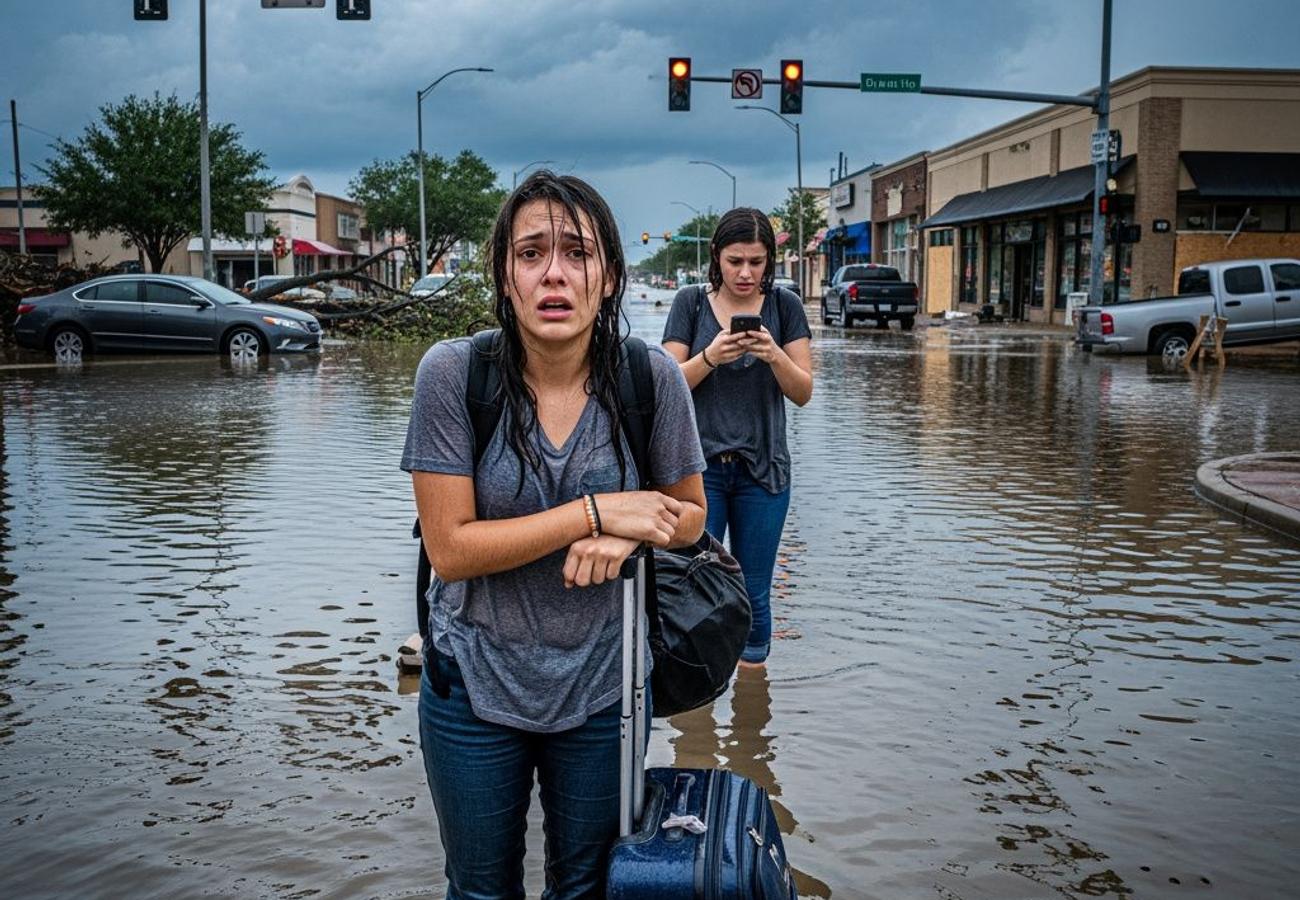
Image generated by AI
When Nature Strikes: Tropical Storm Arthur Transforms the Gulf Coast Into a Disaster Zone
Tropical Storm Arthur is no longer a distant forecast concern—it's unfolding right now across the Texas and Louisiana coastlines, and the scale is staggering. I've covered severe weather events before, but the sheer geographic reach of this system is remarkable. From Houston to Corpus Christi, from Galveston to Lafayette, millions of Americans are bracing for what meteorologists are calling a flooding catastrophe unlike anything seen in years.
The stakes couldn't be higher. This isn't just another tropical system with a scary name—it's a grinding, relentless rainfall machine that's already overwhelming drainage systems, closing highways, and forcing airport disruptions across the entire region.
The Perfect Storm: How Multiple Weather Systems Merged Into Disaster
Here's what made Arthur so dangerous: it wasn't just one weather ingredient. Instead, several atmospheric systems collided simultaneously to create an unprecedented flooding setup.
Meteorologists identified the dangerous combination:
- Moisture remnants from eastern Pacific Tropical Storm Cristina
- An African tropical wave crossing the Atlantic basin
- A stalled weather front locked over the Gulf region
- Upper-level jet stream energy amplifying rainfall potential
When these patterns align, the atmosphere transforms into a rainfall amplifier. Repeated thunderstorms can hammer the same locations for hours, turning manageable rain into catastrophic flooding. The National Weather Service has issued multiple flood watches and warnings across the region, with some areas potentially receiving unprecedented rainfall totals.
Reddit: "I'm in Houston right now and the traffic is insane. Everyone's trying to leave at once. Roads are already closing." — r/weather
Flooding, Not Winds: Why Arthur's True Threat Isn't What You'd Expect
Here's the counterintuitive reality that caught many by surprise: Arthur might only officially exist as a tropical storm for hours before weakening inland. Yet that brief classification masks the real danger.
Meteorologists identified strong wind shear as the culprit preventing Arthur from strengthening into a sustained hurricane system. Once the center moves inland into Louisiana, warm Gulf waters—the storm's fuel source—disappear. The system will rapidly weaken.
But here's the critical point: weakening doesn't mean the danger ends. Rainfall will intensify across multiple states long after Arthur loses its tropical classification. This is where the genuine catastrophe emerges.
The expected rainfall totals are staggering:
- 4-8 inches widespread across Texas to eastern Alabama
- 8-12 inches in many localized areas
- Isolated peaks approaching 20 inches in the heaviest bands
To put this in perspective, some locations could receive an entire month's worth of rain in 24-48 hours.
Houston's Nightmare: Urban Infrastructure Meets Tropical Deluge
Houston, the nation's fourth-largest city and a major travel hub, sits squarely in the crosshairs of Arthur's most dangerous rainfall corridor.
I've visited Houston multiple times, and I understand its vulnerability. The city's infrastructure—while advanced—can become overwhelmed when rainfall rates exceed 2-3 inches per hour, which is exactly what Arthur's strongest thunderstorms are producing.
What makes Houston especially vulnerable:
- Urban drainage systems designed for normal rainfall, not tropical deluges
- Major highways and underpasses prone to sudden flooding
- Proximity to the Gulf Coast, amplifying moisture access
- Ongoing sporting events, conventions, and daily commuting creating concentrated traffic
- Critical infrastructure including George Bush Intercontinental Airport and Hobby Airport operating at flood risk
Travel delays are already extending into multiple hours. Flight cancellations are increasing. Ground transportation has become hazardous. Visitors scheduled for Houston this week should expect disruptions affecting hotels, attractions, and business operations.
The Multi-State Impact Zone: From Texas Coastal Cities to Deep Louisiana
Arthur isn't confining its damage to Houston alone. The entire region is under siege:
Texas Gulf Coast Cities Facing Catastrophic Risk:
- Galveston (coastal flooding plus heavy rainfall)
- Corpus Christi (exceptional rainfall accumulation expected)
- Freeport (significant water accumulation)
- Port Arthur (tropical storm-force conditions)
- Beaumont (widespread flooding threats)
Louisiana Communities in Critical Danger:
- Lake Charles (severe rainfall and flooding)
- Lafayette (flash flood risks)
- Morgan City (tropical storm warning zone)
- New Orleans (drainage system stress)
The Sabine River, Calcasieu River, Pearl River, Tombigbee River, and Alabama River are all elevated flood risks. Rivers will continue rising for days after rainfall ends as upstream runoff gradually moves downstream.
Travel Industry Braces for Widespread Disruptions
The cascading impacts on tourism and travel are already evident across the region.
Anup Kumar Keshan, Founder and Editor-in-Chief of Travel and Tour World, noted: "The developing Arthur weather event is another reminder that resilience has become the new foundation of modern travel. Destinations, airports, hotels and tourism stakeholders across the world are becoming stronger through preparedness and technology. While weather disruptions may temporarily alter journeys, coordinated planning and timely information help protect travellers and communities."
Anticipated travel industry impacts include:
- Flight delays and cancellations at Houston's major airports
- Highway closures affecting north-south travel corridors
- Hotel disruptions due to access road closures and utility failures
- Event postponements across the region
- Reduced tourist arrivals as visitors reschedule plans
Tourism operators who rely on this region's summer travel season are implementing contingency plans. Convention centers are assessing closure protocols. Airlines have prepositioned extra crews to manage cascading delays.
Why This Isn't Just Another Tropical Storm
Here's what separates Arthur from standard tropical systems: its classification doesn't reflect its actual danger level.
Major hurricanes cause devastation through wind damage—destructive, but localized and relatively brief. Arthur operates differently. It's a rainfall machine. The water threat is often deadlier than wind because flooding spreads across massive geographic areas and can trap people rapidly.
Water-related hazards account for the majority of tropical storm fatalities. People underestimate flooding's speed and force. A vehicle can be swept away in two feet of moving water. Underpasses become death traps within minutes. Neighborhoods transform into lakes in hours.
The Federal Emergency Management Agency has activated emergency response protocols across Texas and Louisiana, pre-positioning resources and urging residents to prepare immediately.
What Happens Now: The Critical Next 72 Hours
Emergency management officials are issuing urgent guidance:
For Residents: Monitor official weather updates continuously. Avoid unnecessary travel. Prepare emergency supplies including water, food, medications, and flashlights. Identify evacuation routes now, not when flooding begins. Understand that road conditions can deteriorate rapidly—what appears passable now may become impassable within hours.
For Travellers: Contact airlines immediately to reschedule flights. Expect significant delays even for flights not directly affected—cascading delays will impact connecting flights nationwide. Hotels should confirm cancellation policies. Ground transportation will be severely limited.
For Businesses: Activate continuity plans. Assess property flood risks. Brief employees on procedures. Consider temporary closures in vulnerable areas.
The National Weather Service is updating forecasts multiple times daily as Arthur's exact track clarifies.
Tropical Storm Arthur demonstrates that nature doesn't distinguish between categories—only between preparedness and chaos.
Related Travel Guides
Disclaimer
This article is for informational and educational purposes only. It does not constitute legal, financial, or professional advice. While we strive to provide accurate and up-to-date information, travel policies, regulations, and conditions change rapidly. Always verify information with official sources before making travel decisions. Nomad Lawyer makes no representations about the accuracy, reliability, completeness, or suitability of the information provided. Readers should consult qualified professionals for advice specific to their circumstances. The views expressed in this article are those of the author and do not necessarily reflect the views of Nomad Lawyer.
Preeti Gunjan
Contributor & Community Manager
A passionate traveller and community builder. Preeti helps grow the Nomad Lawyer community, fostering engagement and bringing the reader experience to life.
Learn more about our team →