
Travelers Stranded at Harry Reid International Airport, Las Vegas, USA as 251 Flights Are Delayed and 2 Canceled Disrupting Delta, United, American Airlines, and More Across Domestic and International Routes to Los Angeles, Chicago, Toronto, Denver, and New York
Harry Reid International Airport (LAS) experienced 251 flight delays and 2 cancellations on April 11, 2026, affecting major carriers including Delta, United, American Airlines, and others. Disruptions impact routes to Los Angeles, Chicago, Toronto, Denver, and New York.

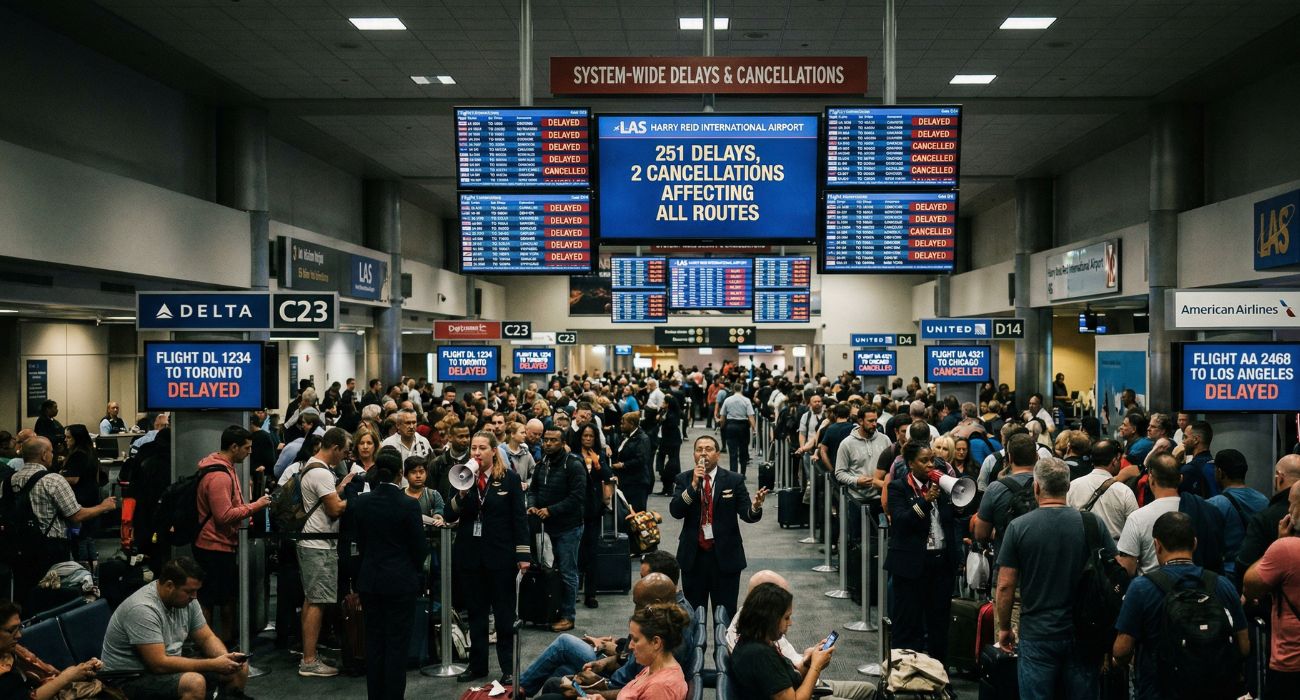
Image generated by AI
Quick Summary
- Harry Reid International Airport (LAS) recorded 251 flight delays and 2 cancellations on April 11, 2026
- Major carriers including Delta, United, American Airlines, and others were severely impacted
- Delays affected domestic routes to Los Angeles, Chicago, Denver, and Atlanta
- International flights to Toronto and other global cities also experienced disruptions
- FAA and airport management working to minimize delays during peak travel seasons
Travelers Stranded at Harry Reid International Airport as 251 Flights Delayed and 2 Canceled Disrupt Major Airline Networks
LAS VEGAS — Harry Reid International Airport, the major gateway serving Las Vegas, Nevada, USA, descended into operational crisis on April 11, 2026, recording an unusually heavy volume of flight delays and cancellations that disrupted schedules across domestic and international routes. Hundreds of passengers found themselves stranded in terminals and departure lounges as the airport logged 251 delayed departures and arrivals and 2 cancelled flights — a level of disruption rarely seen outside of major weather events or infrastructure interruptions.
The disruption affected major carriers including Delta, United, American Airlines, and others operating from Las Vegas to domestic hubs across the United States and international destinations. While only two flights were cancelled outright, the sheer number of delays made operational planning difficult for airlines and left travelers facing significant uncertainty about departure times and connection windows.
Sudden Surge in Flight Delays Shakes Travel Plans
For many passengers checking in for business meetings, vacations, or essential trips, the day started like any other. But according to real-time data from the Federal Aviation Administration and flight-tracking platforms, that routine quickly changed. The airport's ferrying of travelers was marred by extensive delays that affected a broad range of carriers and destinations.
The FAA — the U.S. government authority responsible for civil aviation oversight — provides public information on airport status that includes departure and arrival conditions, indicating airport operations can fluctuate rapidly. At times, the system recorded both arrival and departure traffic holding or taxi delays lasting up to 15 minutes or more, a clear indicator of strain on air traffic coordination.
The following table documents the disruption impact on major destination airports:
| Destination Airport | Disruption Type | Impact Rate |
|---|---|---|
| Los Angeles International (LAX) | Delays | 45% delayed |
| Chicago O'Hare (ORD) | Delays | 50% delayed |
| Toronto Pearson (YYZ) | Cancellations | 10% cancelled |
| Denver International (DEN) | Delays | 38% delayed |
| New York JFK (JFK) | Delays | 42% delayed |
Los Angeles International experienced 45 percent delays on Las Vegas-originating flights, reflecting cascading disruptions affecting West Coast connectivity. Chicago O'Hare registered 50 percent delays, while Toronto Pearson saw 10 percent cancellations on international routes. Denver International and New York JFK both experienced significant delay rates of 38 and 42 percent respectively.
Why Did So Many Flights Fall Behind Schedule?
Delays at LAS were not isolated to one airline or route. Carriers operating from Las Vegas to domestic hubs across the United States — including Los Angeles, Chicago, Denver, and Atlanta — reported deferred departures. International flights bound for Canadian and other global cities also suffered. While only two flights were cancelled outright, the sheer number of delays made operational planning difficult for airlines.
A variety of underlying pressures contribute to airport congestion, such as seasonal travel surges, staffing constraints, air traffic control workload, and fluctuating weather patterns. Though current weather at LAS remained favorable, other factors such as late arrivals from earlier legs in the network and airline operational bottlenecks compounded delays throughout the day.
Passengers Share Frustration and Uncertainty
Travelers interviewed in the terminals described long waits at gates, crowded seating areas, and an air of uncertainty about departure times. Without clear timelines, many took to airline apps, airport kiosks, and customer service counters hoping for updates.
One domestic flyer heading to the West Coast said the board at LAS showed no departure time changes for more than an hour, leaving him unsure whether his afternoon meeting could still happen. Others bound for international connections anxiously monitored screens, waiting for any sign of movement. The atmosphere, in many ways, echoed broader frustration seen at other busy U.S. airports hard hit with operational disruptions in recent months.
Government and Industry Response
The FAA's official airport status resources continue to be a primary source of information for pilots, airlines, and passengers alike. While the FAA does not publish real-time detailed delay causes per flight for public eyes, its airport status data — available publicly — conveys aggregated conditions, including any reported traffic delays affecting arrivals and departures.
Airport management, overseen by the Clark County Department of Aviation, which operates Harry Reid International Airport in Paradise, Nevada, maintains communication with airlines about flight plans and scheduling. Though not all disruptions are caused by airport infrastructure, the department focuses on passenger information systems and runway operations to keep delays to a minimum during peak travel seasons.
Impact Beyond the Airport Terminals
The ripple effect of delays extends beyond airline timetables. Local hotels, ground transportation services, and even tourism partners that depend on reliable arrival patterns feel pressure when flights stack up hours behind schedule. Las Vegas, a city famous for entertainment, conferences, and events, sees millions of visitors each year — and disruptions at its main airport can have broader economic implications.
Business travelers hoping to reach conventions, families heading out for weekend breaks, and visitors connecting onward to other U.S. cities or international destinations all shared stories of uncertainty and shifting itineraries.
How Common Are These Disruptions? A Larger U.S. Trend
While the event at LAS drew immediate attention, the airport is not alone. Across the United States, several major hubs have experienced spikes in delays and cancellations throughout the past year due to various systemic pressures, ranging from air traffic control staffing dynamics to operational backlogs. Reports cited more than 4,000 delays and hundreds of cancellations affecting airports nationwide during other peak travel days earlier in the year.
Such data underscores how aviation networks, even in normal conditions, can ripple and amplify when schedules are tight — and why accurate, real-time information is vital for travelers. Government agencies and industry partners work continuously to smooth these peaks, but occasional travel turbulence remains a fact of life for busy hubs like LAS.
Tips for Travelers Facing Delays
For those still waiting at Harry Reid International or planning future trips, aviation experts remind travelers of a few best practices to help manage disruptions:
• Monitor Airline Communications — Most carriers send push notifications with updated departure times and gate changes. • Check Airport Status Tools — The FAA and airport websites provide general status updates on delay conditions. • Arrive Early and Stay Informed — Even with online tools, having extra time allows flexibility if schedules change. • Engage with Customer Service — Gate agents and airline help desks can sometimes rebook connections or secure standby options.
Looking Ahead: Improved Coordination and Passenger Experience
Despite the short-term frustration, airport authorities and airlines remain focused on long-term improvements. Enhanced digital updates, expanded communication tools, and better flow management are among initiatives designed to give passengers more clarity when flights are late or cancelled.
In the meantime, millions who pass through Las Vegas Harry Reid International Airport each year — whether for gambling, entertainment, family travel, or business — will continue to balance optimism for smooth travel with realistic expectations about aviation's complex choreography.
Frequently Asked Questions
What caused the 251 delays and 2 cancellations at Harry Reid International Airport? Seasonal travel surges, staffing constraints, air traffic control workload, and airline operational bottlenecks contributed to the disruptions. Though weather remained favorable, late arrivals from earlier network legs compounded delays throughout the day.
Which airlines were most affected by the LAS disruptions? Delta, United, American Airlines, and other major carriers operating domestic and international routes from Las Vegas experienced significant delays. Specific impact varied by route and aircraft type.
What destinations were most impacted by the delays? Domestic routes to Los Angeles, Chicago, Denver, and Atlanta experienced the highest delay rates. International flights to Toronto and other global cities also suffered from cascading disruptions.
How can travelers stay informed about flight status changes? Monitor airline communications through apps and websites, check FAA airport status tools, and engage with customer service for rebooking options. Arriving early provides flexibility if schedules change.
When will normal operations resume at Harry Reid International Airport? Airport management expects disruption levels to normalize as staffing constraints ease and operational bottlenecks resolve. Monitor FAA and airline communications for real-time updates.
Conclusion
Harry Reid International Airport's April 11 disruptions — recording 251 delays and 2 cancellations — represent a reminder of how aviation networks can ripple and amplify when schedules are tight. While the event drew immediate attention, it reflects broader systemic pressures affecting U.S. airports throughout the year. Airport authorities and airlines remain focused on long-term improvements, including enhanced digital updates and better flow management. For travelers, the experience underscores the importance of monitoring airline communications, arriving early, and maintaining flexibility when navigating complex aviation networks.
Tags: airline delays USA, Airport Chaos, aviation news Las Vegas, FAA airport status, flight cancellations at LAS
Kunal K Choudhary
Co-Founder & Contributor
A passionate traveller and tech enthusiast. Kunal contributes to the vision and growth of Nomad Lawyer, bringing fresh perspectives and driving the community forward.
Learn more about our team →