
Travel Industry Warns Against DHS Customs Halt at Newark Hub
Travel industry leaders warn a DHS proposal to halt customs operations at Newark Airport could paralyze one of America's busiest international aviation hubs in 2026, threatening thousands of daily passengers and airline operations.

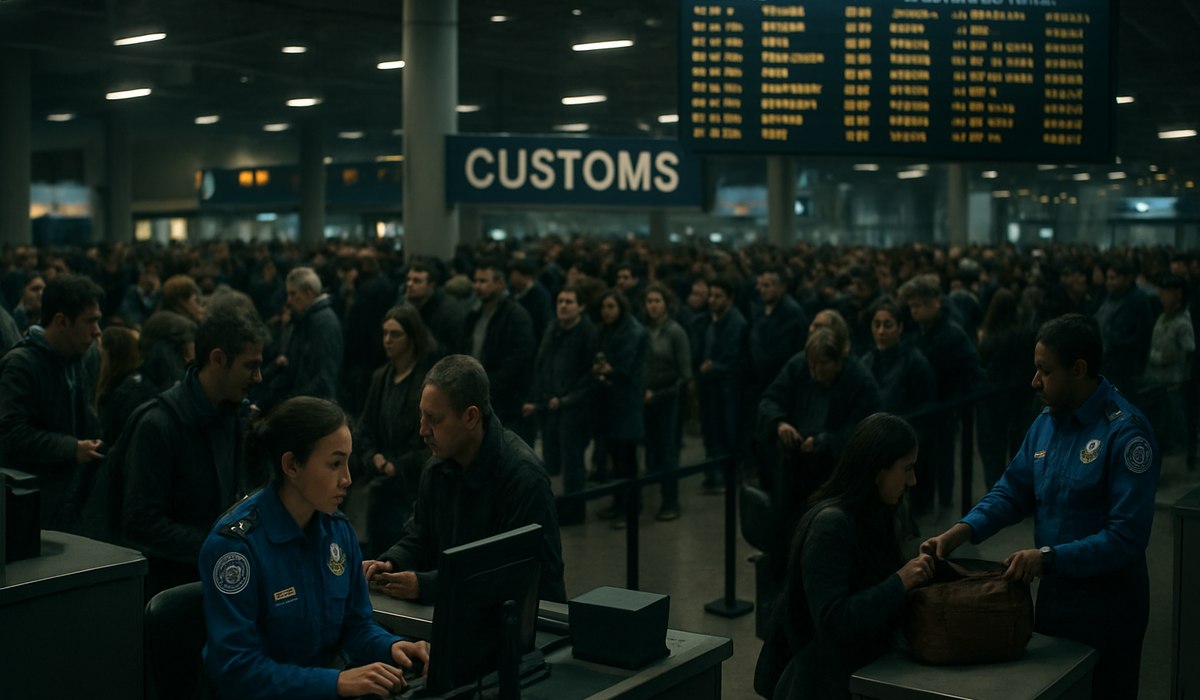
Image generated by AI
Major Aviation Hub Faces Customs Operations Crisis
Newark Liberty International Airport is bracing for operational chaos if the Department of Homeland Security moves forward with a controversial proposal to halt customs processing at sanctuary cities. As one of the nation's three busiest international gateways, handling over 140,000 passengers daily, Newark's potential loss of customs capabilities would trigger unprecedented disruption across the entire travel industry. Airlines operating transatlantic and Asia-Pacific routes rely heavily on Newark's customs infrastructure, making this DHS proposal an existential threat to airport operations and passenger connectivity.
DHS Proposal Threatens Major International Hub
The Department of Homeland Security has signaled intent to suspend customs and border protection services at airports located in municipalities designated as sanctuary cities. This policy framework directly targets Newark, which processed 21 million international passengers in 2025 and serves as a critical hub for major carriers including United Airlines, Emirates, and Korean Air. The proposal, if enacted, would effectively redirect all incoming international flights to alternative facilities, creating bottlenecks across the Eastern Seaboard.
Travel industry stakeholders argue this approach ignores the critical distinction between immigration enforcement and customs revenue collection. Newark's customs operations generate billions in economic activity annually and facilitate legitimate commerce. Halting these services wouldn't reduce undocumented immigration; it would merely shift passenger volumes to already-overcapacity facilities like JFK and Philadelphia International Airport.
You can track real-time flight impacts using FlightAware and monitor official FAA guidance through the Federal Aviation Administration website.
Logistical Nightmare for Airlines and Travelers
Airlines operating from Newark face staggering operational challenges under this scenario. United Airlines alone operates 280 daily flights from Newark, with 65% involving international routes requiring customs processing. Diverting these flights to alternative airports would require:
- Securing additional landing slots at congested facilities
- Renegotiating ground handling contracts across multiple airports
- Absorbing millions in deadheading costs for aircraft repositioning
- Managing passenger rebooking across fragmented flight networks
The ripple effects extend beyond individual carriers. Connecting passengers, particularly those traveling via Newark on feed flights from smaller regional airports, face 6-12 hour delays or costly rebooking penalties. Tourism economies dependent on Newark connectivity—including Caribbean and South American destinations—would experience immediate booking declines.
British Airways, Air France, and Lufthansa have issued formal warnings that European operations could face significant schedule reductions if Newark loses customs capability. The travel industry consensus suggests these restrictions would reduce transatlantic capacity by approximately 18-22% across the entire New York metropolitan area.
Industry Response and Concerns
Major hospitality and airline associations have mobilized opposition to the DHS proposal. The Airlines for America coalition released data showing that Newark handles 56 customs-cleared flights daily from restricted travel nations, processing high-risk passengers that actually enhance national security through proven screening protocols.
Tourism boards representing New York, New Jersey, and Connecticut have quantified potential economic losses at $2.3 billion annually. International business travelers—who generate premium fares and hotel occupancy—would face incentives to avoid Newark arrivals entirely, selecting Boston Logan or Philadelphia alternatives instead.
Airport operators emphasize that sanctuary city designation reflects municipal immigration enforcement policy, not security risk assessment. Newark Airport maintains TSA PreCheck facilities, advanced screening technology, and integrated customs infrastructure that exceeds security standards at non-sanctuary airports. Conflating municipal policy with aviation security represents a category error with severe consequences.
The U.S. Chamber of Commerce submitted formal comments opposing the proposal, highlighting that customs halt would violate international treaty obligations and invite retaliatory restrictions on American carriers at foreign airports.
What's Next for Customs Operations
The DHS proposal enters the federal rulemaking process during summer 2026, with a preliminary 90-day public comment period. Congressional members from affected states have introduced legislative language blocking implementation without specific congressional authorization and economic impact studies.
Airport advocacy groups expect litigation if the DHS proceeds unilaterally. Legal theories include constitutional takings claims, interstate commerce violations, and Administrative Procedure Act challenges for failure to conduct comprehensive environmental review.
Industry observers predict the proposal will face significant headwinds before implementation. However, the uncertainty itself creates operational planning challenges for airlines through the remainder of 2026. Carriers are already investing in backup customs capacity assessments and contingency staffing arrangements.
The U.S. Department of Transportation has signaled it will coordinate with DHS on implementation feasibility, though official guidance remains pending. Monitor updates through the DOT Aviation Consumer Protection Division.
Critical Impact Data
| Metric | Value | Impact |
|---|---|---|
| Newark Daily International Passengers | 140,000 | Potential diversion to already-saturated airports |
| Newark Annual International Passengers | 21 million | Processing backlog at alternative facilities |
| United Airlines Daily Flights from Newark | 280 | 65% serve international routes requiring customs |
| Daily Customs-Cleared Restricted-Nation Flights | 56 | Enhanced screening capacity elimination |
| Estimated Annual Economic Loss (NY/NJ/CT) | $2.3 billion | Tourism and business travel decline |
| Transatlantic Capacity Reduction Projection | 18-22% | Regional competitiveness disadvantage |
| Current Customs Processing Time at Newark | 18-24 minutes | Average for standard screening protocols |
What This Means for Travelers
If the DHS proposal advances, affected travelers should prepare for significant operational changes through 2026 and beyond:
-
Flight Changes: Expect airlines to announce alternative routing through JFK or Philadelphia within 30 days of final DHS announcement. Check your airline's website for updated flight schedules.
-
Advance Notifications: Subscribe to email alerts from your airline regarding Newark service changes. Major carriers will announce modifications 60 days before implementation.
-
Customs Preparation: Arrive at alternative airports 3 hours before international departures, accounting for expanded processing queues.
-
Booking Modifications: When booking Newark flights through 2026, request explicit confirmation that customs processing remains available or select alternative airports.
-
Passport and Documentation: Maintain current passport books and NEXUS/Global Entry memberships, which offer expedited processing at backup facilities.
-
Travel Insurance: Purchase comprehensive coverage addressing airline schedule changes and rebooking delays, particularly for premium international itineraries.
-
Real-Time Monitoring: Use FlightAware for live updates on flight diversions and status changes affecting your specific routing.
Frequently Asked Questions
Will Newark Airport close completely if customs operations halt?
No. Newark would remain operational for domestic flights and cargo operations. However, all arriving international flights would require diversion to customs-equipped facilities, rendering the airport unsuitable for overseas travel. This effectively reduces Newark's commercial utility by 40-45% despite remaining technically open.
How long would customs processing delays extend at backup airports like JFK?
Processing times could increase from current 20-minute averages to 90+ minutes during peak hours. JFK already handles 86,000 daily international passengers, and absorbing Newark's 140,000 would exceed current infrastructure capacity significantly. Delays would cascade throughout 2026 and into 2027.
Can airlines simply redirect flights to other nearby airports?
Alternative airports lack sufficient customs capacity and gate infrastructure. Philadelphia International can accommodate approximately 12,000 additional daily passengers before saturation. Boston Logan and Hartford-Bradley would require costly network restructuring. Most carriers lack operational flexibility to absorb Newark's volume efficiently.
Would this proposal affect domestic connections through Newark?
Yes, indirectly. Airlines would likely reduce Newark operations entirely rather than maintain separate domestic-only service. Domestic connections through Newark represent only 8% of airport volume; carriers would reallocate gates and resources
Disclaimer
This article is for informational and educational purposes only. It does not constitute legal, financial, or professional advice. While we strive to provide accurate and up-to-date information, travel policies, regulations, and conditions change rapidly. Always verify information with official sources before making travel decisions. Nomad Lawyer makes no representations about the accuracy, reliability, completeness, or suitability of the information provided. Readers should consult qualified professionals for advice specific to their circumstances. The views expressed in this article are those of the author and do not necessarily reflect the views of Nomad Lawyer.
Kunal K Choudhary
Co-Founder & Contributor
A passionate traveller and tech enthusiast. Kunal contributes to the vision and growth of Nomad Lawyer, bringing fresh perspectives and driving the community forward.
Learn more about our team →