
Travel Group International Marks AI Integration Milestone in Cruise Event Evolution
AIM Group International celebrates 65 years of cruise industry leadership as artificial intelligence fundamentally reshapes event management, destination relationships, and how travel operators build authentic client connections in 2026.

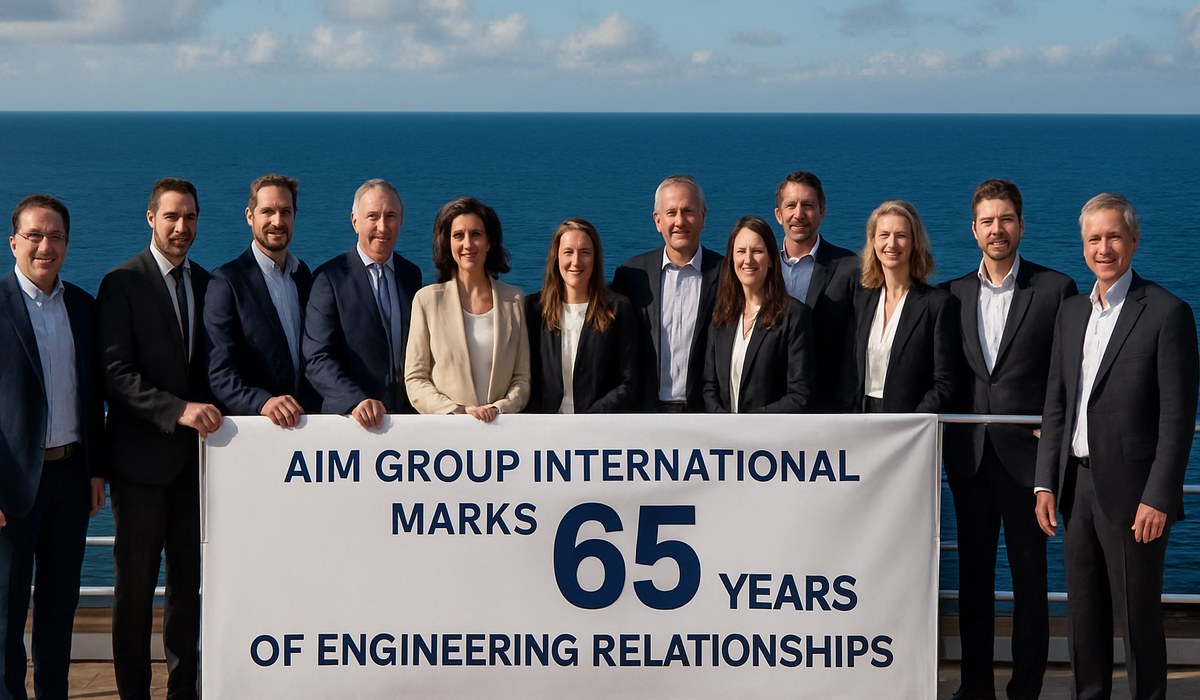
Image generated by AI
Quick Summary
- AIM Group International reaches its 65th anniversary as the cruise industry's premier event strategist and relationship builder
- Artificial intelligence is forcing fundamental rethinking of how destinations and cruise lines establish lasting partnerships
- Human-centered relationship management remains the competitive edge that survives algorithmic disruption
- Port innovation and loyalty integration are reshaping how cruise operators engage emerging markets and retain passengers
- 2026 marks a pivotal transition toward authenticity-driven event experiences in an increasingly automated industry
AIM Group's 65-Year Legacy: The Human Foundation of Cruise Industry Trust
For nearly seven decades, AIM Group International has occupied a singular position within global cruise tourism: the architect of relationships that endure. Founded in the era when cruise itineraries were mapped by captains and shore excursions booked by telephone, the organization built its reputation on a simple principle—that trust between cruise lines, ports, destinations, and passengers cannot be rushed, automated, or outsourced.
The milestone anniversary arrives at a moment of unprecedented industry flux. While AIM Group International's leadership has consistently emphasized the irreducible value of human judgment in complex event coordination, the cruise sector now confronts an uncomfortable question: which elements of relationship-building can AI handle, and which demand the lived experience that only seasoned professionals possess?
The organization's trajectory mirrors the cruise industry's own evolution. As containerization transformed maritime commerce and mega-ships redefined passenger capacity, cruise operators discovered that operational scale without strategic relationship management breeds passenger dissatisfaction and missed revenue opportunities. AIM Group International positioned itself at this intersection—not as a logistics vendor, but as a strategic partner whose expertise lay in understanding what made destinations, ports, and cruise lines succeed together.
Today, the association oversees events that touch thousands of industry professionals annually. Their conferences bring together captains, port authorities, destination marketing organizations, and hotel partners. These gatherings have historically functioned as something more than networking forums—they serve as laboratories where the cruise industry tests new approaches, surfaces emerging challenges, and builds the informal networks that drive operational resilience.
How AI Is Reshaping Event Management and Destination Relationships
The integration of artificial intelligence into cruise industry operations has arrived with surprising speed. Predictive analytics now inform port scheduling. Machine learning algorithms optimize passenger routing through embarkation terminals. Chatbots handle routine destination inquiries. Yet AIM Group International's leadership recognizes a deeper disruption: AI systems are fundamentally altering how events themselves function as relationship-building vehicles.
Consider the data flows that now characterize cruise operations. A single mega-ship generates terabytes of passenger information—booking patterns, onboard spending, cabin preferences, beverage choices, excursion selections. Historically, cruise line executives and destination planners relied on quarterly reports and annual strategy sessions to digest this information. AI systems now process these signals in real time, identifying trends that human analysis would miss entirely.
This capability transforms the value proposition of industry events. When destination marketing organizations gathered at AIM Group conferences five years ago, they exchanged anecdotal intelligence about which excursion types appealed to different passenger demographics. Today, Seatrade's industry intelligence platforms and similar analytics services provide granular data about what actually drives passenger satisfaction and repeat visitation across the global cruise network.
Yet data availability creates new challenges rather than solving existing ones. The cruise industry's most valuable relationships—between port authorities and cruise line executives, between destination planners and onboard entertainment directors, between loyalty program managers and incentive travel coordinators—cannot be reduced to data feeds. These partnerships require the kind of contextual understanding, intuitive judgment, and interpersonal trust that emerges only through repeated interaction.
AIM Group International's 65-year existence means the organization possesses institutional memory that no algorithm can replicate. When a port faces operational disruptions, when a destination experiences political instability that affects tourism, when a cruise line redesigns its itinerary strategy, experienced industry professionals at AIM-convened events provide immediate context about historical precedents, potential solutions, and likely consequences. This knowledge lives in conversation, not in data structures.
The Authenticity Challenge: Preserving Personal Connection in an Algorithmic Age
The cruise industry's relationship with automation reveals a paradox. Passengers increasingly expect frictionless digital experiences—mobile check-in, AI-powered cabin service requests, personalized dining recommendations generated by machine learning. Yet the same passengers report higher satisfaction when they encounter genuine human connection: a crew member who remembers a passenger's preference, a destination guide who shares local knowledge with passion, a cruise line executive who addresses a service concern with empathy rather than scripted solutions.
AIM Group International's response to this paradox shapes the organization's strategic direction for the next phase of its history. Rather than competing with AI systems in speed or analytical capacity, the organization is repositioning its events as sanctuaries for the kind of human decision-making that AI cannot replicate.
This shift manifests concretely. AIM-hosted forums increasingly focus on case studies where relationship-based problem-solving produced outcomes that pure data analysis would have missed. Workshops explore how cruise line personnel can identify passengers whose preferences have evolved in ways their booking history doesn't capture. Strategic conversations examine how port authorities and destination planners can build loyalty among cruise operators in an environment where every operational metric is quantified and compared.
The stakes are substantial. Industry analysts project that the global cruise market will carry over 32 million passengers annually by 2028. That volume cannot be managed by algorithms alone. The industry's capacity to deliver differentiated experiences—distinguishing one cruise line from competitors, one port from alternatives, one destination from rivals—depends on relationships between decision-makers who understand context, share values, and commit to long-term partnerships rather than transaction optimization.
AIM Group International's emphasis on "engineering relationships" in its 65-year narrative reflects this reality. The language of engineering suggests precision, design, and intentionality. Relationships in the cruise industry must be built with the same rigor that designers apply to ship architecture or port infrastructure. They cannot be left to chance or managed exclusively through CRM systems.
Strategic Partnerships and Port Innovation in the AI Era
The specific ways that cruise destinations and ports are innovating in response to AI-driven change illuminates AIM Group's contemporary relevance. Consider Port of Miami's operational innovations, which have emerged partly through relationships cultivated at industry events where port authorities exchange solutions to shared challenges.
Miami's evolution as a cruise hub demonstrates that port leadership requires more than operational competence. The port must simultaneously manage relationships with over a dozen major cruise lines, coordinate with local hospitality partners, navigate community concerns about environmental impact, and remain competitive against emerging Caribbean and Mediterranean alternatives. These relationships—formed through recurring interaction, shared problem-solving, and mutual commitment—cannot be managed by algorithms that optimize for individual transaction efficiency.
Similarly, cruise lines are discovering that destination relationships require active cultivation. The industry trends toward longer itineraries and fewer days at individual ports mean that each port visit must deliver exceptional value. This demands that cruise line planners understand not just what destinations offer, but what specific destinations are attempting to build as brands. A Caribbean island developing eco-tourism credentials requires different relationship investment than a Mediterranean port focused on cultural heritage.
Emerging cruise markets add another dimension. India's premium travel investment boom is generating new opportunities for cruise tourism in regions without
Disclaimer
This article is for informational and educational purposes only. It does not constitute legal, financial, or professional advice. While we strive to provide accurate and up-to-date information, travel policies, regulations, and conditions change rapidly. Always verify information with official sources before making travel decisions. Nomad Lawyer makes no representations about the accuracy, reliability, completeness, or suitability of the information provided. Readers should consult qualified professionals for advice specific to their circumstances. The views expressed in this article are those of the author and do not necessarily reflect the views of Nomad Lawyer.
Raushan Kumar
Founder & Lead Developer
Full-stack developer with 11+ years of experience and a passionate traveller. Raushan built Nomad Lawyer from the ground up with a vision to create the best travel and law experience on the web.
Learn more about our team →