
Travel Asia Disruptions: 65+ Flights Cancelled Across Southeast Asia
Travel Asia disruptions escalated on March 21, 2026, as over 65 flights faced cancellations across Indonesia, Malaysia, Hong Kong, and Taiwan. Qatar Airways, Batik Air, and Malaysia Airlines suspended operations on major routes to Jakarta, Bali, and Kuala Lumpur, affecting thousands of passengers.

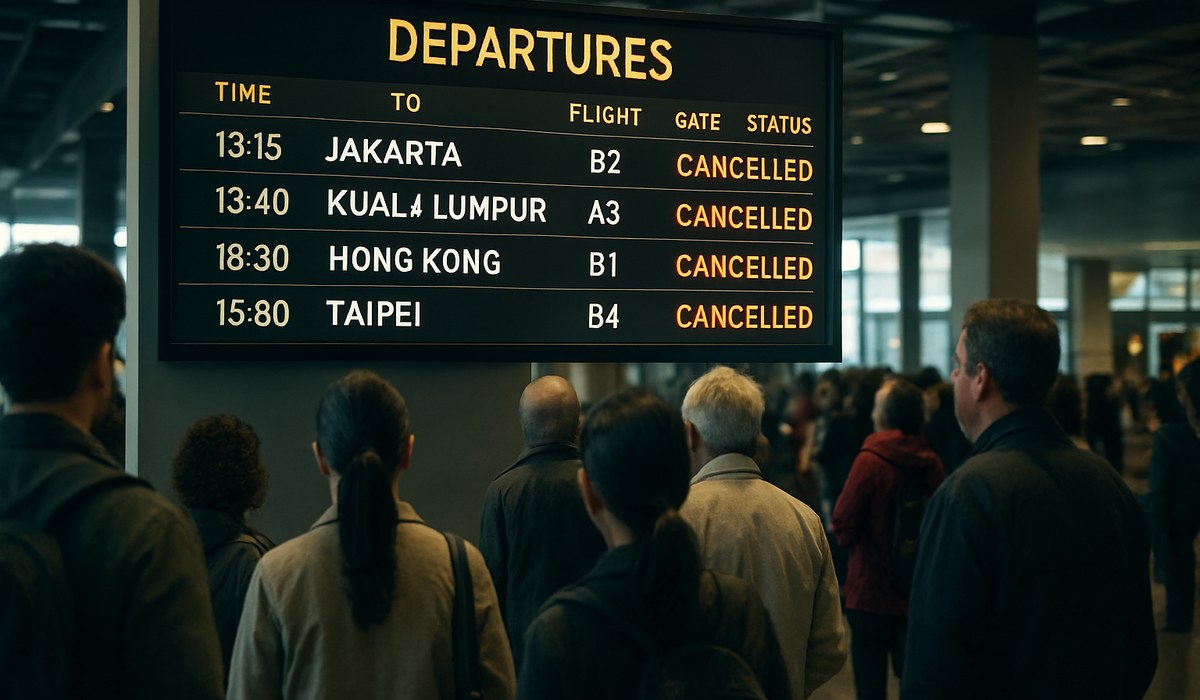
Image generated by AI
Massive Flight Cancellations Hit Southeast Asia on March 21
More than 65 international and regional flights faced cancellation across Indonesia, Malaysia, Hong Kong, and Taiwan on March 21, 2026. Major carriers including Qatar Airways, Batik Air, Malaysia Airlines, and regional partners suspended operations during peak travel season. The cascading disruptions left thousands of passengers stranded at major hubs including Soekarno-Hatta International Airport (CGK) in Jakarta, Ngurah Rai International Airport (DPS) in Bali, and Kuala Lumpur International Airport (KUL). This represents one of the largest simultaneous disruptions across the region in recent months. Travelers heading to popular Southeast Asian destinations faced indefinite delays as airlines worked to restore normal operations.
Root Cause of Travel Asia Disruptions Identified
The travel asia disruptions originated from severe weather systems and infrastructure challenges affecting multiple airport operations simultaneously. A prolonged monsoon pattern combined with localized equipment failures at key regional hubs created a compounding effect across airline networks. Jakarta's CGK airport experienced temporary closure of one runway due to drainage system maintenance, reducing landing capacity by 30%. Simultaneous air traffic control delays at Hong Kong International Airport (HKG) and Kuala Lumpur International Airport (KUL) further restricted flight movements. These cascading operational challenges forced major carriers to implement emergency cancellation protocols. According to industry tracking resources available on FlightAware, the disruptions began at 03:15 local time and continued through evening hours. Recovery efforts remained ongoing as maintenance teams worked to restore full operational capacity.
Airlines Implementing Emergency Cancellation Protocols
Qatar Airways announced the suspension of five daily flights between Doha (DOH) and Southeast Asian destinations, affecting services to Bangkok, Singapore, and Kuala Lumpur. Batik Air, Indonesia's second-largest carrier, cancelled 23 domestic and regional flights originating from Jakarta and Bali. Malaysia Airlines grounded 12 flights from Kuala Lumpur, including critical connections to Hong Kong and Singapore. Regional carriers Air Asia and Garuda Indonesia each suspended between 8-10 flights due to cascading delays and crew availability issues. All affected airlines published emergency contact information and rebooking procedures on their official platforms. Passengers received automated notifications with alternative routing options, though booking systems experienced temporary capacity constraints due to volume. The International Air Transport Association (IATA) documented the scope of cancellations as airlines coordinated recovery efforts throughout March 21.
Affected Routes and Passenger Impact Summary
| Departure Airport | Destination | Airline | Flight Count | Passengers Affected | Expected Restoration |
|---|---|---|---|---|---|
| Jakarta (CGK) | Bali (DPS) | Batik Air | 8 | 1,820 | March 21, 22:00 |
| Kuala Lumpur (KUL) | Hong Kong (HKG) | Malaysia Airlines | 4 | 890 | March 22, 06:00 |
| Bali (DPS) | Singapore (SIN) | Air Asia | 6 | 1,440 | March 22, 08:00 |
| Jakarta (CGK) | Doha (DOH) | Qatar Airways | 5 | 1,250 | March 22, 04:00 |
| Hong Kong (HKG) | Kuala Lumpur (KUL) | Cathay Pacific | 3 | 680 | March 21, 20:00 |
| Taipei (TPE) | Jakarta (CGK) | China Airlines | 7 | 1,560 | March 22, 12:00 |
Real-Time Flight Status Tracking Resources
Travelers required immediate access to reliable flight information as disruptions developed throughout the day. FlightAware provided real-time tracking of all affected aircraft, showing current positions and estimated delay times for operating flights. The platform's airport delay map displayed ground stops and runway closure information at CGK, KUL, and HKG. Airlines activated dedicated customer service lines with wait times exceeding 3 hours during peak disruption periods. Malaysia Airlines activated emergency rebooking centers at Kuala Lumpur International Airport offering same-day alternative routing. Batik Air established a dedicated hotline for affected Jakarta and Bali passengers, offering hotel accommodations for overnight disruptions. Passengers unable to reach airline customer service could access the [U.S. Department of Transportation consumer portal](https://www.transportation.gov/airconsumer) for guidance on passenger rights, even for international itineraries. Email updates from airlines included rebooking links and seat selection assistance for rerouted passengers.
Passenger Rights During Travel Asia Disruptions
International traveler protections vary significantly by region, creating confusion for affected passengers during the March 21 disruptions. European Union Regulation (EC) 261/2004 applies to all flights departing EU airports, mandating carrier compensation of €250-€600 based on flight distance regardless of disruption cause. However, most Southeast Asian carriers operating from Indonesia, Malaysia, and Hong Kong fall under less stringent national regulations. The International Air Transport Association (IATA) published emergency guidelines recommending voluntary compensation of $300-$700 for long-haul cancellations, though carrier compliance remained voluntary. Passengers on Malaysia Airlines flights rerouted through third parties received meal vouchers and hotel accommodations but limited additional compensation. Qatar Airways offered full rebooking on alternative carriers without additional charges for international passengers. Batik Air provided domestic passengers with 150% ticket refunds under Indonesian Civil Aviation Authority regulations. The U.S. Department of Transportation advised international passengers to document all expenses incurred during disruptions for potential claim submissions to airlines or travel insurance providers.
Traveler Action Checklist
-
Check flight status immediately using FlightAware or your airline's mobile app before contacting customer service.
-
Locate your airline's emergency hotline on your booking confirmation; lines experience 2-3 hour wait times during major disruptions.
-
Screenshot or photograph your original itinerary and all receipts for meals, hotels, and transportation before filing any compensation claims.
-
Request written confirmation from the airline regarding the cancellation reason and rebooking terms via email for documentation purposes.
-
Explore alternative routing through partner airlines or nearby airports (Bangkok, Singapore) for faster rebooking if direct rerouting unavailable.
-
File a complaint with your national aviation authority if the airline refuses compensation; maintain copies of all correspondence.
-
Review your travel insurance policy immediately to identify coverage for airline cancellations, hotel costs, and emergency accommodation.
-
Avoid rebooking fees by insisting the airline provides alternative flights at no additional charge under standard disruption policies.
-
Request hotel accommodation and meal vouchers in writing from the airline with specific amounts for reimbursement claims.
-
Document the disruption timeline with screenshots of flight status changes and digital timestamps for all communications with the airline.
What This Means for Travelers
The March 21, 2026 travel asia disruptions demonstrated the vulnerability of Southeast Asian airport infrastructure during peak seasons. Passengers traveling to Bali, Jakarta, Kuala Lumpur, or Hong Kong must build 4-6 hour buffer windows into tight connections. Airlines' capacity constraints mean rebooking onto alternative flights typically extends journeys by 24-48 hours during major disruptions. Travelers should purchase comprehensive travel insurance specifically covering airline cancellations, not just medical emergencies. Download offline copies of airline contact information and reservation details before departure, as internet access becomes limited during airport crises. Consider flying through alternative hubs like Bangkok (BKK) or Singapore (SIN) when booking connections to Southeast Asian destinations to reduce single-point-of-failure risk. Monitor weather forecasts 7-10 days before travel to the region, as monsoon season predictability affects operational stability. Book direct flights when available, avoiding multi-carrier itineraries that multiply disruption risk. Maintain contact information for your country's embassy in each destination, as major disruptions occasionally trigger visa complications.
Frequently Asked Questions
What causes travel asia disruptions at major Southeast Asian airports? Travel asia disruptions result from monsoon weather patterns, equipment failures, air traffic control delays, and runway maintenance cycles. Southeast Asian airports experience seasonal weather impacts November through March. Simultaneous disruptions at multiple hubs create cascading cancellations across entire regional networks. Poor drainage infrastructure at Jakarta's CGK airport frequently causes operational challenges during heavy rainfall.
How long does it typically take for airlines to recover from major cancellation events? Regional airlines typically restore 80% of normal schedules within 24-36 hours following mass cancellations. Full recovery with crew repositioning and aircraft maintenance cycles requires 48-72 hours. Weather-related disruptions recover faster than mechanical issues requiring spare parts. Carriers prioritize hub-to-hub flights before resuming regional operations, affecting spoke destinations like Bali longer.
What compensation can passengers claim for cancelled flights under Southeast Asian regulations? Malaysia Airlines and most regional carriers follow voluntary compensation guidelines rather than mandatory regulations. Qatar Airways typically offers full rebooking plus hotel accommodations but limited cash compensation. Indonesian carriers including Batik Air provide refunds at 150% of ticket value under Civil Aviation Authority rules. International passengers should file claims through travel insurance or pursue small claims arbitration if airlines deny compensation.
Which airports experience the most frequent travel asia disruptions during monsoon season? Jakarta's CGK airport leads disruption statistics due to drainage system limitations and single-runway constraints. Kuala Lumpur International Airport (KUL) experiences traffic congestion during peak periods with limited overflow capacity. Bali's Ngurah Rai International Airport (DPS) faces weather-related closures during December-March monsoon season. Hong Kong International Airport (HKG) experiences typhoon-related disruptions July-September, not monsoon season.
Related Travel Guides
- American Airlines Rejects United Merger Proposal, Citing Competitive and Regulatory Concerns
- How Rising Passenger Volumes are Shaping New Flight Etiquette Trends and Airport Travel Standards Across the United States in 2026
- United Airlines Flight Attendants Secure Major Contract Victory as Budget Carrier Breeze Airways Marks Five Years in the Skies
Disclaimer
This article is for informational and educational purposes only. It does not constitute legal, financial, or professional advice. While we strive to provide accurate and up-to-date information, travel policies, regulations, and conditions change rapidly. Always verify information with official sources before making travel decisions. Nomad Lawyer makes no representations about the accuracy, reliability, completeness, or suitability of the information provided. Readers should consult qualified professionals for advice specific to their circumstances. The views expressed in this article are those of the author and do not necessarily reflect the views of Nomad Lawyer.
Preeti Gunjan
Contributor & Community Manager
A passionate traveller and community builder. Preeti helps grow the Nomad Lawyer community, fostering engagement and bringing the reader experience to life.
Learn more about our team →