
Tourism New Zealand Launches AI Workshops for Operators to Boost Digital Discovery and Bookings in 2026
Tourism New Zealand is deploying AI workshops across Auckland, Rotorua, and Queenstown to help operators optimize their digital presence for AI-driven travel planning tools.

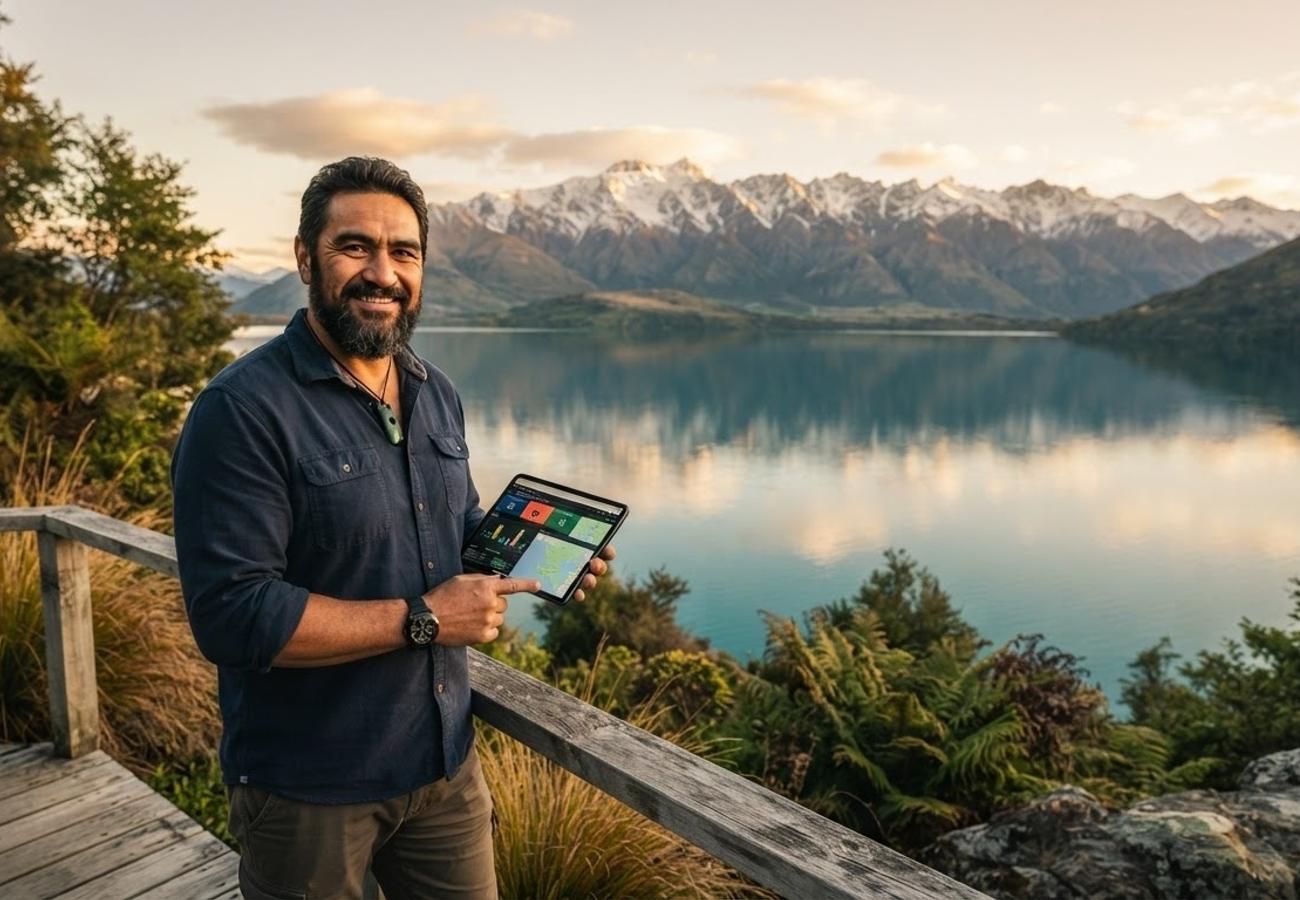
Image generated by AI
Tourism New Zealand has initiated a series of industry workshops to transition local operators from traditional digital marketing to AI-optimized visibility. The move comes as artificial intelligence fundamentally alters how international tourists discover destinations and finalize bookings.
The initiative targets tourism businesses in Auckland, Rotorua, Queenstown, and Christchurch, alongside virtual sessions. The primary goal is to ensure New Zealand remains "discoverable and bookable" as AI agents begin to replace traditional search engines in the holiday planning phase.
The Shift in Traveler Behavior
Data from Tourism New Zealand’s Active Considerer programme indicates that AI is no longer a niche tool for tech enthusiasts but a mainstream requirement for travel planning.
- 62% of audiences in key international markets are likely to use AI tools for their next trip.
- 53% of travelers expect to increase their reliance on AI for future planning.
Current AI integration occurs across the entire traveler journey, specifically impacting destination inspiration, budget forecasting, itinerary creation, and logistics.
Critical Requirements for AI Visibility
Tourism New Zealand warns that traditional strategies—such as relying solely on social media or a basic website—are insufficient. AI systems rely on structured, consistent, and accessible data to make recommendations. If a business's digital footprint is fragmented, AI tools will omit them from suggested itineraries.
Operators are now urged to test their visibility using specific, natural-language queries, such as:
- "Best family activities in Rotorua"
- "Where should I stay in Auckland for a long weekend"
- "Accessible experiences in Queenstown"
Optimization Framework for Operators
To improve "AI discoverability," the workshops provide a practical framework for data consistency.
Digital Alignment Checklist: Operators must ensure the following data points are identical across their own websites, newzealand.com, Regional Tourism Organisation (RTO) listings, Google Business Profiles, and OTA platforms:
- Official Business Name
- Precise Location Details
- Experience Category
- Booking Information
- Contact Details
Content Strategy Shift: The guidance moves away from "promotional language" toward descriptive, factual content. AI systems interpret detailed specifications better than marketing adjectives.
The Role of Trust Signals: Tourism New Zealand is pushing for "text-based trust signals" rather than visual logos, as AI crawlers process text more effectively. Key areas for text expansion include:
- Qualmark certifications and safety standards.
- Sustainability initiatives and cultural partnerships.
- Detailed customer feedback and local expertise.
Strategic Implementation and Support
Bjoern Spreitzer, General Manager New Zealand and Business Events, stated that the focus is on immediate, practical actions rather than theoretical trends. To facilitate this, Tourism New Zealand has released a practical AI guidebook.
The program is a collaborative effort involving industry partners Data Story, Air New Zealand, and Maverick Tourism. Further learning will continue via an online AI collective forum scheduled for mid-September.
AI Integration Metrics for Tourism Operators
| Focus Area | Traditional Strategy | AI-Optimized Strategy |
|---|---|---|
| Content Style | Promotional/Adjectives | Descriptive/Factual |
| Trust Signals | Visual Logos/Badges | Textual Descriptions of Certifications |
| Search Target | Keywords/SEO | Natural Language Queries/Intent |
| Data Management | Isolated Website Updates | Cross-Platform Data Synchronization |
| User Interaction | Static Contact Pages | Comprehensive AI-Readable FAQs |
Why This Matters
From a logistical perspective, this represents a shift from Search Engine Optimization (SEO) to Answer Engine Optimization (AEO). For the traveler, the real impact is a frictionless, curated experience. For the operator, the risk is "digital invisibility."
Our analysis suggests that businesses failing to standardize their data across the ecosystem (Google, OTAs, and official tourism boards) will see a precipitous drop in referrals as travelers move away from browsing lists of links and toward asking a single AI agent for a "perfect" recommendation. The move toward text-based trust signals is particularly savvy; it acknowledges that LLMs (Large Language Models) prioritize semantic meaning over visual branding.
Industry Outlook
Expect a surge in "structured data" adoption across the New Zealand tourism sector. As mid-September's AI collective forum approaches, we anticipate a move toward integrated AI booking agents that can communicate directly with operator APIs. The long-term goal is a transition where the "discovery-to-booking" pipeline is handled entirely by AI, requiring operators to maintain a "perfect" digital twin of their physical business online to remain competitive.
The race for AI visibility is no longer about who has the best website, but who has the most readable data.
Related Travel Guides
Disclaimer
This article is for informational and educational purposes only. It does not constitute legal, financial, or professional advice. While we strive to provide accurate and up-to-date information, travel policies, regulations, and conditions change rapidly. Always verify information with official sources before making travel decisions. Nomad Lawyer makes no representations about the accuracy, reliability, completeness, or suitability of the information provided. Readers should consult qualified professionals for advice specific to their circumstances. The views expressed in this article are those of the author and do not necessarily reflect the views of Nomad Lawyer.
Kunal K Choudhary
Co-Founder & Contributor
A passionate traveller and tech enthusiast. Kunal contributes to the vision and growth of Nomad Lawyer, bringing fresh perspectives and driving the community forward.
Learn more about our team →