
Toronto Pearson Airport (YYZ) to Downtown Transfer Guide: Best Transport Options for 2026
A comprehensive analysis of transit options from Toronto Pearson (YYZ) to downtown, comparing UP Express, taxis, and rideshares on cost, speed, and reliability.

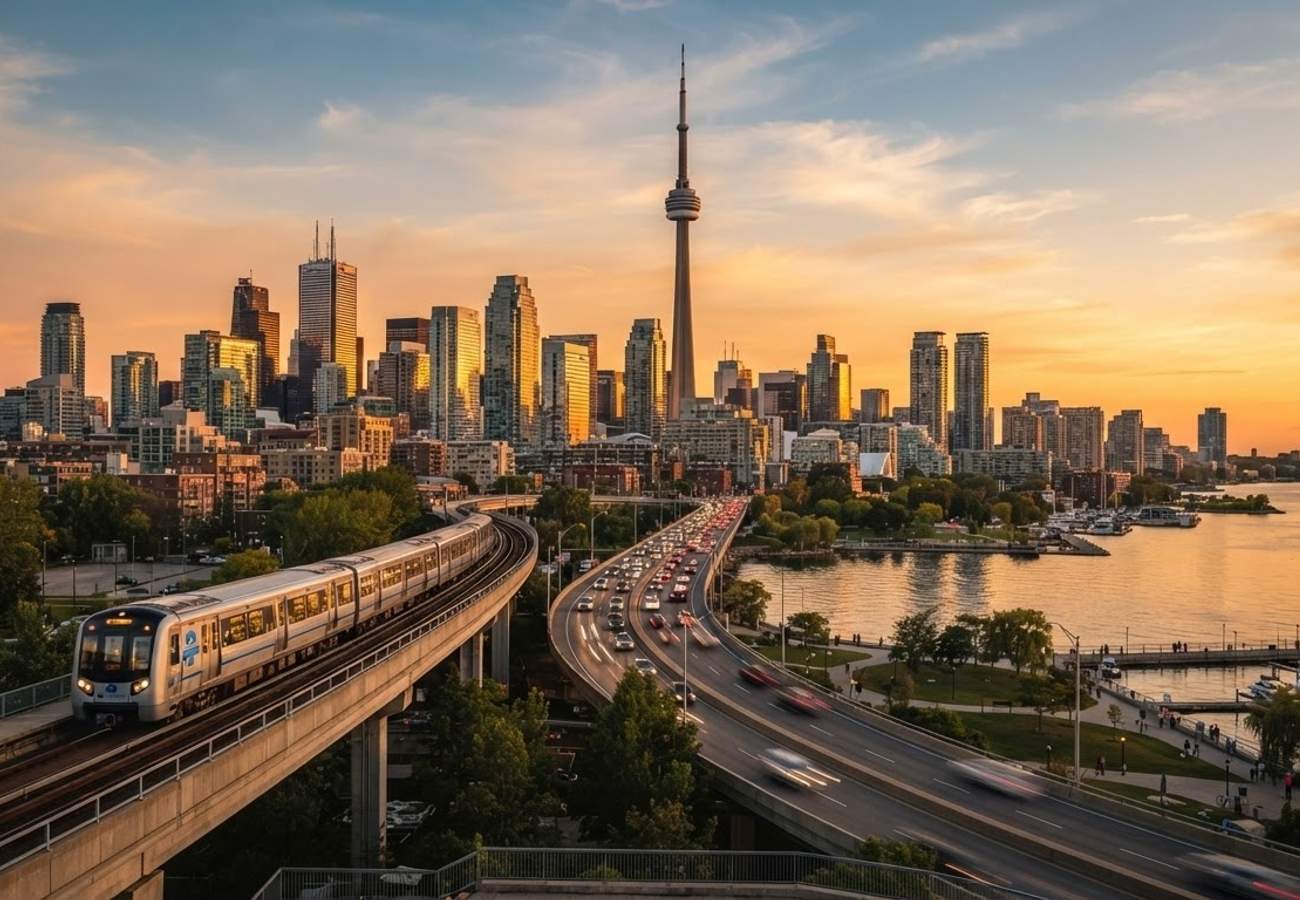
Image generated by AI
Travelers arriving at Toronto Pearson International Airport (YYZ) face a 25-kilometer transit gap to the city core. Depending on the mode of transport and time of day, this journey can fluctuate from a predictable 25-minute rail trip to a 60-minute highway crawl.
Route Analysis: Pearson (YYZ) to Toronto Core
Toronto Pearson International Airport is situated in Mississauga, west of the central business district. For most visitors, "downtown" encompasses the Financial District, Union Station, the Entertainment District, and the waterfront.
Travelers arrive at either Terminal 1 or Terminal 3. While the Terminal Link shuttle provides 24/7 connectivity between the two, the specific transport choice dictates the starting point. The Union Pearson (UP) Express is integrated into Terminal 1, while taxis and rideshares operate from designated curbs at both terminals.
Traffic volatility on Highway 427 and the Gardiner Expressway is the primary variable for road-based transfers. Peak congestion typically occurs during two windows:
- Morning Rush: 07:00 to 09:30
- Evening Rush: 16:00 to 19:00
Transport Mode Comparison and Impact Breakdown
Union Pearson (UP) Express
The UP Express is a dedicated rail link serving as the most reliable transit option for those bound for Union Station.
- Travel Time: 25 to 28 minutes.
- Frequency: Trains depart approximately every 15 minutes.
- Cost: Adult one-way fares are in the low teens (CAD). Contactless payment (credit/debit) or local transit cards offer slight discounts over paper tickets.
- Family Value: Children under 12 typically ride free.
- Strategic Advantage: Immune to highway traffic; ideal for guests at the Fairmont Royal York, Westin Harbour Castle, or those connecting to the Line 1/Line 2 subway systems.
Licensed Airport Taxis
Taxis provide immediate door-to-door service and are managed by dispatchers at both terminals.
- Travel Time: Highly variable; 30 to 60+ minutes depending on traffic.
- Cost: Metered fares to the core typically range between 65 and 80 CAD before gratuity.
- Capacity: Standard sedans accommodate two large suitcases; minivans are available for larger groups.
- Strategic Advantage: Best for passengers with mobility issues or heavy luggage who wish to avoid transfers.
Rideshare (Uber and Lyft)
Rideshares operate from designated pickup zones, separate from taxi ranks, requiring app-based requests.
- Travel Time: Parallel to taxis (30 to 60+ minutes).
- Cost: Standard UberX trips often range from 45 to 70 CAD.
- Volatility: Subject to surge pricing during inclement weather, major concerts at Scotiabank Arena, or Blue Jays games.
- Strategic Advantage: Cost-effective for groups of three or more traveling to neighborhoods like Liberty Village or Trinity Bellwoods.
Passenger Rights & Transfer Advisory
For the affected passenger, choosing the wrong transfer mode during peak hours can result in significant delays and unforeseen costs. Our analysis of the local infrastructure suggests the following actionable strategies:
1. The "Rush Hour" Rule If landing between 07:00–09:30 or 16:00–19:00, the UP Express is the only way to guarantee a arrival time. A taxi during these windows may take double the time of the train.
2. Cost Optimization For solo travelers or families with children under 12, the UP Express is the most economical choice. For groups of 3+, a rideshare often undercuts the combined cost of individual train tickets and subsequent Uber/taxi trips from Union Station to the final destination.
3. Luggage and Accessibility Passengers with restricted mobility or oversized equipment should avoid the UP Express/Subway combination, as it involves multiple escalators and platforms. A pre-booked limo or airport taxi is the recommended standard for accessibility.
The efficiency of the YYZ-to-Downtown corridor relies heavily on the "last mile" connection. While the UP Express has streamlined the airport-to-city link, the reliance on the Gardiner Expressway for road transport remains a systemic vulnerability.
We observe a growing trend where business travelers prioritize the rail link not just for speed, but for the ability to maintain a predictable schedule for meetings in the Financial District. Conversely, the rise of short-term rentals in areas like CityPlace has increased the demand for rideshare services, which offer a more direct route than the hub-and-spoke model of the rail system.
Plan your transit based on the clock, not just the cost.
Related Travel Guides
Disclaimer
This article is for informational and educational purposes only. It does not constitute legal, financial, or professional advice. While we strive to provide accurate and up-to-date information, travel policies, regulations, and conditions change rapidly. Always verify information with official sources before making travel decisions. Nomad Lawyer makes no representations about the accuracy, reliability, completeness, or suitability of the information provided. Readers should consult qualified professionals for advice specific to their circumstances. The views expressed in this article are those of the author and do not necessarily reflect the views of Nomad Lawyer.
Kunal K Choudhary
Co-Founder & Contributor
A passionate traveller and tech enthusiast. Kunal contributes to the vision and growth of Nomad Lawyer, bringing fresh perspectives and driving the community forward.
Learn more about our team →