
Canada Airport Busiest: Toronto Pearson Dominates 2026 Aviation Hub
Toronto Pearson International Airport claims Canada's busiest airport status in 2026, handling over 65,000 scheduled flights with 10 million seats across its top routes, reshaping travel patterns across North America.

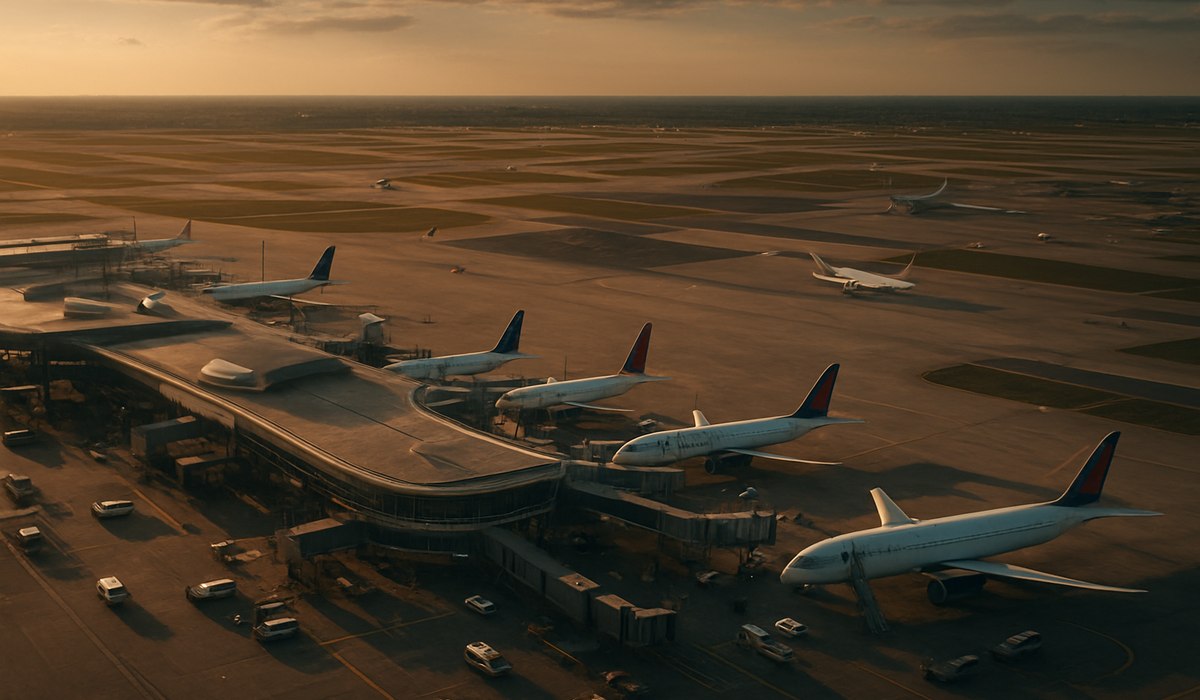
Image generated by AI
Toronto Pearson International Airport Reigns as Canada's Busiest Airport
Toronto Pearson International Airport (YYZ) has solidified its position as Canada's premier aviation hub in 2026, commanding the nation's commercial flight landscape with unparalleled scale and connectivity. The airport operates over 65,000 scheduled flights annually, with its ten most-traveled routes alone accounting for more than 10 million passenger seats. This dominance reflects Toronto's central role as a gateway connecting North American travelers to domestic and international destinations.
The airport's significance extends beyond raw numbers. Toronto Pearson functions as a critical junction for both leisure and business travel, serving as the primary international entry point for Canada's largest metropolitan region. Airlines competing for gate space and slot allocations at YYZ recognize the commercial value of this gateway, making it North America's competitive battleground for route expansion.
Toronto Pearson's Dominance in Canadian Aviation
Toronto Pearson has cemented its status as the undisputed leader among Canadian airports through consistent infrastructure investment and strategic airline partnerships. The airport's three-terminal configuration handles diverse aircraft and passenger volumes, from narrow-body regional jets to wide-body international carriers. This operational flexibility allows YYZ to accommodate surge capacity during peak travel seasons while maintaining service consistency throughout the year.
The airport's market share reflects broader economic patterns in Canada. The Greater Toronto Area's population exceeding 6 million residents generates substantial originating and connecting passenger demand. Corporate headquarters and financial institutions concentrated in downtown Toronto create sustained business travel flows that anchor YYZ's schedule reliability. Additionally, tourism to Niagara Falls, the Thousand Islands, and Ontario's cottage country funnel through Toronto Pearson, making it a natural hub for both domestic and cross-border leisure passengers.
Current capacity management strategies prioritize efficiency across terminal operations. Airlines have invested in modernized check-in facilities, expanded security infrastructure, and streamlined baggage handling systems to accommodate growth without proportional increases in delays or cancellations. This operational excellence distinguishes Toronto Pearson from competing Canadian airports.
Top Routes and Passenger Volume
Toronto Pearson's route network reflects strategic market positioning and demand patterns across North America. The airport's scheduled flight portfolio spans 200-plus destinations, but capacity concentration on core routes demonstrates airline prioritization of high-yield passenger segments. These top-ten routes generate sufficient passenger volume to justify daily frequencies and aircraft larger than typical for secondary Canadian markets.
Airline competition on these premium routes shapes pricing dynamics and service offerings. Carriers operating multiple daily frequencies on routes from YYZ maintain schedule redundancy, providing passengers with backup flights if disruptions occur. This redundancy particularly benefits business travelers whose schedules tolerate minimal flexibility.
Seasonal variation significantly impacts route scheduling across Toronto Pearson's network. Winter months see elevated frequencies to sun destinations in the Caribbean and Mexico as Canadian travelers escape cold weather. Summer brings increased capacity on transcontinental and transatlantic routes as families prioritize European vacations and domestic leisure travel. Airlines adjust aircraft sizing and frequency to match these seasonal demand patterns, requiring sophisticated revenue management coordination.
Most Popular Domestic Destinations
Montréal–Trudeau International Airport (YUL) ranks as Toronto Pearson's number-one domestic destination, reflecting the primacy of the Toronto-Montreal corridor in Canadian business and leisure travel. This route pair represents the continent's densest North American city-to-city travel market, with multiple carriers competing aggressively on pricing and convenience. Frequencies on this route exceed those available between most US metropolitan pairs.
Vancouver International Airport (YVR) claims second position, connecting Canada's largest and third-largest cities across North America's widest geography. Despite the cross-country distance, transcontinental demand justifies six-or-more daily flights in each direction. The Toronto-Vancouver route sustains premium pricing due to limited alternative connections, making it consistently profitable for operating carriers.
Ottawa Macdonald-Cartier International Airport (YOW) ranks third, driven by Canada's national government concentration and associated business travel. Parliamentary sessions generate predictable demand patterns as political staffers, lobbyists, and journalists commute between Toronto and Ottawa. This institutional demand provides baseline frequency stability regardless of leisure travel fluctuations.
Additional popular domestic destinations include Calgary, Edmonton, and Winnipeg, reflecting Toronto Pearson's role as the primary connection point for Western Canadian markets. These routes typically operate with daily frequencies and mid-size aircraft, efficiently serving both business and leisure passenger segments.
What This Means for Travelers
Navigating Toronto Pearson as Canada's busiest airport requires understanding operational realities and practical preparation strategies. High passenger volumes create both opportunities and challenges for travelers, necessitating proactive planning to optimize your airport experience.
Traveler Action Checklist:
-
Arrive at Toronto Pearson 3 hours before international departures and 2 hours before domestic flights to accommodate security screening during peak periods.
-
Download the YYZ mobile app for real-time flight status, gate assignments, and terminal navigation maps to reduce confusion in multi-terminal operations.
-
Check airline baggage policies before arrival, as capacity constraints during congested periods occasionally require gate-checked luggage on connecting flights.
-
Identify your airline's preferred terminal location (Terminal 1, 3, or international) and note shuttle schedules between terminals if connecting through different airlines.
-
Monitor flight status on FlightAware as your departure time approaches, enabling quick response to schedule changes or gate relocations.
-
Review US DOT passenger rights resources if traveling on international carriers, understanding compensation and assistance requirements beyond standard airline policies.
-
Allow 90-120 minutes for connections at Toronto Pearson when transferring between terminals, accounting for potential security re-screening on international connections.
-
Reserve TSA PreCheck or NEXUS enrollment to qualify for expedited US border screening on departure to American destinations.
Key Data Table
| Metric | Value | Significance |
|---|---|---|
| Annual Scheduled Flights | 65,000+ | Highest volume among Canadian airports |
| Top-10 Route Capacity | 10 million seats | Equivalent to ~15% of annual passenger volume |
| Primary Domestic Destination | Montréal-Trudeau (YUL) | Densest city-pair in Canadian aviation |
| Secondary Destination | Vancouver (YVR) | Longest domestic route in high-volume rotation |
| Tertiary Destination | Ottawa (YOW) | Government-driven institutional demand |
| Terminal Configuration | 3 terminals | Distributed capacity across parallel operations |
FAQ
What airlines operate the most flights from Toronto Pearson?
Air Canada operates the largest number of departures from YYZ as the airport's dominant carrier, followed by United Airlines, American Airlines, and WestJet. The carrier mix reflects both Canadian carrier strength and US airline hub integration strategies targeting Toronto's North American connectivity.
How has Toronto Pearson's capacity compared to other Canadian airports?
Toronto Pearson handles approximately 45 million annual passengers, roughly equivalent to Vancouver (20+ million), Calgary (16+ million), and Montréal (20+ million) combined. This concentration reflects Ontario's population advantage and Toronto's role as Canada's primary international gateway.
When are peak travel times at Toronto Pearson?
Summer months (June-August), winter holiday periods (December-January), and spring break seasons generate the highest passenger volumes. Weekday mornings (6am-9am) and evenings (4pm-7pm) see peak business travel flows, while weekends sustain consistent leisure passenger demand.
What ground transportation options connect Toronto Pearson to downtown Toronto?
The UP Express (Union Pearson Express) rail link provides 25-minute service to downtown Toronto stations, while taxi, rideshare, and rental car options require 25-45 minutes depending on traffic conditions. Hotel shuttle services operate from major hospitality properties in the Greater Toronto Area.
Related Travel Guides
Explore [Canada
Disclaimer
This article is for informational and educational purposes only. It does not constitute legal, financial, or professional advice. While we strive to provide accurate and up-to-date information, travel policies, regulations, and conditions change rapidly. Always verify information with official sources before making travel decisions. Nomad Lawyer makes no representations about the accuracy, reliability, completeness, or suitability of the information provided. Readers should consult qualified professionals for advice specific to their circumstances. The views expressed in this article are those of the author and do not necessarily reflect the views of Nomad Lawyer.
Raushan Kumar
Founder & Lead Developer
Full-stack developer with 11+ years of experience and a passionate traveller. Raushan built Nomad Lawyer from the ground up with a vision to create the best travel and law experience on the web.
Learn more about our team →