
Toronto Pearson Airport Weather Chaos: 18 Cancellations and 79 Delays Hit North American Hub in 2026
Severe weather at Toronto Pearson Airport triggered 18 flight cancellations and 79 delays, disrupting critical corridors between Canada, the US, and international hubs.

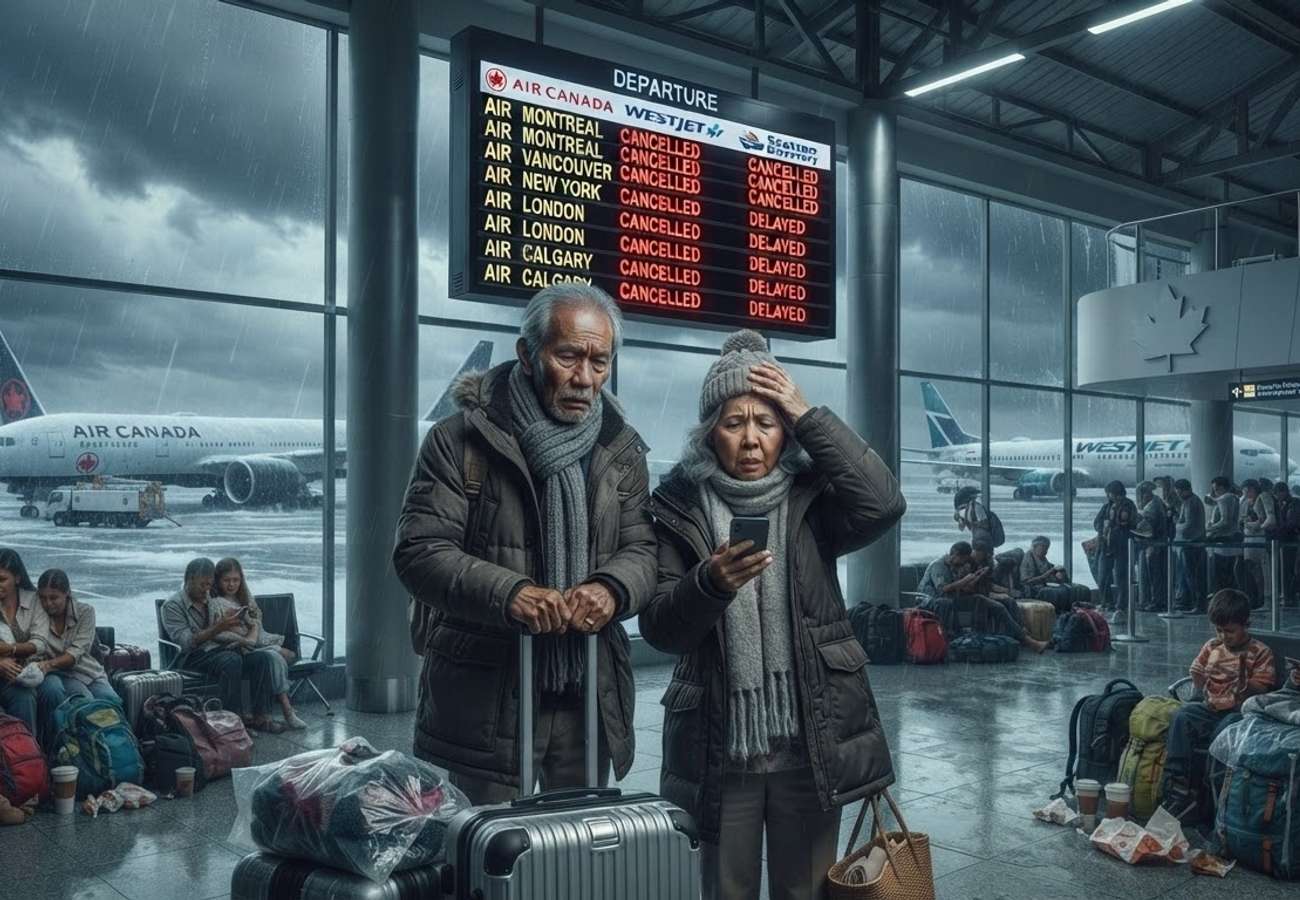
Image generated by AI
Severe weather conditions at Toronto Pearson Airport have triggered significant operational instability, resulting in 18 flight cancellations and 79 delays across domestic and international corridors.
The disruption hit Canada's busiest aviation hub on July 8, 2026, creating a ripple effect that impacted key routes to Montreal, New York City, Miami, and several other major North American cities. The weather event forced immediate schedule adjustments for both regional carriers and global airlines, leaving thousands of passengers stranded or facing extended wait times.
The instability affected three primary categories of flight operations: domestic Canadian routes, transborder flights to the United States, and long-haul international services. While some international carriers avoided total cancellations, the systemic delays hampered the efficiency of the entire gateway.
Operational Impact by Carrier
The burden of the disruption fell most heavily on regional and mainline Canadian operators. Air Canada and its subsidiaries recorded the highest volume of instability.
- Jazz: The most severely impacted carrier with 9 cancellations and 28 delays.
- Air Canada (Mainline): Recorded 21 delayed flights.
- Air Canada Rouge: 4 cancellations and 4 delays.
- Porter Airlines: 4 cancellations and 8 delays.
Beyond the primary Canadian carriers, a wide array of global airlines reported delays, including Qatar Airways, Air India, Air France, Cathay Pacific, Philippine Airlines, LOT Polish Airlines, Condor, and China Eastern.
Disrupted Route Network
The cancellations were not isolated to a single region but spanned the entire North American network. The following destinations saw significant arrival disruptions:
United States Corridors:
- New York City (including LaGuardia and JFK)
- Miami
- Philadelphia
- Chicago
- Houston
- Dallas
- Newark
- Cincinnati
- St. Louis
- Denver
Canadian Domestic Routes:
- Montreal
- Halifax
- Calgary
- Winnipeg
- Ottawa
- Quebec City
- Kelowna
- Windsor
- London (Ontario)
- Sault Ste. Marie
- Moncton
Summary of Flight Disruptions
| Metric | Total Volume | Primary Affected Carriers |
|---|---|---|
| Total Cancellations | 18 | Jazz, Porter, Air Canada Rouge |
| Total Delays | 79 | Air Canada, Jazz, International Carriers |
| Impacted Hubs | 20+ Cities | NYC, Miami, Montreal, Calgary, London |
Why This Matters: Industry Implication
This event highlights the systemic vulnerability of the "hub-and-spoke" model employed by Canada's aviation industry. Because Toronto Pearson serves as the primary gateway for the country, a localized weather event does not simply affect Toronto; it creates a logistical bottleneck for the entire North American eastern corridor.
Industry observers note that regional operators like Jazz and Porter are more susceptible to these disruptions. Their high-frequency, short-haul schedules leave zero margin for error; a single weather delay in Toronto cascades through their entire daily rotation, leading to the high cancellation rates seen in this data. Furthermore, the involvement of ultra-long-haul carriers (such as Qatar Airways and Air India) in the delay statistics proves that local weather at a primary hub can disrupt global crew scheduling and aircraft rotations thousands of miles away.
Forward Outlook
Recovery of the flight schedule will be gradual. Airlines must now manage the "backlog" of displaced passengers while repositioning aircraft that were diverted or delayed. Travelers should expect residual delays for 24 to 48 hours as crews are reset and aircraft return to their scheduled rotations.
Expect continued volatility in transborder scheduling until all diverted aircraft are recovered.
Related Travel Guides
Disclaimer
This article is for informational and educational purposes only. It does not constitute legal, financial, or professional advice. While we strive to provide accurate and up-to-date information, travel policies, regulations, and conditions change rapidly. Always verify information with official sources before making travel decisions. Nomad Lawyer makes no representations about the accuracy, reliability, completeness, or suitability of the information provided. Readers should consult qualified professionals for advice specific to their circumstances. The views expressed in this article are those of the author and do not necessarily reflect the views of Nomad Lawyer.
Raushan Kumar
Founder & Lead Developer
Full-stack developer with 11+ years of experience and a passionate traveller. Raushan built Nomad Lawyer from the ground up with a vision to create the best travel and law experience on the web.
Learn more about our team →