
Toronto City Centre Airport Operational Collapse: 28 Delays, 20 Cancellations Cripple Porter Airlines and Jazz Aviation on July 4, 2026
Billy Bishop Toronto City Airport faced severe operational disruption with 28 delayed and 20 cancelled flights, severely impacting Porter Airlines, Jazz Aviation, and regional air connectivity across Ontario.

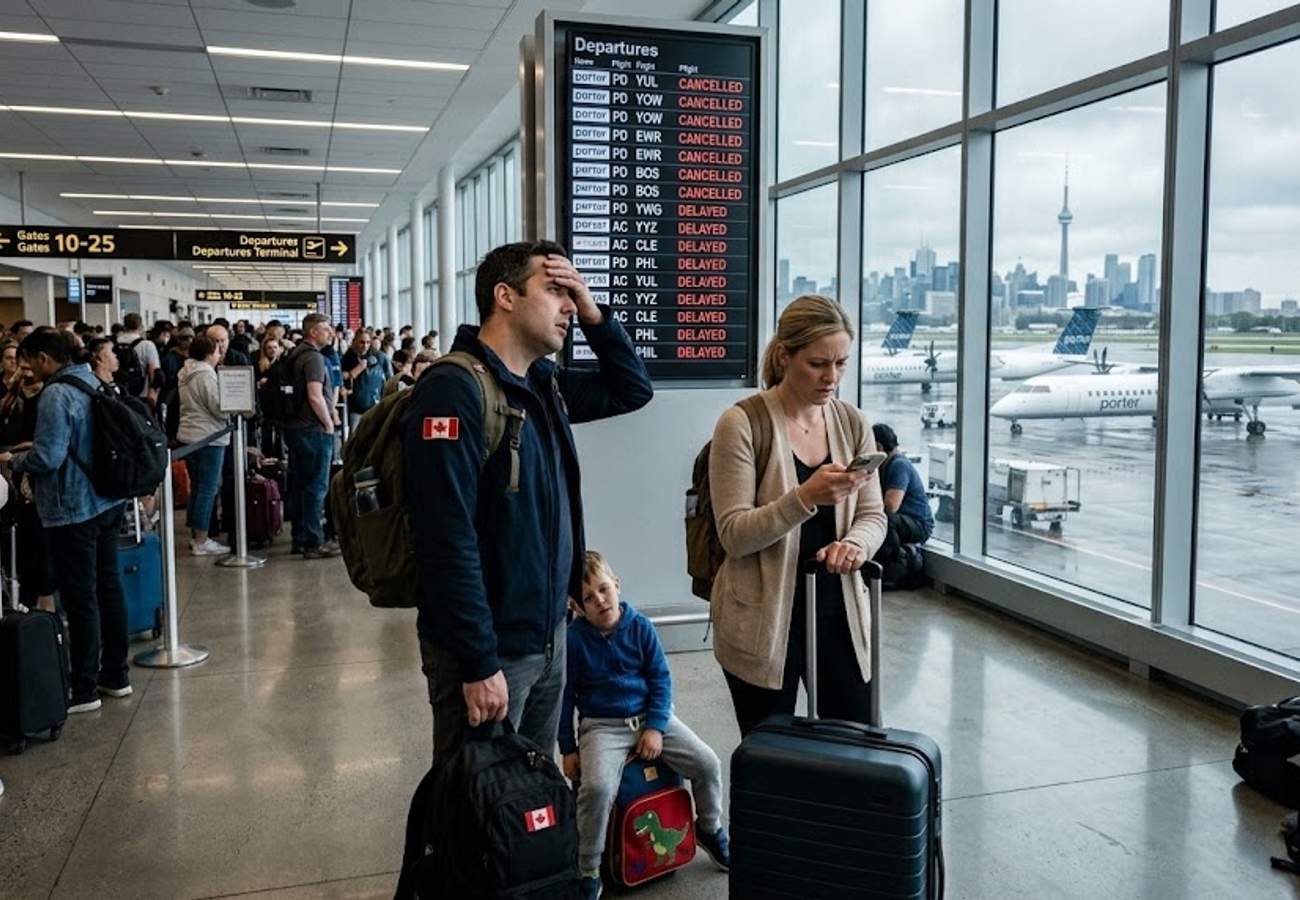
Image generated by AI
Billy Bishop Toronto City Airport (YTZ), officially known as Toronto City Centre Airport, experienced a complete operational breakdown on July 4, 2026, with cascading delays and cancellations that exposed the fragility of Canada's densest regional air corridor. The incident—affecting 28 delayed flights and 20 cancelled operations—disrupted connectivity across Ontario's business and leisure travel networks while stranding thousands of passengers.
Carrier Impact: Regional Network Paralysis
Jazz Aviation (operating as Air Canada Jazz) bore the brunt of today's disruption, recording 16 cancellations (representing 32 percent of total cancellations) and 11 delays (22 percent of cumulative delays). The carrier's high-frequency feeder network—which supplies passengers to Air Canada's international hubs—collapsed under the operational pressure.
Porter Airlines, the airport's dominant regional operator, sustained heavy damage with 4 cancellations and 17 delays (20 percent of total delayed operations). The carrier's business-heavy schedule between Toronto and Ottawa, Montreal, and US Northeast destinations bore the brunt of cascading knock-on effects.
| Carrier | Cancellations | Delays | Percentage Impact |
|---|---|---|---|
| Jazz Aviation (Air Canada Jazz) | 16 | 11 | 32% cancellations, 22% delays |
| Porter Airlines | 4 | 17 | 4% cancellations, 20% delays |
| Other regional operators | — | — | Isolated disruptions |
The concentration of disruption within these two carriers underscores the structural vulnerability of high-frequency short-haul networks operating on compressed turnaround schedules that leave minimal buffer capacity for unexpected operational pressures.
Root Cause: Constrained Airspace and Capacity Limits
Billy Bishop Toronto City Airport operates within a complex airspace architecture shared with Toronto Pearson International Airport (YYZ), creating sequential traffic management challenges during peak operational windows. The facility's geographic constraints—located on Toronto Island with restricted approach corridors—amplify disruption risk during adverse conditions or traffic congestion events.
Key structural factors contributing to today's cascade:
- Reduced aircraft rotation efficiency during peak morning and evening windows
- Gate congestion limiting aircraft turnaround velocity
- Crew and equipment repositioning challenges across the regional network
- Air traffic control ground holding patterns mandated by Greater Toronto Area airspace sequencing protocols
Even minor delays at Billy Bishop propagate across the broader Ontario aviation ecosystem within 90 minutes, affecting inbound and outbound schedules across interconnected regional markets.
Passenger Impact: Thousands Stranded Across Six Regional Markets
An estimated several thousand passengers faced same-day travel disruption, with particular concentration on high-frequency routes serving Ottawa (YOW), Montreal (YUL), Halifax (YHZ), New York area airports, and regional business centers. The airport's critical function as a commuter gateway for financial professionals, government officials, and time-sensitive business travelers amplified the operational and economic impact.
Affected passenger segments included:
- Bay Street and downtown Toronto professionals (missed meetings and conference connections)
- Government and administrative personnel traveling to Ottawa parliamentary offices
- International connecting passengers rerouted through Toronto Pearson International (creating secondary congestion)
- Leisure travelers whose same-day return journeys were compromised, forcing rail and road alternative modes
- Hotel and ground transport operators managing unexpected schedule reshuffling for delayed arrivals
Peak morning (6:00–9:00 AM) and evening (4:00–7:00 PM) departure windows experienced severe terminal congestion as rebooking and passenger service operations overwhelmed ground staff capacity.
Regional Aviation Market Consequences
The disruption signals structural strain within Canada's intercity aviation network. Billy Bishop Toronto City Airport serves as a preferred entry point for domestic and US visitors—offering faster downtown access via pedestrian tunnel and ferry connections compared to the 25-kilometer transfer from Toronto Pearson International.
Tourism and business travel analysts note that repeated short-term disruptions at city-center airports influence passenger preference toward larger hubs, despite longer ground transfer times. Weekend leisure travelers heading to Toronto's waterfront and entertainment districts, combined with business tourists attending corporate conferences, will likely reassess tight-schedule regional air service reliability for future bookings.
The incident may temporarily erode traveler confidence in short-haul regional carriers, particularly for time-sensitive itineraries where schedule predictability is non-negotiable. This confidence erosion could redirect leisure traffic toward Toronto Pearson International's expanded regional carriers and increase demand for rail alternatives (VIA Rail) on Toronto–Ottawa–Montreal corridors.
Structural Vulnerability of High-Density Regional Networks
Today's disruption exemplifies how compressed scheduling and constrained physical infrastructure create systemic fragility. Billy Bishop Toronto City Airport processes approximately 16 million annual passengers through a facility designed for significantly lower throughput, with limited expansion capacity due to island geography and waterfront environmental constraints.
The operational breakdown demonstrates why regional aviation networks require:
- Expanded airspace buffers coordinated between Billy Bishop and Pearson traffic management
- Schedule resilience architecture (building recovery time into published schedules rather than back-to-back block times)
- Redundant ground infrastructure (additional gates, boarding bridges, and aircraft parking positions)
- Crew fatigue management protocols that account for cascading delay scenarios
Without structural capacity investment, repeated disruptions will accelerate passenger migration toward larger hub airports and ground transportation alternatives, ultimately eroding the business case for regional carriers operating from Billy Bishop.
Market Implications and Competitive Positioning
The incident provides competitive advantage to Toronto Pearson International, which—despite longer ground transfer times—offers schedule predictability and operational redundancy that Billy Bishop cannot match. Air Canada, through both mainline operations and Jazz Aviation feeding, benefits operationally when passengers abandon unreliable regional feeders for consolidated hub-to-destination routing.
Porter Airlines, as the primary independent operator at Billy Bishop, faces reputational damage and potential customer defection to larger carriers offering schedule guarantees or alternative routing. The carrier's competitive positioning relies on speed-to-market and convenience premiums; operational reliability breakdowns undermine both value propositions.
Regional business travel patterns may show measurable shift toward Toronto Pearson's expanded regional service offerings and toward video conferencing adoption for time-sensitive meetings, reducing underlying demand for regional air services.
Today's operational collapse at Billy Bishop signals that Canada's densest regional air corridor has reached capacity saturation without infrastructure investment—a market reality that will reshape carrier competitive strategy and passenger routing decisions across Ontario's aviation network.
Related Travel Guides
Disclaimer
This article is for informational and educational purposes only. It does not constitute legal, financial, or professional advice. While we strive to provide accurate and up-to-date information, travel policies, regulations, and conditions change rapidly. Always verify information with official sources before making travel decisions. Nomad Lawyer makes no representations about the accuracy, reliability, completeness, or suitability of the information provided. Readers should consult qualified professionals for advice specific to their circumstances. The views expressed in this article are those of the author and do not necessarily reflect the views of Nomad Lawyer.
Kunal K Choudhary
Co-Founder & Contributor
A passionate traveller and tech enthusiast. Kunal contributes to the vision and growth of Nomad Lawyer, bringing fresh perspectives and driving the community forward.
Learn more about our team →