
The Instagram War: How Times Square is Crushing Rivals to Become America's Most Viral Street
Visual density reigns supreme as Times Square brutally dominates the latest 2026 Instagram travel metrics, effectively crushing heavyweights like Bourbon Street and Miami's Ocean Drive.

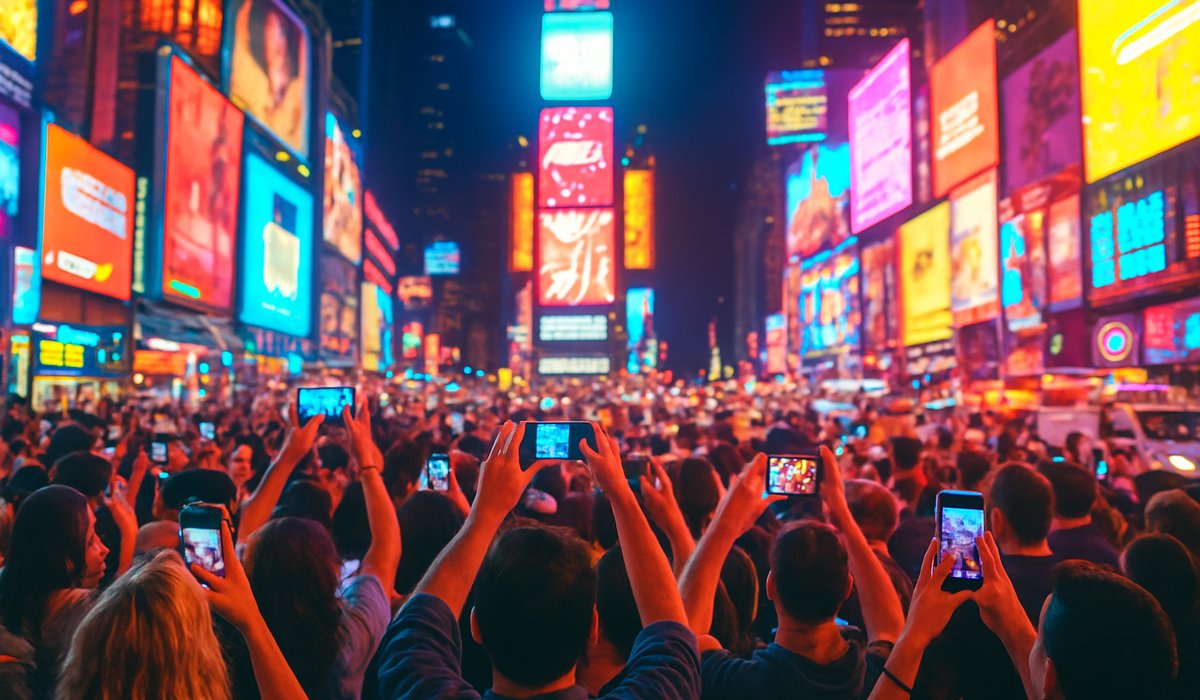
Image generated by AI
The Economics of Visual Density in American Tourism
Fundamentally proving that pure visual density absolutely dictates modern tourism patterns, New York's legendary Times Square has violently dominated the latest 2026 travel data metrics, officially winning the incredibly lucrative "Instagram War" against massive American rivals. In an era where leisure travel is heavily driven explicitly by social media viability, a street's ability to compress intense visual aesthetics into a tiny geographical footprint is paramount. Times Square effortlessly crushed historic heavyweights—including San Francisco's Lombard Street, New Orleans' Bourbon Street, and Miami's iconic Ocean Drive—by generating an absolutely staggering 8,154 hashtags per meter of pavement.
The resulting dataset proves that Gen Z and Millennial tourists are no longer spreading their wealth evenly across massive metropolitan cities. They are hunting highly specific, hyper-concentrated "viral nodes." What makes this shift incredibly terrifying for municipal tourism boards is that massive, sprawling cities frequently lose out to incredibly short, punchy streets. Brooklyn's historic Washington Street (famous for the incredibly perfect framing of the Manhattan Bridge) secured second place nationally despite being barely 150 meters long, completely starving attention from the rest of the massive borough.
The Viral Power Matrix
Why does a street in New York beat a gorgeous pastel Art Deco avenue in Miami?
The answer lies in kinetic energy. Ocean Drive in Miami is incredibly beautiful, but it is deeply static; the buildings do not move. Times Square, conversely, is a massive, hyper-aggressive, constantly rotating digital canyon that looks entirely different every three seconds. For a tourist shooting a 15-second TikTok reel, Times Square mathematically guarantees maximum visual chaos and engagement. This digital virality instantly translates into massive localized retail spending, as tourists flock specifically to these highly concentrated grids to buy coffee, retail goods, and Broadway tickets simply because they are physically "in the shot."
Decoding the 2026 American Street Rankings
| Rank | Iconic Street / City | Instagram Metric (Hashtags) | Why It Wins |
|---|---|---|---|
| 1. | Broadway (Times Square) | 5.3 Million total / 8,154 per meter | Absolute total visual overkill and digital immersion |
| 2. | Washington St (Brooklyn) | 434,000 / 2,893 per meter | The mathematically perfect architectural photography frame |
| 3. | Lombard Street (San Fran) | 326,000 / 1,781 per meter | Unique topographic quirk (crookedest street) |
What Guests Get
- Understanding algorithmic tourism — realizing that tourism boards no longer aggressively market their city as a whole; they heavily market three specific, highly visual streets.
- The psychology of the photo — grasping why tourists will happily ignore world-class museums in favor of taking 400 photos on a single cobblestone road in Brooklyn.
- Real estate realities — seeing how a high Instagram ranking physically explodes commercial real estate pricing on that specific street, as corporate brands fight to place their logo in the background of tourist selfies.
What This Means for Travelers
If you want to visit these viral hotspots: You absolutely must understand the brutal mathematics of the "Golden Hour." If you attempt to shoot the iconic Manhattan Bridge frame on Washington Street in DUMBO, Brooklyn at 2:00 PM on a Saturday, you will physically be fighting 500 other tourists for an inch of pavement, completely ruining your photo. You must arrive precisely at 6:30 AM before the sun fully clears the skyline and before the massive tourist coach buses physically deploy into the neighborhood.
Hunt the 'Next' Viral Street: Because places like Times Square and Lombard Street have essentially reached maximum global saturation, algorithmic travel trends are heavily pivoting toward aggressive, hyper-local street art districts. If you want high-engagement travel photos without the crushing crowds, heavily pivot your itineraries toward emerging visual corridors, such as Miami's Wynwood Walls (NW 2nd Ave) or the deeply historic, brightly painted Rainbow Row in Charleston, South Carolina.
FAQ: Navigating America's Viral Streets
Why is Times Square so popular if locals hate it? New Yorkers fundamentally despise Times Square because it is crowded, aggressively loud, and commercially homogenized. However, to an international tourist arriving from a rural European or South American city, the sheer vertical scale of the digital LED canyon is legitimately awe-inspiring and unique.
Is it actually safe to walk down Bourbon Street at night for an Instagram photo? Bourbon Street in New Orleans is heavily policed and physically barricaded from vehicle traffic at night, making the central walking corridor highly safe. However, the extreme density of intoxicated tourists makes it a premier hunting ground for highly skilled pickpockets.
Can I fly a drone to get a better photo of these streets? Absolutely not. Practically all of these massive viral hotspots (especially in New York and San Francisco) reside deeply inside Federal Aviation Administration (FAA) "No-Fly Zones." Attempting to deploy a drone in Times Square will result in immediate arrest and heavy federal fines.
Related Travel Guides
Disclaimer
This article is for informational and educational purposes only. It does not constitute legal, financial, or professional advice. While we strive to provide accurate and up-to-date information, travel policies, regulations, and conditions change rapidly. Always verify information with official sources before making travel decisions. Nomad Lawyer makes no representations about the accuracy, reliability, completeness, or suitability of the information provided. Readers should consult qualified professionals for advice specific to their circumstances. The views expressed in this article are those of the author and do not necessarily reflect the views of Nomad Lawyer.
Raushan Kumar
Founder & Lead Developer
Full-stack developer with 11+ years of experience and a passionate traveller. Raushan built Nomad Lawyer from the ground up with a vision to create the best travel and law experience on the web.
Learn more about our team →