
Southwest Airlines Emerges as Top Value Carrier for Cheap U.S. Domestic Flights in 2026
New 2026 federal fare data reveals Southwest Airlines is now the leading choice for affordable U.S. domestic travel, offering a superior balance of low costs and operational reliability over ultra-low-cost carriers.

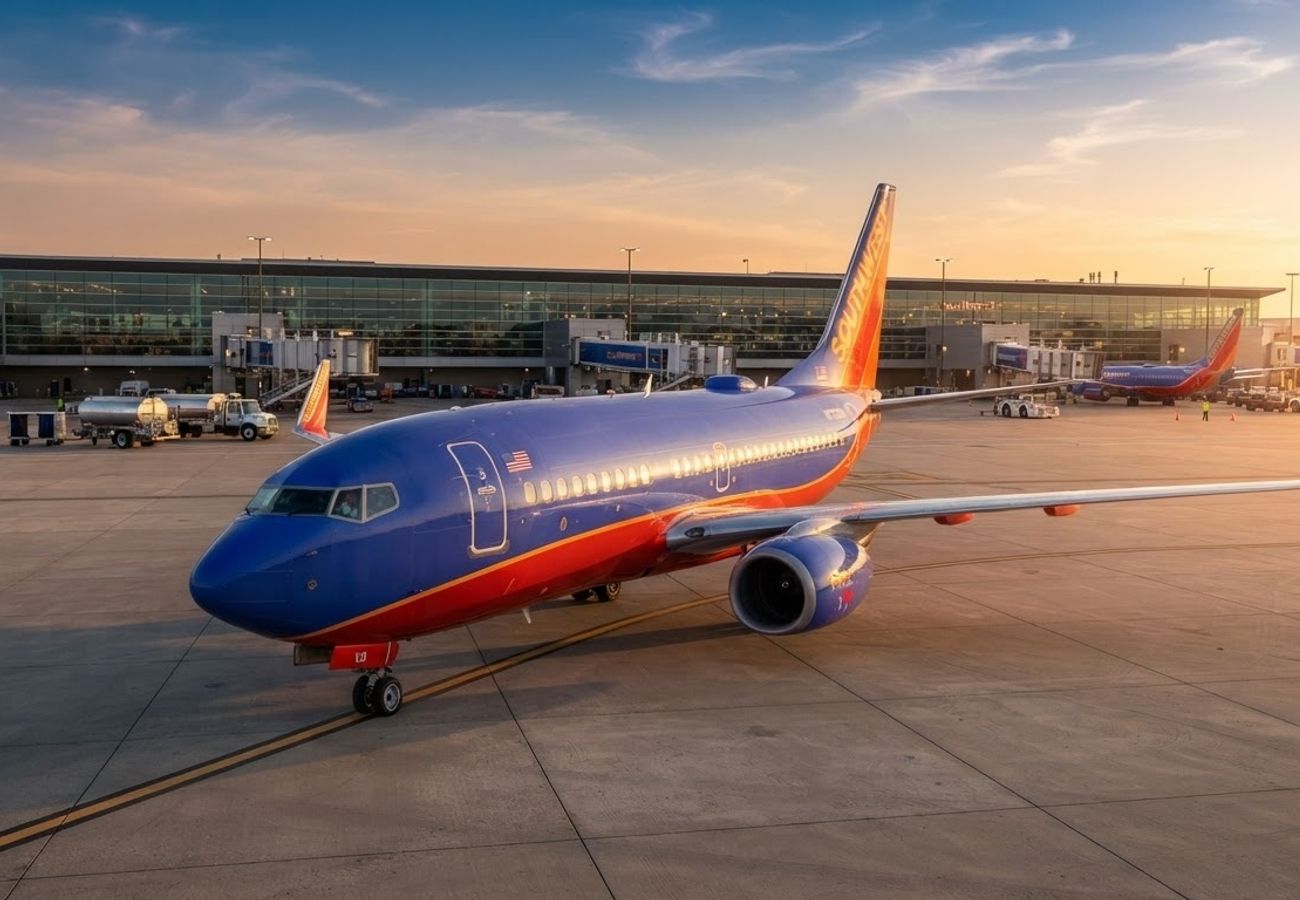
Image generated by AI
The era of the ultra-low-cost carrier dominating the budget sector is shifting. New 2026 data indicates that Southwest Airlines has overtaken traditional budget rivals by blending competitive base fares with superior operational stability.
While names like Frontier and Allegiant have long been the default for rock-bottom ticket prices, the domestic aviation landscape in 2026 tells a different story. Federal fare data and industry analyses now position Southwest as the primary value leader for U.S. travelers, offering a strategic middle ground between expensive legacy carriers and the restrictive models of ultra-low-cost carriers (ULCCs).
The Shift in Budget Aviation Dynamics
The dominance of ULCCs is waning due to a combination of market exits and economic pressures. Spirit Airlines' decision to retreat from numerous domestic routes has significantly reduced fare pressure in the ultra-discount segment, allowing remaining budget players to increase their prices.
Simultaneously, systemic inflation affecting labor and fuel costs has narrowed the pricing gap between budget airlines and larger carriers. This shift has made the "headline price" less of a differentiator than it was in previous years.
According to the Department of Transportation’s (DOT) Domestic Airfare Consumer Reports and data from the Bureau of Transportation Statistics (BTS), Southwest is now frequently the lowest-fare provider across major city pairs. This is particularly evident in short- and medium-haul markets, where full-service airlines typically prioritize higher-paying business travelers.
Deconstructing the Total Cost of Travel
A critical distinction in 2026 is the gap between the advertised base fare and the actual out-of-pocket expense. ULCCs like Frontier and Allegiant maintain low entry prices by stripping away essentials, charging extra for:
- Carry-on bags
- Checked luggage
- Advanced seat assignments
When these ancillary fees are added, the total cost often equals or exceeds a Southwest ticket. Southwest’s policy of providing two free checked bags remains a decisive advantage for families and long-term travelers, as baggage fees are typically the highest additional expense on a trip.
Furthermore, Southwest’s lack of change fees provides a financial safety net that ULCCs do not offer. In an environment where schedule disruptions remain common, the ability to modify travel plans without penalty adds a layer of "hidden" value that lowers the overall financial risk for the passenger.
Operational Reliability and Network Scale
Value is not measured by the ticket price alone but by the probability of reaching a destination on time. Early 2026 on-time performance data from the government’s Air Travel Consumer Reports places Southwest near the top of the industry, outperforming several legacy and low-cost competitors.
High reliability reduces the risk of secondary costs, such as:
- Unplanned hotel stays
- Missed connections
- Emergency rebooking fees
Southwest also maintains a significantly larger domestic footprint than its budget rivals. While Allegiant and Frontier often operate thin, seasonal routes with limited frequencies, Southwest offers multiple daily flights across key corridors. This provides travelers in mid-size cities with greater flexibility in departure times without sacrificing affordability.
Strategic Booking Trends for 2026
Current booking patterns reveal specific opportunities for cost-conscious travelers to find deep discounts. Analysis of first-quarter 2026 data shows an unusual pricing dip in June for certain corridors.
This "trough" occurs between the peak of corporate travel and the start of the primary family vacation season. Revenue managers have been observed lowering prices during these specific windows to maintain aircraft load factors.
Travelers can maximize savings by monitoring routes where Southwest competes directly with at least one full-service legacy carrier, as this competition typically drives fares lower.
Comparison of Carrier Value Models
| Feature | Ultra-Low-Cost Carriers (ULCC) | Southwest Airlines | Legacy Network Carriers |
|---|---|---|---|
| Base Fare | Lowest (Headline) | Competitive/Low | Moderate to High |
| Baggage Policy | High Ancillary Fees | 2 Bags Included | Limited/Paid |
| Change Fees | Strict/High | No Change Fees | Varies by Fare Class |
| Route Frequency | Low/Seasonal | High/Consistent | Very High |
| Reliability | Variable | High (Top Tier 2026) | Moderate to High |
Key Takeaways for Travelers
- Look Beyond the Base Fare: The cheapest ticket on the search screen often becomes the most expensive after adding bags and seat selections.
- Prioritize Reliability: Higher on-time performance reduces the risk of costly travel disruptions.
- Leverage the "June Dip": Watch for pricing lulls in early summer between corporate and family travel peaks.
- Value the Flexibility: No-fee changes provide a significant hedge against the volatility of modern flight schedules.
Frequently Asked Questions
Is Southwest always the cheapest option in 2026? Not always. For passengers traveling with only a small personal item and fixed dates, ULCCs may still offer the absolute lowest price. However, for the average traveler, Southwest provides the best overall value.
Why are budget airline prices rising? The exit of Spirit from several routes and the rising cost of fuel and labor have reduced the ability of budget carriers to maintain extremely low fares.
How does the "two free bags" policy affect the total cost? For most travelers, baggage is the most expensive add-on. By including this in the base fare, Southwest often undercuts the "all-in" price of budget rivals.
Smart travel in 2026 is no longer about finding the lowest number, but the lowest total cost of ownership for the journey.
Related Travel Guides
Disclaimer
This article is for informational and educational purposes only. It does not constitute legal, financial, or professional advice. While we strive to provide accurate and up-to-date information, travel policies, regulations, and conditions change rapidly. Always verify information with official sources before making travel decisions. Nomad Lawyer makes no representations about the accuracy, reliability, completeness, or suitability of the information provided. Readers should consult qualified professionals for advice specific to their circumstances. The views expressed in this article are those of the author and do not necessarily reflect the views of Nomad Lawyer.
Raushan Kumar
Founder & Lead Developer
Full-stack developer with 11+ years of experience and a passionate traveller. Raushan built Nomad Lawyer from the ground up with a vision to create the best travel and law experience on the web.
Learn more about our team →