
Boeing 787 Dreamliner Engine Choice: How Rolls-Royce and GE Are Reshaping Long-Haul Aviation Economics
Breaking airline news and aviation industry updates for 2026.

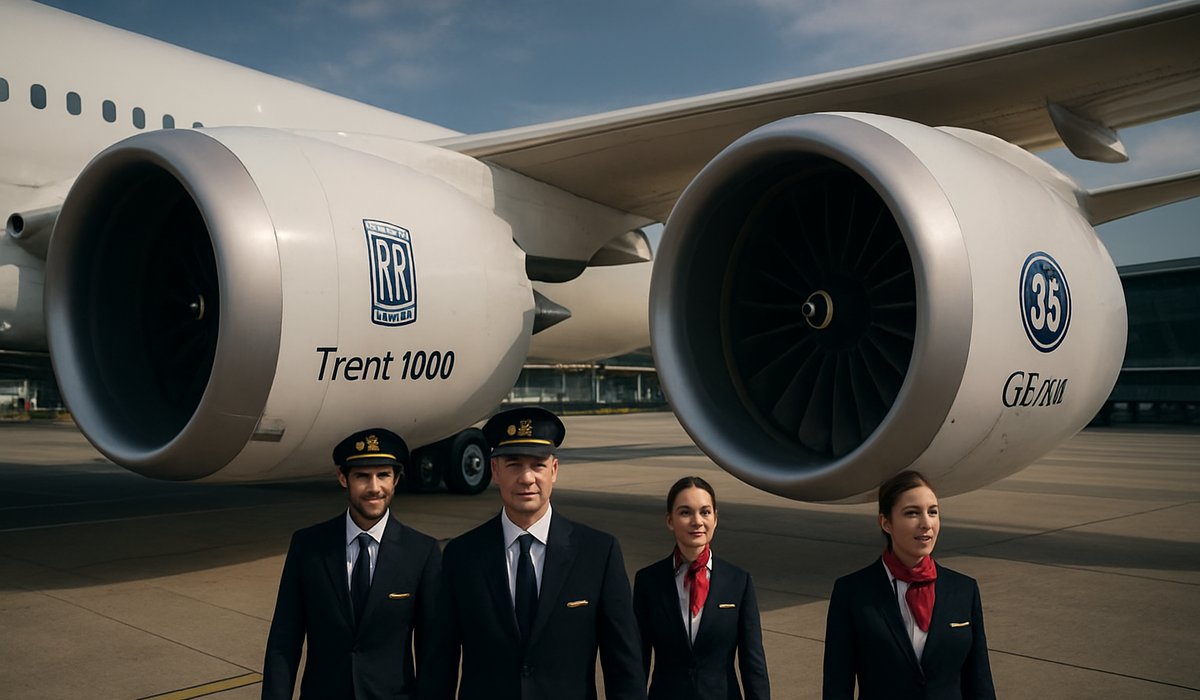
Image generated by AI
Boeing 787 Dreamliner Engine Choice: How Rolls-Royce and GE Are Reshaping Long-Haul Aviation Economics
Two competing powerplants drive fuel efficiency gains—and reveal deeper industry trends about aircraft operating costs and airline profitability
The Technology Battle Behind Modern Long-Haul Flight
The Boeing 787 Dreamliner has emerged as a game-changer in commercial aviation, fundamentally altering how airlines approach fuel consumption, passenger capacity, and operational efficiency on intercontinental routes. Yet beneath the aircraft's revolutionary composite airframe and advanced systems lies a critical decision that carriers face: which engine technology best serves their fleet strategy and bottom line.
Two competing propulsion systems now power the 787 fleet worldwide: Rolls-Royce's Trent 1000 and General Electric's GEnx. This engine rivalry carries significant implications not only for aircraft performance but for the broader economics of aviation—from jet fuel price volatility to how airlines structure baggage charges and ancillary fees.
Engine Performance and Fuel Efficiency: The Core Differentiator
The Rolls-Royce Trent 1000 and GE GEnx represent fundamentally different engineering philosophies optimized for the 787's twin-engine configuration. Both powerplants deliver exceptional fuel burn reductions compared to previous-generation aircraft, directly impacting airline operating costs and, consequently, ticket pricing strategies.
Rolls-Royce's Trent 1000 emphasizes advanced high-pressure compressor technology and optimized turbine design. General Electric's GEnx counters with its own efficiency gains through advanced materials and aerodynamic refinements. Airlines selecting either option are making long-term commitments affecting maintenance schedules, spare parts inventory, and crew training protocols.
For carriers operating in regions facing volatile jet fuel prices—particularly post-geopolitical disruptions—the fuel efficiency margins between these engines translate directly to profitability. A single percentage-point improvement in fuel consumption across a global fleet can mean millions in annual savings, allowing operators to maintain competitive fares or absorb rising operating expenses without imposing additional baggage charges.
Industry Impact and Competitive Positioning
The engine selection process reflects broader aviation industry trends. Airlines committed to sustainable operations and reduced carbon emissions increasingly view propulsion efficiency as a competitive advantage. Both manufacturers continue refining these engines to meet evolving environmental regulations and customer demands for lower fuel consumption.
This competition drives innovation across the aviation sector, encouraging manufacturers to pursue next-generation technologies that could further revolutionize long-haul economics.
FAQ: Understanding Boeing 787 Engines and Aviation Costs
Q: How do engine differences affect airline ticket prices and baggage fees? A: Superior fuel efficiency reduces overall operating costs, potentially allowing airlines to maintain lower base fares or defer additional ancillary charges, though competitive market forces ultimately determine pricing strategies.
Q: Which engine is more reliable for long-haul operations? A: Both the Rolls-Royce Trent 1000 and GE GEnx have demonstrated strong reliability records. Selection depends on individual airline maintenance capabilities and regional support infrastructure.
Q: How do jet fuel prices influence engine selection decisions? A: Airlines prioritize fuel-efficient engines when facing sustained high fuel costs, as efficiency gains compound across thousands of flight hours and directly impact profitability.
Q: Can airlines retrofit existing 787s with different engines? A: No. Engine selection is determined at aircraft manufacture and cannot be changed during the aircraft's operational life without complete redesign.
Q: What environmental benefits do these modern engines provide? A: Both engines significantly reduce fuel consumption and CO2 emissions compared to previous-generation long-haul aircraft, supporting industry decarbonization goals.
Related Travel Guides
- Breaking Airline News: Severe Travel Chaos Averted as United Airlines Flight UA1805 Executes Terrifying Emergency Diversion to San Francisco Following Mid-Air Security Threat
- Six Airlines Premium Economy Seats: World's Widest Cabins in 2026
- Ultra-Long-Haul Aviation: Inside the Six Most Capable Aircraft Reshaping Global Flight Routes
Disclaimer
This article is for informational and educational purposes only. It does not constitute legal, financial, or professional advice. While we strive to provide accurate and up-to-date information, travel policies, regulations, and conditions change rapidly. Always verify information with official sources before making travel decisions. Nomad Lawyer makes no representations about the accuracy, reliability, completeness, or suitability of the information provided. Readers should consult qualified professionals for advice specific to their circumstances. The views expressed in this article are those of the author and do not necessarily reflect the views of Nomad Lawyer.
Kunal K Choudhary
Co-Founder & Contributor
A passionate traveller and tech enthusiast. Kunal contributes to the vision and growth of Nomad Lawyer, bringing fresh perspectives and driving the community forward.
Learn more about our team →