
Ryanair's Unlikely Triumph: Why Passengers Keep Flying Despite Widespread Complaints
Breaking airline news and aviation industry updates for 2026.

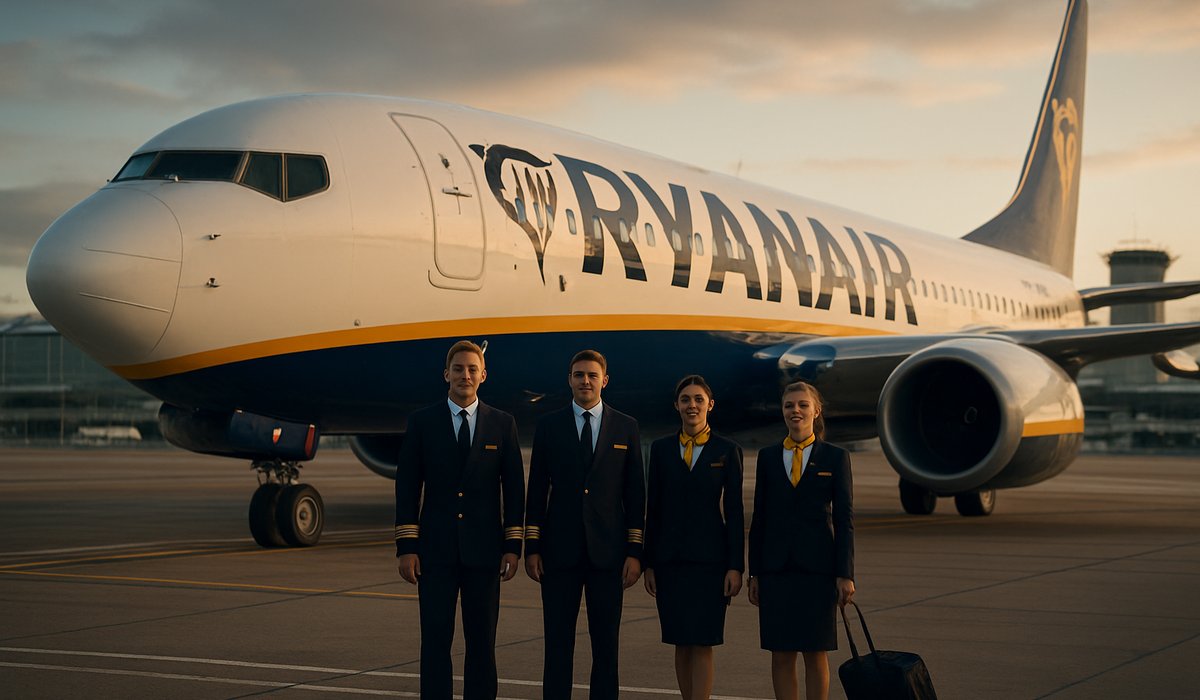
Image generated by AI
Ryanair's Unlikely Triumph: Why Passengers Keep Flying Despite Widespread Complaints
A deep dive into the paradox of Europe's most-criticized budget airline dominating the continent's skies
The Disconnect Between Sentiment and Booking Behavior
Ryanair has cemented its position as Europe's most polarizing airline—a carrier that passengers routinely criticize, yet continue to book with remarkable consistency. This counterintuitive phenomenon reveals a fundamental shift in how modern travelers evaluate air travel: price trumps passenger experience in an era of economic uncertainty and cost-conscious tourism.
The Dublin-based low-cost carrier has built its empire on radical cost reduction, stripping away the amenities and services that traditional carriers offer as standard. Yet despite earning a reputation for aggressive baggage policies, minimal legroom, and aggressive ancillary fees, Ryanair continues to capture market share across Europe, filling aircraft at rates that shame full-service competitors.
The Economics of Discontent
The explanation lies in simple economics. Ryanair's unbridled focus on operational efficiency has created a pricing structure that competitors cannot match. By charging separately for checked baggage, seat selection, and even printing boarding passes, the airline has effectively commoditized air travel into its base components.
For price-sensitive leisure travelers—particularly those spanning Europe's short-haul routes—the savings are too substantial to ignore. A transatlantic economy ticket on a legacy carrier might cost $800 to $1,200, while comparable Ryanair fares frequently undercut this by 60-70% on European routes. This pricing advantage persists even when ancillary charges are factored in.
Market Dominance Despite Reputational Challenges
Ryanair's operational model has generated substantial financial returns. The airline maintains some of the industry's highest load factors, meaning passenger seats remain occupied at rates exceeding those of full-service airlines. This efficiency drives profitability even as customer satisfaction scores languish.
Industry analysts note that Ryanair's success reflects a broader transformation in aviation economics. Surging jet fuel prices, labor cost pressures, and post-pandemic demand recovery have made ultra-low-cost carriers increasingly attractive to both leisure and budget-conscious business travelers. Traditional carriers, saddled with legacy cost structures and workforce agreements, struggle to compete on price.
The Future of Budget Aviation
Ryanair's paradoxical position—simultaneously reviled and patronized—suggests that passenger sentiment matters less than fare transparency and price competitiveness in shaping travel decisions. The airline's willingness to endure reputational damage in pursuit of cost leadership has proven strategically sound.
As inflation pressures household budgets worldwide and aviation fuel costs remain elevated, expect budget carriers to strengthen their market position further. Ryanair's model, once considered unsustainably aggressive, increasingly appears prescient.
FAQ: Understanding Ryanair's Market Success
Q: Why do passengers keep flying Ryanair if they dislike the airline? A: Price remains the dominant factor in short-haul travel decisions. Ryanair's fares are often 40-60% cheaper than competitors, making the trade-off between cost and comfort economically rational for budget travelers.
Q: How does Ryanair maintain profitability with such low fares? A: The airline maximizes revenue through ancillary fees (baggage, seat selection, priority boarding) while maintaining exceptionally high aircraft utilization rates and lean staffing models.
Q: Are baggage fees and other charges transparent in Ryanair's pricing? A: Yes, though charges are itemized separately from base fares, which can inflate total costs. Passengers booking basic economy fares without add-ons pay the advertised price.
Q: How do rising jet fuel prices affect budget airlines like Ryanair? A: All carriers suffer from fuel cost increases, but low-cost carriers' efficiency models provide greater resilience. Ryanair's operational discipline limits margin compression compared to traditional carriers.
Q: Will Ryanair's business model change in response to customer complaints? A: Unlikely. As long as load factors remain high and profitability strong, management has little incentive to modify its cost-cutting strategy.
Related Travel Guides
-
Delta Movers Shakers: Walshe Group Reshapes Australian Commercial Team
-
Why Mega US Carriers May Be Circling JetBlue for a Blockbuster Airline Takeover
External Resources
Disclaimer
This article is for informational and educational purposes only. It does not constitute legal, financial, or professional advice. While we strive to provide accurate and up-to-date information, travel policies, regulations, and conditions change rapidly. Always verify information with official sources before making travel decisions. Nomad Lawyer makes no representations about the accuracy, reliability, completeness, or suitability of the information provided. Readers should consult qualified professionals for advice specific to their circumstances. The views expressed in this article are those of the author and do not necessarily reflect the views of Nomad Lawyer.
Raushan Kumar
Founder & Lead Developer
Full-stack developer with 11+ years of experience and a passionate traveller. Raushan built Nomad Lawyer from the ground up with a vision to create the best travel and law experience on the web.
Learn more about our team →