
Airlines Launch Economy Upsell Revolution: United and Air New Zealand Pioneer Seat-Row Bundling on Long-Haul Routes
Breaking airline news and aviation industry updates for 2026.

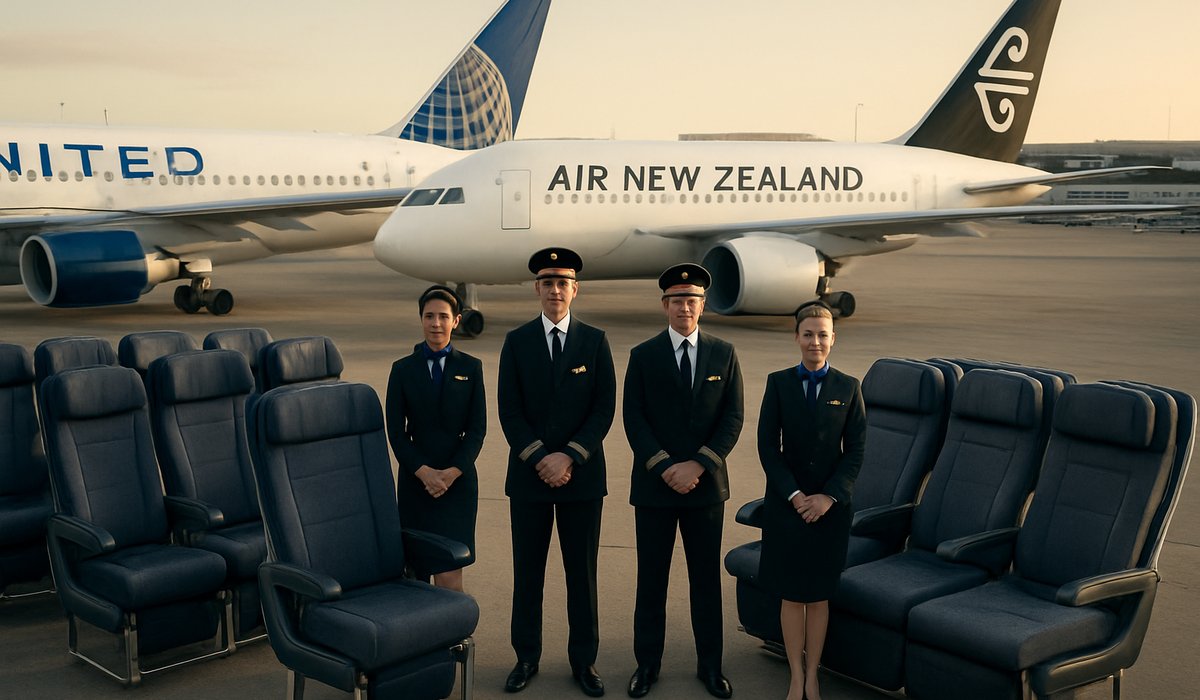
Image generated by AI
Airlines Launch Economy Upsell Revolution: United and Air New Zealand Pioneer Seat-Row Bundling on Long-Haul Routes
Carriers introduce premium economy alternatives as industry seeks new revenue streams beyond traditional baggage and seat fees
New Revenue Frontier Emerges in Economy Cabin
United Airlines and Air New Zealand are reshaping the economics of long-haul travel with a novel cabin upsell strategy that transforms economy seating into quasi-premium experiences. The carriers now permit passengers to purchase three consecutive economy seats, converting the space into a makeshift sleeping platform—a strategy that captures middle-ground demand between congested standard economy and expensive business-class fares.
United's "Relax Row" offering and Air New Zealand's "Skycouches" represent a calculated industry response to shifting passenger preferences and evolving revenue optimization tactics. Rather than relying solely on traditional airline fees—baggage charges, seat selection premiums, and ancillary services—both carriers are capitalizing on the acute discomfort of sleeping across multiple economy seats during overnight flights.
Bridging the Cabin Gap
While these configurations cannot compete with lie-flat business-class beds that dominate premium cabins, they represent a substantial upgrade from the cramped reality of standard economy seating on intercontinental routes. The three-seat arrangement creates sufficient horizontal space for extended rest, particularly appealing to couples, families with children, and solo travelers willing to invest additional capital for improved comfort.
The offerings demonstrate how airlines are segmenting demand within traditionally homogeneous cabin classes. As jet fuel prices fluctuate and operational costs remain elevated, carriers increasingly view ancillary revenue—once dominated by baggage surcharges and seat selection—as critical to profitability. These bundled-seat products fit neatly into that ecosystem.
Industry Implications and Market Timing
The timing reflects broader aviation industry trends. Following years of volatile fuel surcharges and evolving consumer expectations around service quality, carriers recognize that premium-economy style products generate higher margins than traditional economy fares while remaining accessible to budget-conscious travelers seeking creature comforts.
This strategy positions both United and Air New Zealand competitively on long-haul markets where passenger duration—typically 10 to 18 hours—directly correlates with discomfort complaints. By offering an intermediate product tier, they can capture revenue from passengers unable or unwilling to afford business-class premiums but desperate for improved sleep arrangements.
Industry analysts expect comparable offerings from other major carriers operating extended international routes, particularly on Australia-to-North America and Europe-to-Asia corridors where overnight flight duration maximizes demand for sleep-friendly configurations.
FAQ: Economy Seat Bundling and Long-Haul Travel
What are airline Relax Rows and Skycouches? These are converted economy seating configurations where airlines sell three adjacent seats that flatten into couch-like sleeping platforms, offering improved comfort without business-class pricing.
How much do these premium economy bundles cost? Pricing varies by route and airline; specific rates depend on demand, distance, and baseline economy fares on particular flights.
Are these alternatives cheaper than business class? Yes—bundled-seat products typically cost significantly less than premium cabin fares while providing superior comfort to standard economy arrangements.
Which airlines offer these products currently? United Airlines and Air New Zealand have launched their versions; additional carriers are expected to introduce similar offerings as demand proves viable.
Why are airlines introducing these products now? Volatile jet fuel costs and increased operational expenses drive carriers to develop new revenue streams through segmented cabin products that capture middle-market demand.
Related Travel Guides
Flight Delay Compensation Guide 2026
Understanding Airline Route Changes
Airport Security Process Updated (2026)
External Resources
Disclaimer
This article is for informational and educational purposes only. It does not constitute legal, financial, or professional advice. While we strive to provide accurate and up-to-date information, travel policies, regulations, and conditions change rapidly. Always verify information with official sources before making travel decisions. Nomad Lawyer makes no representations about the accuracy, reliability, completeness, or suitability of the information provided. Readers should consult qualified professionals for advice specific to their circumstances. The views expressed in this article are those of the author and do not necessarily reflect the views of Nomad Lawyer.
Preeti Gunjan
Contributor & Community Manager
A passionate traveller and community builder. Preeti helps grow the Nomad Lawyer community, fostering engagement and bringing the reader experience to life.
Learn more about our team →