
US Navy Strategically Deploys F/A-18 Super Hornets Alongside F-35C in Operational Reassessment
Breaking airline news and aviation industry updates for 2026.

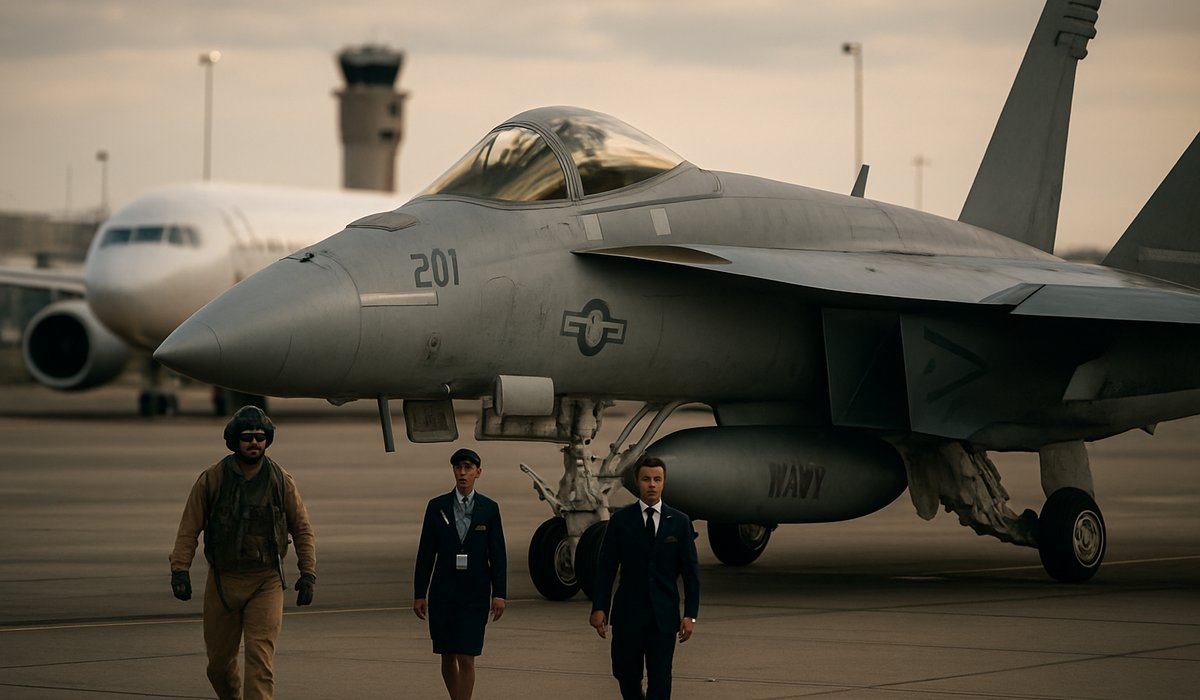
Image generated by AI
US Navy Strategically Deploys F/A-18 Super Hornets Alongside F-35C in Operational Reassessment
Military aviation experts reveal why legacy fighter jets remain mission-critical despite next-generation stealth capabilities
Operational Reality Challenges Pentagon's Fighter Jet Strategy
The United States Navy continues to rely heavily on Boeing's F/A-18 Super Hornet for combat operations, even as Lockheed Martin's fifth-generation F-35C Lightning II stealth fighter gradually integrates into carrier strike groups. Military strategists confirm that aircraft selection depends on multiple factors beyond technological superiority, fundamentally reshaping how the Pentagon approaches modern naval aviation requirements.
Multi-Factor Mission Planning Determines Aircraft Deployment
Rather than phasing out the proven Super Hornet entirely, Navy commanders employ both platforms strategically based on operational needs. Availability constraints, specific mission parameters, inter-service coordination requirements, and complementary force composition all influence daily deployment decisions. Pentagon officials acknowledge that next-generation capabilities alone cannot dictate squadron assignments when legacy platforms offer distinct advantages for particular scenarios.
The Navy's continued confidence in the Super Hornet reflects practical realities facing military aviation planners. Maintenance schedules, aircraft readiness rates, and the learning curve associated with deploying newer F-35C variants across the fleet create operational windows where fourth-generation fighters remain indispensable. Additionally, many regional contingencies benefit from the Super Hornet's established combat doctrine and proven reliability in contested environments.
Collaborative Force Posture Drives Strategic Pairing
Rather than viewing the F-35C as a complete replacement, the Navy increasingly operates both aircraft types in coordinated configurations. The Super Hornet's superior maneuverability in certain close-range scenarios, combined with the F-35C's advanced sensor fusion and stealth capabilities, creates a layered tactical advantage that neither platform delivers alone. This hybrid approach maximizes carrier strike group effectiveness while maintaining operational flexibility.
Military aviators emphasize that mission success depends on matching aircraft capabilities to specific objectives. Transport escort missions, rapid-response scenarios, and engagements requiring extended loiter times often favor the Super Hornet's proven performance envelope. Meanwhile, air superiority operations in heavily defended airspace leverage the F-35C's fifth-generation attributes.
Long-Term Fleet Modernization Remains On Track
Despite continued Super Hornet deployments, the Pentagon maintains its commitment to F-35C integration across naval aviation. Budget allocations, pilot training programs, and carrier modifications proceed according to modernization schedules. However, military planners now acknowledge that a gradual transition period—rather than rapid fleet replacement—optimizes operational readiness and risk management.
The Navy's pragmatic approach underscores a critical lesson in modern defense strategy: technological advancement must align with real-world operational constraints, fleet availability, and mission-specific requirements.
Frequently Asked Questions
Why does the US Navy continue using F/A-18 Super Hornets instead of exclusively deploying F-35C fighters? Aircraft selection depends on mission type, pilot availability, aircraft readiness, inter-service coordination, and operational requirements rather than technological capability alone.
What are the advantages of the F/A-18 Super Hornet over the F-35C Lightning II? The Super Hornet offers superior maneuverability in close-range engagements, proven combat reliability, extended loiter capabilities, and established tactical doctrine, making it optimal for specific scenarios.
How does the Navy coordinate deployments between fourth and fifth-generation fighters? Commanders pair both platforms strategically within carrier strike groups, leveraging the Super Hornet's tactical advantages alongside the F-35C's stealth and sensor fusion capabilities for maximum effectiveness.
When will the F-35C completely replace the F/A-18 Super Hornet? The Navy anticipates a gradual transition period rather than rapid fleet replacement, allowing for pilot training, maintenance optimization, and operational readiness continuity.
What factors influence which fighter jet the Navy deploys for specific missions? Availability, mission parameters, aircraft readiness rates, maintenance schedules, regional threat assessments, and inter-service requirements drive deployment decisions.
Related Travel Guides
Flight Delay Compensation Guide 2026
Understanding Airline Route Changes
Airport Security Process Updated (2026)
External Resources
Disclaimer
This article is for informational and educational purposes only. It does not constitute legal, financial, or professional advice. While we strive to provide accurate and up-to-date information, travel policies, regulations, and conditions change rapidly. Always verify information with official sources before making travel decisions. Nomad Lawyer makes no representations about the accuracy, reliability, completeness, or suitability of the information provided. Readers should consult qualified professionals for advice specific to their circumstances. The views expressed in this article are those of the author and do not necessarily reflect the views of Nomad Lawyer.
Raushan Kumar
Founder & Lead Developer
Full-stack developer with 11+ years of experience and a passionate traveller. Raushan built Nomad Lawyer from the ground up with a vision to create the best travel and law experience on the web.
Learn more about our team →