
Last Airworthy Lockheed Constellation Takes Flight as Aviation Heritage Reaches Critical Juncture
Breaking airline news and aviation industry updates for 2026.

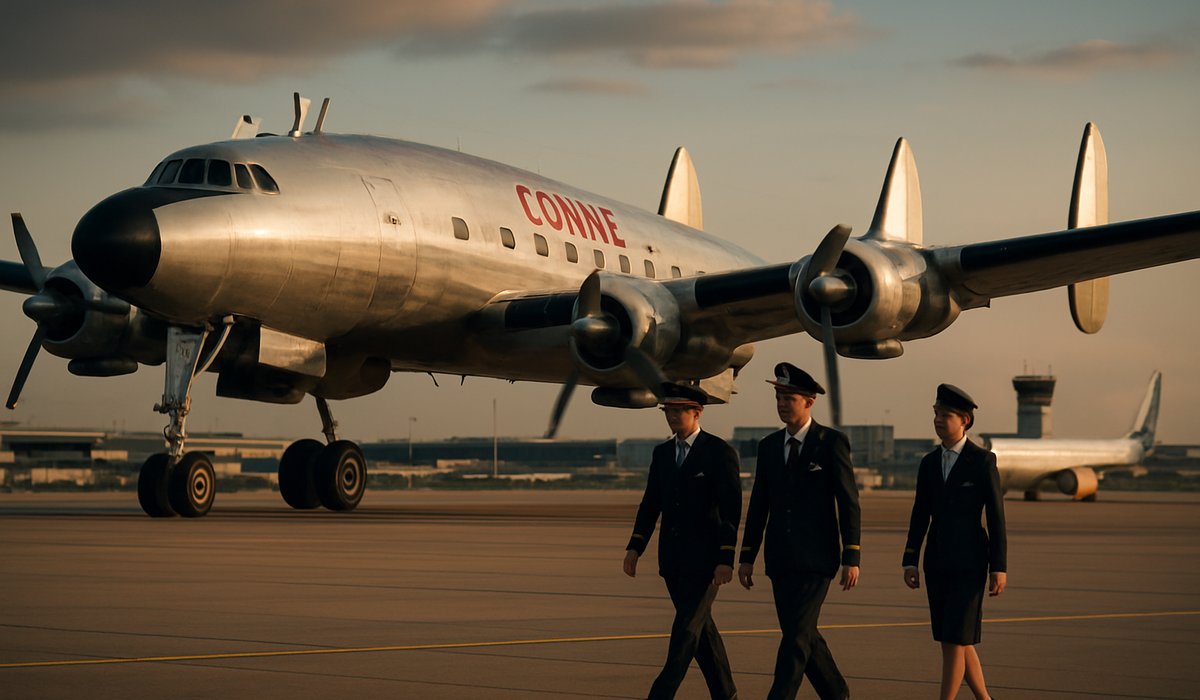
Image generated by AI
Last Airworthy Lockheed Constellation Takes Flight as Aviation Heritage Reaches Critical Juncture
The iconic 'Connie' represents a vanishing link to commercial aviation's golden age, with only a handful of examples still capable of flying
A Living Relic of Aviation's Pioneering Era
The Lockheed Constellation—affectionately dubbed the "Connie" by aviation historians and enthusiasts—remains one of the most celebrated aircraft designs ever to grace the skies. With its distinctive triple-tail configuration, gracefully swept fuselage, and robust radial engines, this machine stands as a tangible monument to an era when commercial aviation represented the cutting edge of technological achievement and luxury travel.
Yet as 2026 approaches, these magnificent aircraft grow increasingly rare. Today, only a select few examples of the legendary Constellation continue to maintain active airworthiness status, making each flight a precious window into aviation history.
The Technical Marvel That Changed Long-Range Travel
Introduced in the 1940s, the Lockheed Constellation revolutionized intercontinental air travel by significantly extending range capabilities while delivering unprecedented passenger comfort. The aircraft's distinctive aerodynamic profile—instantly recognizable by its curved fuselage and triple-fin tail design—became synonymous with the golden age of flying, when air travel represented a luxury experience rather than a utilitarian necessity.
The Constellation's powerful radial engine configuration provided the reliability and performance needed for ambitious transatlantic and transpacific routes, establishing new standards for commercial aviation operations that would influence aircraft design for decades to come.
Preserving History in an Age of Modern Aviation
The survival of operational Lockheed Constellations today owes much to dedicated aviation preservationists and heritage organizations committed to maintaining these aircraft to active flying status. Each airworthy example represents thousands of hours of meticulous restoration work, sourcing of period-correct components, and specialized engineering expertise.
These remaining aircraft serve multiple purposes: they allow researchers and historians to understand the operational characteristics and limitations of early modern aviation, provide educational opportunities for aviation professionals, and inspire a new generation of enthusiasts who might otherwise only encounter these machines in museums or photographs.
Global Significance for Aviation Heritage
The existence of flying Constellations underscores the broader challenge facing aviation heritage organizations worldwide. As the fleet of historic commercial aircraft continues to dwindle, institutions increasingly focus resources on preservation and educational initiatives. The Constellation's enduring appeal demonstrates continued public interest in aviation history and the remarkable engineering achievements of the mid-twentieth century.
For aviation enthusiasts and industry professionals alike, each flight by an airworthy Constellation represents an irreplaceable connection to the formative decades when commercial aviation was establishing itself as a transformative global technology.
FAQ: Lockheed Constellation and Aviation Heritage
Q: How many Lockheed Constellations are still airworthy today? A: Only a small number of Constellations maintain active airworthiness status globally, making them exceptionally rare examples of operating vintage aircraft.
Q: What makes the Lockheed Constellation historically significant in aviation? A: The Constellation revolutionized long-range commercial air travel during the 1940s-1950s through advanced range capabilities and passenger comfort standards that exceeded contemporary competitors.
Q: Where can aviation enthusiasts see a flying Lockheed Constellation? A: Airworthy examples typically appear at major aviation heritage events, air shows, and museums with active flight programs, though appearances remain infrequent due to operational limitations.
Q: Why are vintage aircraft like the Constellation difficult to maintain? A: Sourcing replacement components, finding specialized maintenance expertise, and meeting modern regulatory requirements present substantial challenges for aircraft over 70 years old.
Q: What is the difference between a museum aircraft and an airworthy vintage plane? A: Airworthy aircraft maintain full operational certifications and undergo regular flight testing, while museum examples are typically static displays preserved for historical documentation.
Related Travel Guides
External Resources
Disclaimer
This article is for informational and educational purposes only. It does not constitute legal, financial, or professional advice. While we strive to provide accurate and up-to-date information, travel policies, regulations, and conditions change rapidly. Always verify information with official sources before making travel decisions. Nomad Lawyer makes no representations about the accuracy, reliability, completeness, or suitability of the information provided. Readers should consult qualified professionals for advice specific to their circumstances. The views expressed in this article are those of the author and do not necessarily reflect the views of Nomad Lawyer.
Raushan Kumar
Founder & Lead Developer
Full-stack developer with 11+ years of experience and a passionate traveller. Raushan built Nomad Lawyer from the ground up with a vision to create the best travel and law experience on the web.
Learn more about our team →