
Emirates Redesigns A380 Fleet Strategy: How Premium Comfort Trumps Passenger Capacity on World's Largest Airliner
Breaking airline news and aviation industry updates for 2026.

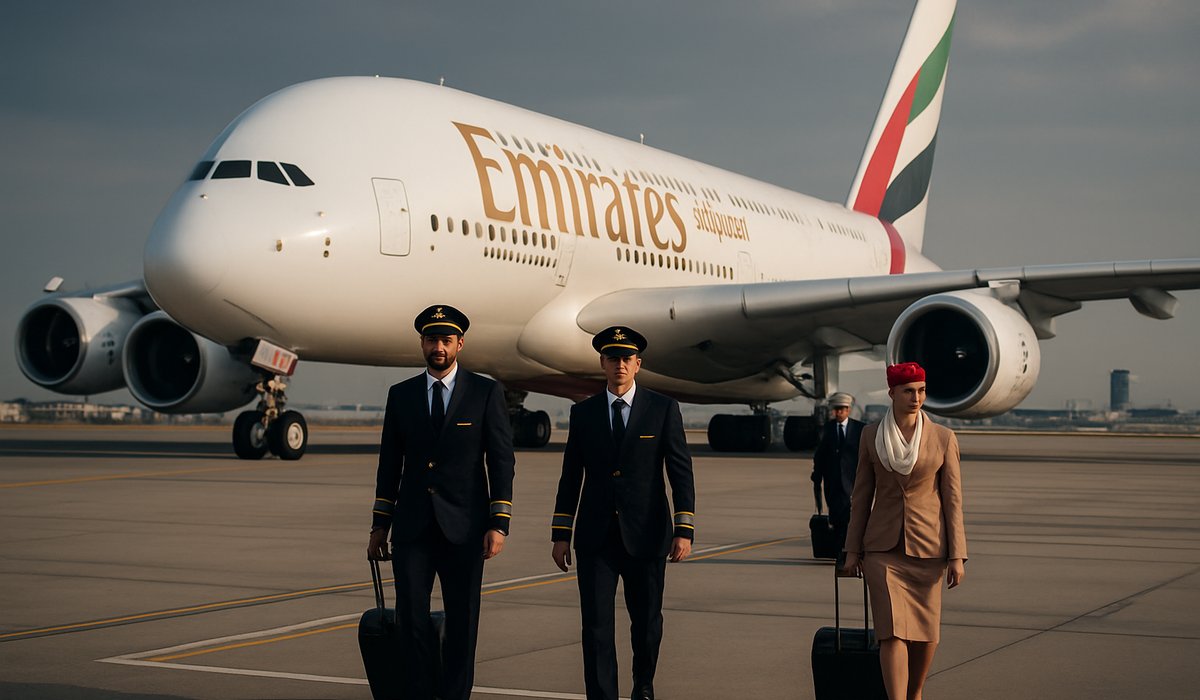
Image generated by AI
Emirates Redesigns A380 Fleet Strategy: How Premium Comfort Trumps Passenger Capacity on World's Largest Airliner
The Dubai carrier's reconfigured superjumbo signals broader industry shift away from density-driven models toward revenue-per-seat optimization
A New Era for Superjumbo Configuration
Emirates marked a pivotal operational milestone on May 20, 2026, when a fundamentally reconfigured Airbus A380 departed Dubai International Airport bound for Birmingham, fundamentally reshaping the economics of ultra-large aircraft deployment. The redesigned superjumbo represents a strategic departure from the carrier's longstanding pursuit of maximum passenger density, instead introducing an intermediate premium cabin tier that rebalances the aircraft's cabin architecture in pursuit of enhanced per-seat revenue generation.
The move reflects mounting pressures across the aviation industry as carriers grapple with volatile jet fuel prices, rising operational costs, and evolving passenger expectations in the post-pandemic travel landscape.
Strategic Reconfiguration Over Raw Volume
The reconfiguration prioritizes passenger experience and yield optimization rather than cramming additional seats throughout the aircraft. By introducing an intermediate cabin segment—positioned between economy and first-class offerings—Emirates aims to capture growing demand from premium leisure travelers and business passengers unwilling to pay full first-class fares but seeking superior comfort beyond standard economy.
This architectural shift reveals a calculated trade-off: reduced overall seat count in exchange for higher average revenue per passenger. Industry analysts suggest this approach addresses persistent profitability challenges plaguing even the world's most prestigious airlines.
Implications for Global Aviation Economics
The reconfigured A380 deployment carries significant implications for the broader aviation sector. As airlines confront elevated jet fuel costs and competitive pressures on international routes, the traditional model of squeezing maximum capacity onto ultra-large aircraft has become increasingly untenable.
Emirates' strategic pivot suggests that future profitability depends less on passenger volume and more on sophisticated revenue management and cabin segmentation. This trend mirrors industry-wide efforts to optimize aircraft utilization through premium ancillary services, enhanced baggage policies, and tiered seating arrangements rather than relying solely on fare compression.
The Birmingham route inaugural flight signals a broader recalibration of how carriers deploy their most expensive assets in an environment where fuel surcharges and operational efficiency have become primary determinants of financial viability.
What's Next for Superjumbo Operations?
As Emirates systematically reintroduces redesigned A380s across its network, competitors like Singapore Airlines, British Airways, and Lufthansa are likely reassessing their own fleet configurations. The superjumbet market—already constrained by Airbus's decision to wind down A380 production—may see renewed interest in retrofit programs emphasizing premium capacity over total seat counts.
Frequently Asked Questions
How do airline baggage charges affect the economics of reconfigured aircraft like the A380? Reduced seat counts enable airlines to generate proportionally higher ancillary revenue per passenger through baggage fees, seat selection charges, and premium service offerings, offsetting lower total passenger numbers.
What role do jet fuel prices play in Emirates' decision to reduce aircraft density? Elevated fuel costs make operating inefficient, high-density configurations economically unfavorable. Airlines now prioritize higher per-seat revenue to offset fuel surcharges and operational expenses.
Why would airlines choose premium cabins over maximum passenger capacity? Modern aviation economics favor revenue optimization over volume. Premium seating commands significantly higher fares and ancillary spending, delivering superior profit margins despite smaller passenger totals.
What is the future of superjumbo aircraft like the A380 in commercial aviation? As production declines, remaining A380s will increasingly undergo premium reconfigurations targeting high-value routes rather than density-driven, mass-market applications. Retrofit programs will become more common.
How does this trend affect international travel costs for economy passengers? While premium cabin expansion may temporarily reduce economy seat availability on select routes, increased competition and fleet modernization typically stabilize or reduce fares for standard passengers over the long term.
Related Travel Guides
Flight Delay Compensation Guide 2026
Understanding Airline Route Changes
Airport Security Process Updated (2026)
External Resources
Disclaimer
This article is for informational and educational purposes only. It does not constitute legal, financial, or professional advice. While we strive to provide accurate and up-to-date information, travel policies, regulations, and conditions change rapidly. Always verify information with official sources before making travel decisions. Nomad Lawyer makes no representations about the accuracy, reliability, completeness, or suitability of the information provided. Readers should consult qualified professionals for advice specific to their circumstances. The views expressed in this article are those of the author and do not necessarily reflect the views of Nomad Lawyer.
Preeti Gunjan
Contributor & Community Manager
A passionate traveller and community builder. Preeti helps grow the Nomad Lawyer community, fostering engagement and bringing the reader experience to life.
Learn more about our team →