
Premium Private Aviation Becomes Critical Logistics Challenge for 2026 FIFA World Cup
Breaking airline news and aviation industry updates for 2026.

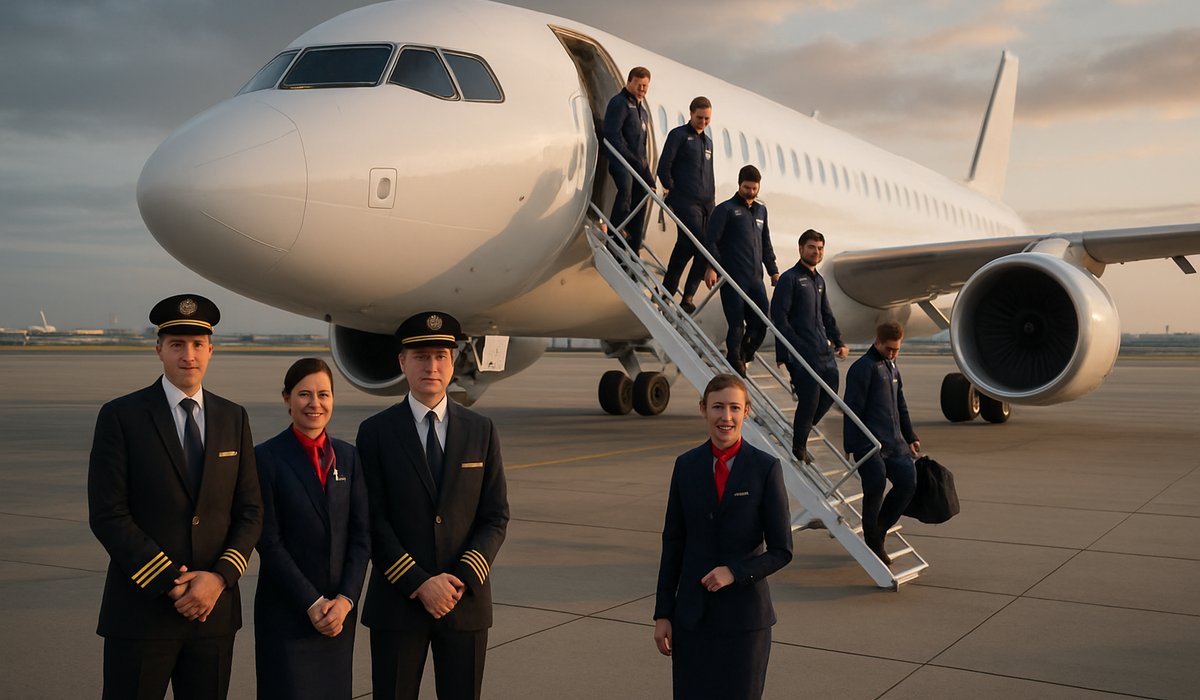
Image generated by AI
Premium Private Aviation Becomes Critical Logistics Challenge for 2026 FIFA World Cup
As 48 national teams prepare for North America's historic tournament, charter aircraft industry faces unprecedented demand despite aircraft size limitations
The Scale of Global Sports Logistics
The 2026 FIFA World Cup represents an unprecedented logistical undertaking for international sports travel. With Canada, Mexico, and the United States jointly hosting the tournament across three nations, organizers face the monumental task of transporting 48 national team delegations—including players, coaching staff, medical personnel, and support crews—across vast North American distances.
This sprawling geographic footprint has thrust the premium aviation charter market into the spotlight, yet industry specialists reveal a surprising constraint: despite the wealth of participating nations and individual players who maintain private aircraft portfolios, not a single national team has selected business jet charters for transatlantic travel to the tournament venues.
Why Traditional Business Jets Fall Short
The reason is straightforward but revealing about the aviation charter market's limitations. Standard business jets, ranging from midsize cabin aircraft to ultra-long-range models, simply lack the passenger and cargo capacity required for modern football team operations.
A typical national squad traveling to the World Cup comprises approximately 100 to 150 personnel. This includes players, physiotherapists, team physicians, nutritionists, coaching staff, security details, and administrative officials. Additionally, teams require substantial cargo space for equipment, training gear, medical supplies, and technical apparatus—volumes that dwarf the internal configurations of conventional business aviation platforms.
The Commercial Aviation Solution
Consequently, teams have opted for commercial airline charter services, which deploy wide-body aircraft capable of accommodating full delegations in single-aircraft movements. This approach offers both logistical efficiency and cost-effectiveness compared to coordinating multiple business jet flights across oceanic distances.
The 2026 World Cup has therefore become a case study in how even the world's most elite sporting organizations must defer to commercial aviation infrastructure when transporting large international contingents. The decision underscores broader trends in sports logistics, where charter airlines specializing in team transport continue expanding their market share against traditional business aviation providers.
Broader Industry Implications
This tournament represents a significant revenue opportunity for charter airlines and commercial operators, even as it highlights persistent gaps in the private aviation sector's service capabilities. As international sporting events grow larger and more complex, the demand for flexible, high-capacity aviation solutions shows no signs of declining.
The 2026 FIFA World Cup ultimately demonstrates that private jet ownership—regardless of individual player assets—cannot substitute for specialized fleet solutions engineered for mass team transportation.
Frequently Asked Questions
1. Why can't FIFA World Cup teams use private jets for transatlantic travel? Business jets lack the passenger and cargo capacity needed for 100-150 person delegations plus extensive equipment requirements across oceanic distances.
2. What aircraft types are being used for 2026 World Cup team charters? Wide-body commercial aircraft and specialized charter planes designed for team transport, offering superior capacity compared to business jets.
3. How does the 2026 World Cup's logistics compare to previous tournaments? The three-nation hosting arrangement across Canada, Mexico, and the US creates more complex intercontinental travel demands than previous single-country tournaments.
4. Are private jet charter companies losing business to commercial aviation for major sporting events? Yes—the sports travel segment increasingly favors commercial charter operators with high-capacity aircraft over traditional business aviation providers.
5. What is the typical team delegation size for international football tournaments? National teams typically travel with 100-150 personnel including players, medical staff, coaches, security, and administrative personnel.
Related Travel Guides
External Resources
Disclaimer
This article is for informational and educational purposes only. It does not constitute legal, financial, or professional advice. While we strive to provide accurate and up-to-date information, travel policies, regulations, and conditions change rapidly. Always verify information with official sources before making travel decisions. Nomad Lawyer makes no representations about the accuracy, reliability, completeness, or suitability of the information provided. Readers should consult qualified professionals for advice specific to their circumstances. The views expressed in this article are those of the author and do not necessarily reflect the views of Nomad Lawyer.
Preeti Gunjan
Contributor & Community Manager
A passionate traveller and community builder. Preeti helps grow the Nomad Lawyer community, fostering engagement and bringing the reader experience to life.
Learn more about our team →