
F-35 Lightning II's Exceptional Safety Record Challenges Narratives About America's Most Expensive Fighter Jet
Breaking airline news and aviation industry updates for 2026.

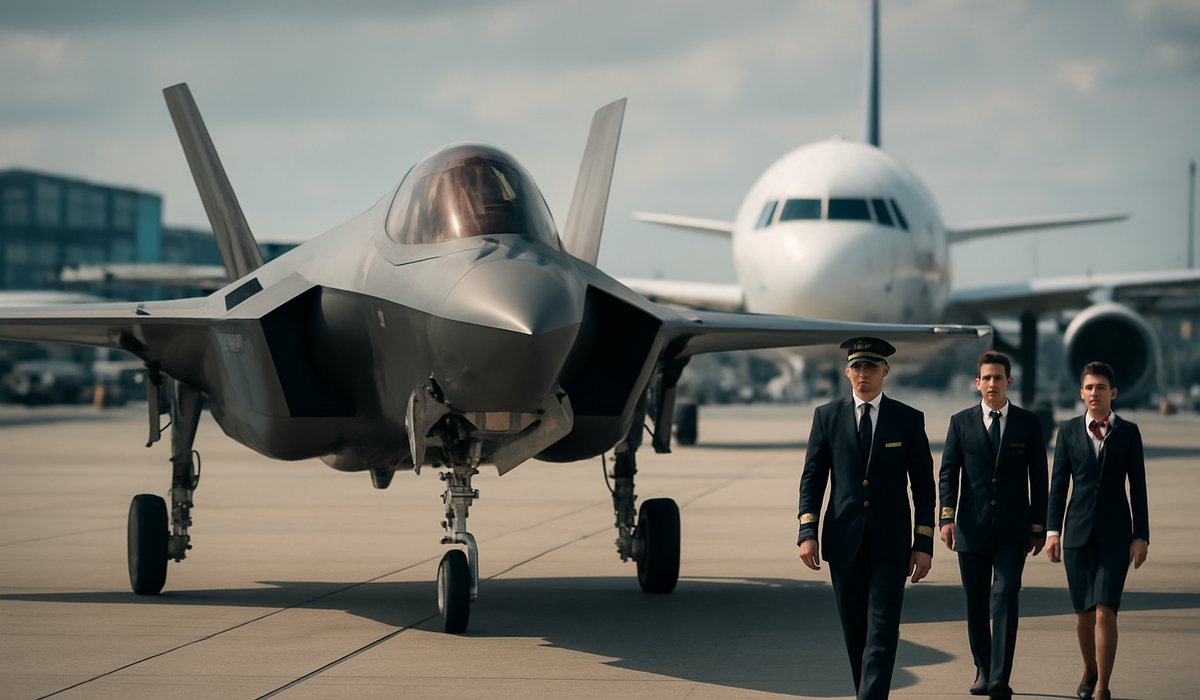
Image generated by AI
F-35 Lightning II's Exceptional Safety Record Challenges Narratives About America's Most Expensive Fighter Jet
Despite widespread criticism over cost overruns and technical delays, the stealth aircraft demonstrates safety performance metrics that rival decades-old platforms
The Safety Story Behind the $2 Trillion Program
While the F-35 Lightning II dominates headlines for its astronomical development costs and operational challenges, a critical dimension of the aircraft's performance remains largely absent from public discourse: its emerging safety record is among the strongest in modern tactical aviation.
The fifth-generation stealth fighter, centerpiece of a $2 trillion defense modernization initiative, has faced relentless scrutiny over budget escalations, delayed radar integration on recent production batches, and readiness concerns affecting deployment schedules. Yet flight safety data reveals a different narrative—one that contradicts the broader criticism leveled at the program and suggests the aircraft's engineering foundation may be more robust than detractors acknowledge.
Reframing the Safety Conversation
Military aviation experts point to pilot incident rates, catastrophic failure statistics, and operational mishap data as indicators that the F-35 represents a significant advancement in airframe safety engineering. When measured against the F-16 Fighting Falcon—the venerable fourth-generation platform that has served as the international standard for decades—the newer jet's safety metrics warrant serious consideration in any comprehensive assessment of the program's value proposition.
This distinction matters because mainstream coverage of the F-35 program has concentrated almost exclusively on financial waste, production delays, and technical shortcomings during integration phases. The safety performance dimension has received minimal attention despite its profound implications for pilot survivability and long-term operational viability.
Industry Implications
The F-35's safety credentials carry weight beyond domestic defense policy. Allied nations investing billions in the platform—from European partners to Pacific-region allies—have made procurement decisions partly contingent on operational reliability and pilot protection capabilities. Safety records directly influence training protocols, deployment decisions, and force readiness calculations that affect military doctrine across multiple nations.
Defense analysts suggest that acknowledging the aircraft's safety achievements doesn't excuse cost management failures or technical delays that plagued development. Rather, it establishes a more complete picture of the platform's actual performance envelope versus its troubled acquisition history.
As the F-35 continues global deployment and allied air forces integrate the jet into operational squadrons, separating engineering performance from program management outcomes becomes increasingly important for informed policy discussion and defense procurement strategy.
FAQ: F-35 Safety and Defense Aviation Questions
How does the F-35's safety record compare statistically to the F-16? While specific incident rates vary by measurement criteria, emerging data suggests the F-35 demonstrates comparable or superior safety metrics to the F-16 across critical categories including structural failures, pilot-survivable incidents, and system redundancies.
Why has the F-35's safety performance received less media attention than cost overruns? Cost narratives and technical delays generate broader public interest than technical safety achievements. However, operational safety data is equally relevant to long-term program assessment and allied procurement decisions.
What role does advanced avionics play in the F-35's safety performance? Modern flight control systems, redundant safety architectures, and sensor integration provide multiple layers of protection and situational awareness that enhance pilot survivability compared to legacy platforms.
How do allied nations evaluate F-35 safety when making procurement decisions? Military partners conduct independent safety assessments, review pilot feedback from training programs, and analyze incident data alongside performance specifications before committing to large-scale fleet acquisitions.
Does acknowledging F-35 safety performance justify the program's $2 trillion cost? Safety excellence and cost management are separate evaluation criteria. Strong safety records support platform viability but don't address budgetary overruns or acquisition mismanagement that remain legitimate policy concerns.
Related Travel Guides
Flight Delay Compensation Guide 2026
Understanding Airline Route Changes
Airport Security Process Updated (2026)
External Resources
Disclaimer
This article is for informational and educational purposes only. It does not constitute legal, financial, or professional advice. While we strive to provide accurate and up-to-date information, travel policies, regulations, and conditions change rapidly. Always verify information with official sources before making travel decisions. Nomad Lawyer makes no representations about the accuracy, reliability, completeness, or suitability of the information provided. Readers should consult qualified professionals for advice specific to their circumstances. The views expressed in this article are those of the author and do not necessarily reflect the views of Nomad Lawyer.
Raushan Kumar
Founder & Lead Developer
Full-stack developer with 11+ years of experience and a passionate traveller. Raushan built Nomad Lawyer from the ground up with a vision to create the best travel and law experience on the web.
Learn more about our team →