
US Air Force Combat Arsenal: Five Dominant Fighter Jets Shape Modern American Airpower
Breaking airline news and aviation industry updates for 2026.

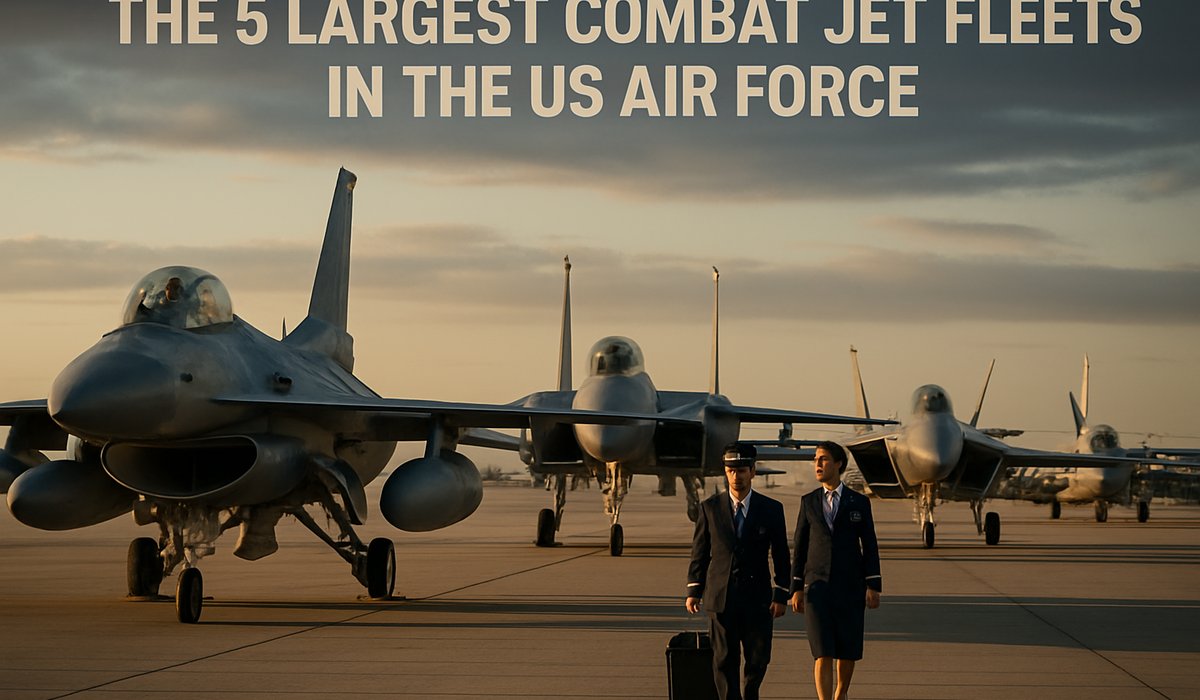
Image generated by AI
US Air Force Combat Arsenal: Five Dominant Fighter Jets Shape Modern American Airpower
The F-16 dominates USAF operations, but aging fleets reveal critical questions about defense modernization and future warfare capabilities
The F-16 Dominance: Legacy Platform Anchors American Air Superiority
More than half of all United States Air Force combat aircraft consist of F-16 Fighting Falcons—a platform that first achieved flight nearly five decades ago in 1974. This striking concentration underscores a fundamental reality about contemporary American military aviation: the service remains heavily dependent on a single, aging airframe despite decades of technological advancement and shifting geopolitical threats.
The F-16's continued prevalence across USAF operations reflects both the aircraft's proven reliability and the complex economics of military procurement. What began as a lightweight fighter concept has evolved into one of aviation's most widely distributed combat platforms globally, with variants operated by allied nations across Europe, Asia, and the Middle East.
A Fragmented Fleet Structure Spanning Five Decades
The Air Force maintains five primary combat jet fleets, representing a compressed timeline of fighter development from the 1970s through the present day. This diverse portfolio creates significant logistical challenges, requiring the service to maintain separate supply chains, training protocols, and maintenance infrastructure across platforms with fundamentally different operational characteristics.
The concentration of aging airframes within these fleets has prompted ongoing debates among defense analysts regarding modernization timelines and procurement priorities. Some platforms are experiencing accelerated retirement schedules, while others continue expanding operational roles despite their advancing service life.
Strategic Implications and Future Readiness Concerns
The composition of America's fighter fleet carries substantial implications for deterrence posture, particularly as peer competitors modernize their own aviation assets. The reliance on platforms designed during the Cold War raises questions about technological currency in an era of hypersonic weapons, artificial intelligence-driven combat systems, and advanced air defense networks.
Defense officials have acknowledged the urgency of transitioning toward next-generation platforms, yet budgetary constraints and congressional oversight continue to complicate acquisition timelines. The gap between strategic requirements and current fleet composition represents an emerging vulnerability in American air superiority doctrine.
Looking Forward: Modernization Pressures Mount
As geopolitical tensions escalate globally, pressure intensifies on the Pentagon to accelerate retirement of legacy systems while expediting integration of advanced fighters including the F-35 and anticipated sixth-generation platforms. The current fleet structure, while operationally proven, increasingly reflects institutional inertia rather than strategic optimization.
Frequently Asked Questions
What percentage of USAF combat jets are F-16s? The F-16 comprises more than 50% of all United States Air Force combat aircraft, making it the service's dominant fighter platform despite its origins dating to 1974.
Why does the Air Force still operate such old aircraft? The F-16 remains operationally viable due to continuous upgrades and modernization programs. Additionally, replacing entire fleets requires substantial congressional appropriations and extended production timelines.
Which aircraft comprise the five major USAF combat fleets? The five primary combat jet fleets span from Cold War-era platforms through contemporary systems, representing aviation technology developments across multiple decades.
How does America's fighter fleet compare to global competitors? While the USAF operates proven platforms with extensive combat experience, peer nations have deployed newer-generation fighters with advanced capabilities, creating potential readiness concerns.
When will the Air Force transition to next-generation fighter platforms? The F-35 Lightning II continues gradual integration, with sixth-generation fighter development underway, though comprehensive fleet transition timelines remain subject to budgetary and congressional approval processes.
Related Travel Guides
Flight Delay Compensation Guide 2026
Understanding Airline Route Changes
Airport Security Process Updated (2026)
External Resources
Disclaimer
This article is for informational and educational purposes only. It does not constitute legal, financial, or professional advice. While we strive to provide accurate and up-to-date information, travel policies, regulations, and conditions change rapidly. Always verify information with official sources before making travel decisions. Nomad Lawyer makes no representations about the accuracy, reliability, completeness, or suitability of the information provided. Readers should consult qualified professionals for advice specific to their circumstances. The views expressed in this article are those of the author and do not necessarily reflect the views of Nomad Lawyer.
Preeti Gunjan
Contributor & Community Manager
A passionate traveller and community builder. Preeti helps grow the Nomad Lawyer community, fostering engagement and bringing the reader experience to life.
Learn more about our team →