
Thailand Crosses 20 Million Foreign Tourist Arrivals in August 2026 Following July Flight Surge and TDAC Digital Entry Rollout
Thailand surpasses 20.3 million YTD arrivals in August 2026, driven by a 38.2% July rebound and mandatory TDAC digital border clearance.

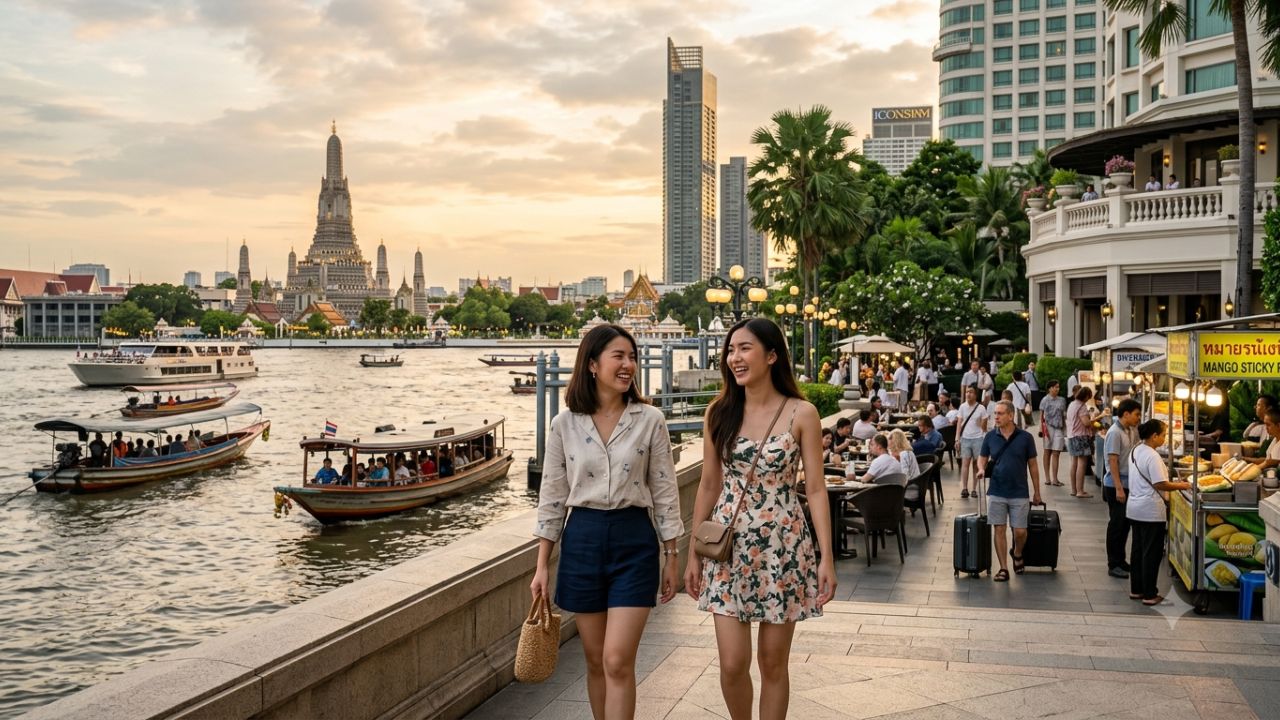
Image generated by AI
Thailand officially surpassed the 20 million international visitor landmark on August 22, 2026, accumulating 20,316,055 year-to-date arrivals following a 38.2% month-on-month rebound in July. The arrival surge is supported by expanded long-haul flight connections into Bangkok and Phuket, mandatory digital border processing via the Thailand Digital Arrival Card (TDAC), and new multi-entry visa frameworks for extended-stay travelers.
[BANGKOK, Thailand, Sept. 3, 2026] — Official joint monitoring reports released by the Ministry of Tourism and Sports (MoTS) and the Bank of Thailand confirm that international passenger entries reached 20,316,055 by August 22, 2026, exceeding national targets. The mid-year growth was anchored by a sharp arrival recovery in July, when international entries climbed to 2,545,620—up 38.2% from June's low of 1,841,550.
The arrival surge generated high hotel occupancy rates across the kingdom, averaging 70.05% nationwide in July. Central Thailand led regional performance at 72.40% occupancy, fueled by urban hotel bookings in Bangkok, while southern island destinations like Phuket and Koh Samui recorded 71.65% occupancy levels, boosted by expanded international flight routes.
Top International Source Markets Driving Thai Travel Demand
Despite a slight 2.96% year-to-date contraction compared to the corresponding period in 2025, international visitor arrivals continue to demonstrate resilience across key Asian and European origin markets.
Mainland China maintained its position as Thailand's primary source market, delivering 3,440,752 visitors through late August towards a full-year target of 6.7 million Chinese arrivals. Malaysia ranked second with 2,559,676 arrivals, primarily entering through southern land border checkpoints and regional airports. India secured third place with 1,494,003 arrivals, followed by Russia (1,158,680 visitors) and South Korea (749,202 visitors).
International Visitor Arrivals & Feeder Market Standings (YTD Aug 22, 2026)
| Source Market Country | Year-to-Date Arrival Volume | Primary Entry Logistics & Checkpoints | 2026 Strategic Target |
|---|---|---|---|
| Mainland China | 3,440,752 Visitors | Air routes to BKK, DMK, HKT & CNX | 6.7 Million Target |
| Malaysia | 2,559,676 Visitors | Southern land borders (Sadao) & short-haul flights | High-frequency border transit |
| India | 1,494,003 Visitors | Direct flights to BKK & HKT | Rapidly expanding MICE & leisure |
| Russia | 1,158,680 Visitors | Long-haul charter & scheduled flights to HKT | Extended winter stay market |
| South Korea | 749,202 Visitors | Direct flights to BKK, HKT & CNX | High golf & wellness spend |
| National YTD Total | 20,316,055 Visitors | All air, sea, and land border checkpoints | Exceeded 20.0M August Milestone |
Hotel Occupancy Rates and Regional Financial Metrics
The commercial health of Thailand's accommodation sector reflects solid yields across luxury resort tiers and urban commercial properties. Average national hotel room occupancy reached 70.05% in July 2026, with Revenue Per Available Room (RevPAR) experiencing a 12.4% year-on-year lift in luxury resort tiers across Phuket and Koh Samui.
Macroeconomic targets set by the Tourism Authority of Thailand (TAT) aim for a full-year tourism revenue total of 2.78 trillion Baht (~7% YoY growth). In Bangkok, international visitors generate daily expenditures between 4,800 and 5,200 Baht per person, with travel and hospitality directly generating 18% to 20% of Thailand's Gross Domestic Product (GDP).
Regional Hotel Occupancy & Economic Indicators (July 2026)
| Region / Destination | July 2026 Occupancy Rate | Key Market Driver & Performance Metric |
|---|---|---|
| Central Thailand (Bangkok) | 72.40% | Business travel, MICE & urban shopping transit |
| Southern Thailand (Phuket / Samui) | 71.65% | Long-haul European flights (+12.4% luxury RevPAR lift) |
| Northern Thailand (Chiang Mai) | 60.58% | Cultural tourism & Destination Thailand Visa (DTV) hub |
| National Average (Kingdom-wide) | 70.05% | Supported by 38.2% month-on-month arrival surge |
Aviation Network and Airport Capacity Across Suvarnabhumi, Don Mueang, and Phuket
A robust international flight network supported July's 38.2% arrival surge. Suvarnabhumi Airport (BKK) and Don Mueang Airport (DMK) in Bangkok registered a combined daily international seat capacity exceeding 120,000 seats during peak mid-summer travel windows.
In Southern Thailand, Phuket International Airport (HKT) benefited from expanded long-haul flight links, including new direct services from Western Europe—such as Thai Airways launching direct flights from Amsterdam (AMS)—alongside scheduled charter routes originating from the Middle East and India.
Cruise Logistics and Infrastructure Upgrades at Laem Chabang and Phuket
Ocean cruise vessel activity experienced a temporary mid-year pause due to seasonal weather patterns. The Port Authority of Thailand (PAT) and regional maritime authorities intentionally adjust cruise liner schedules to avoid the Southwest Monsoon season (May to October), which brings heavy rainfall and swells to the Andaman Sea and Gulf of Thailand.
Major global cruise lines—including the Royal Princess, Celebrity Millennium, and Westerdam—concentrate their primary Southeast Asian itineraries between October and April. Consequently, major maritime terminals like Laem Chabang Terminal A1 in Chonburi and Phuket Deep Sea Port recorded minimal large ocean liner calls in July and August.
To prepare for future cruise volume, PAT and the Marine Department are executing major port infrastructure upgrades. Projects at Laem Chabang Port Terminal A1 will enable high-capacity cruise ship turnarounds, while expansions at Phuket Deep Sea Port and new dedicated cruise berth construction at Koh Samui will support year-round direct vessel dockings.
Traveler Logistics & Smart Entry Protocols (Information Gain)
For international travelers visiting Thailand in late 2026, navigating border customs, transit transfers, and environmental regulations requires careful planning.
Digital Border Clearance: Thailand Digital Arrival Card (TDAC)
- Mandatory Pre-Arrival Registration: All non-Thai travelers entering via air, sea, or land checkpoints must complete the digital Thailand Digital Arrival Card (TDAC) online prior to border clearance. The system streamlines immigration queues at Suvarnabhumi, Don Mueang, and Phuket airports.
- Customs & Transit Validation: Travelers should carry digital and printed copies of their TDAC confirmation QR code, proof of onward travel, and hotel reservation vouchers.
Airport Transfer Logistics (BKK vs DMK Layover Windows)
- Inter-Airport Transfers in Bangkok: Travelers connecting between Suvarnabhumi (BKK) and Don Mueang (DMK) airports should allow a minimum layover buffer of 3.5 to 4 hours. The free AOT shuttle bus operates between terminals (approx. 50 to 70 minutes travel time depending on highway traffic).
- Phuket & Samui Island Connections: For flight connections to Koh Samui (USM) or ferry transfers from Phuket to Koh Phi Phi, schedule arrival flights before 1:00 PM to ensure same-day ferry departures before ocean swell restrictions take effect.
Long-Term Residence: Destination Thailand Visa (DTV)
- 5-Year Multi-Entry Remote Work Visa: Designed for digital nomads, remote workers, Muay Thai participants, and culinary students, the DTV allows stays of up to 180 days per entry with multiple-entry privileges valid over five years. Applicants must provide proof of liquid bank funds of at least 500,000 Baht (~$14,500 USD).
Marine National Park Closures & Daily Visitor Limits
- Monsoon Environmental Restorations: Andaman Sea marine national parks—including the Similan Islands and Surin Islands—undergo mandatory seasonal closures from mid-May through mid-October for ecosystem recovery.
- Maya Bay Carrying Capacity: Daily visitor limits at Maya Bay in the Phi Phi Islands are strictly capped at approximately 4,000 visitors per day, with hourly entry slots enforced by park rangers.
Infrastructure & Regional Industry Impact
Thailand's dual strategy of expanding digital transit infrastructure via TDAC while upgrading maritime cruise ports strengthens its long-term travel competitiveness in Southeast Asia.
Furthermore, expanding medical and wellness tourism infrastructure—a sector valued at $9.46 billion USD in 2026 with average guest stays of 14 to 21 days—provides high-yield revenue stability that buffers the hospitality industry during seasonal monsoon months.
Frequently Asked Questions
How many foreign tourists visited Thailand in July 2026?
Thailand recorded 2,545,620 international tourist arrivals in July 2026, representing a 38.2% month-on-month surge compared to June.
What is the Thailand Digital Arrival Card (TDAC)?
The TDAC is a mandatory digital arrival card system required for all non-Thai visitors entering Thailand via air, sea, or land border checkpoints to streamline immigration clearance.
Which country generated the most visitors to Thailand by August 2026?
Mainland China ranked as the top international feeder market, delivering 3,440,752 arrivals between January 1 and August 22, 2026.
Why do large cruise ships decrease visits to Thailand in July and August?
July and August coincide with the Southwest Monsoon season, prompting major cruise lines to schedule their primary Thailand itineraries during the dry season between October and April.
Related Travel Guides
The 10 Best Island Getaways in Thailand, According To Reddit
Disclaimer
This article is for informational and educational purposes only. It does not constitute legal, financial, or professional advice. While we strive to provide accurate and up-to-date information, travel policies, regulations, and conditions change rapidly. Always verify information with official sources before making travel decisions. Nomad Lawyer makes no representations about the accuracy, reliability, completeness, or suitability of the information provided. Readers should consult qualified professionals for advice specific to their circumstances. The views expressed in this article are those of the author and do not necessarily reflect the views of Nomad Lawyer.
Raushan Kumar
Founder & Lead Developer
Full-stack developer with 11+ years of experience and a passionate traveller. Raushan built Nomad Lawyer from the ground up with a vision to create the best travel and law experience on the web.
Learn more about our team →