
Thailand and Six Other Nations Inspire a New Era of Mindful and Restorative Travel

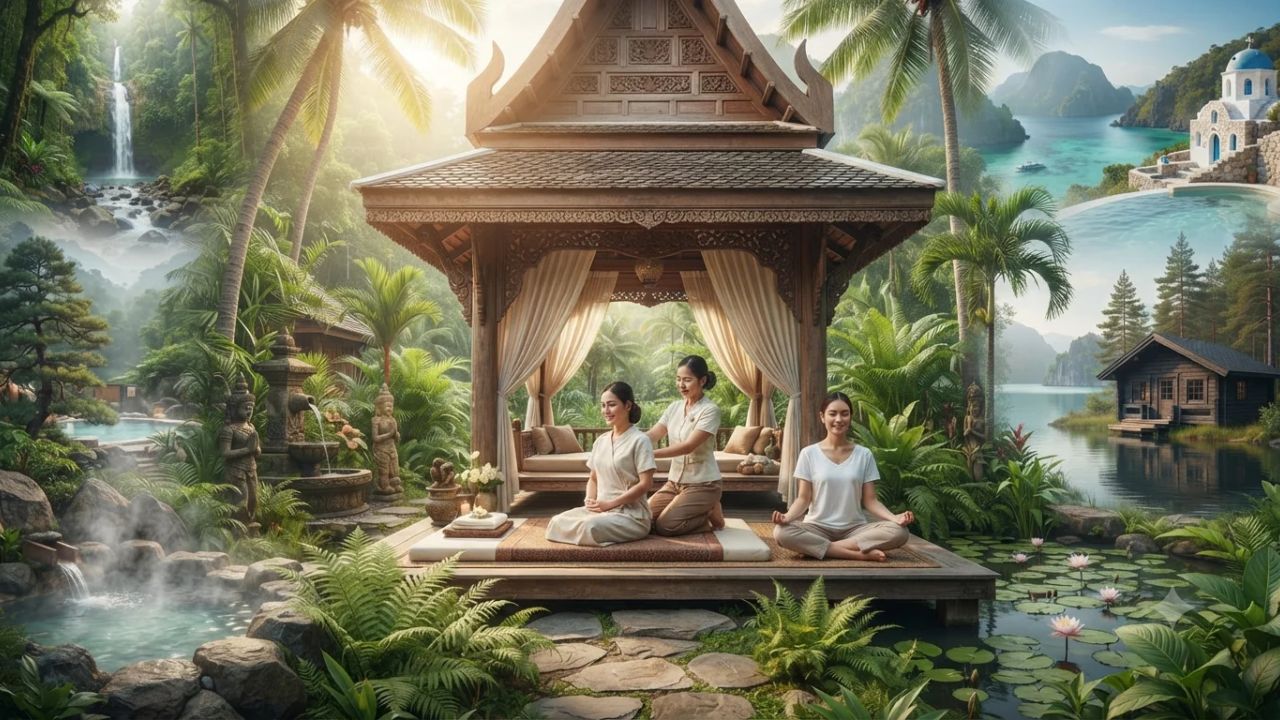
A transformative shift toward mindful, restorative travel is reshaping international tourism, led by Thailand, Costa Rica, Indonesia, Japan, Greece, the Philippines, and Finland—seven distinct nations harnessing ancient healing traditions, geothermal resources, and undisturbed wilderness to help global travelers recover from chronic burnout.
Rather than rushing through crowded sightseeing checklists, travelers are increasingly structuring their journeys around physical restoration, mental clarity, and spiritual reflection. From traditional Nuad Thai bodywork and Japanese geothermal onsen bathing to Nordic lakeside saunas, Balinese water purification, and Mediterranean thermal springs, these destinations bridge traditional ancestral wisdom with modern preventative health science. The movement reflects an international transition within the global wellness tourism market, turning holidays into restorative retreats that support indigenous practitioners, preserve rural ecosystems, and foster sustainable lifestyle changes.
MINDFUL & RESTORATIVE TRAVEL: SEVEN-NATION GLOBAL MATRIX
| Entity / Route | Metrics | Operational Status |
|---|---|---|
| Country | Core Healing Modality | Signature Natural Setting |
| Thailand | Nuad Thai & Herbal Heat | Mist-covered northern mountains, |
| Buddhist Vipassana Dhyana | coastal tropical islands | |
| Costa Rica | Pura Vida Eco-Living | Primary cloud forests, |
| Blue Zone Longevity Habits | Pacific surf & volcanic springs | |
| Indonesia | Jamu Herbal Medicine | Sacred river valleys, lush rice |
| Melukat Water Cleansing | terraces & active volcanic slopes | |
| Japan | Geothermal Onsen & Toji | Alpine hot spring hamlets, |
| Shinrin-yoku Forest Walks | ancient cedar temple sanctuaries | |
| Greece | Ancient Thalassotherapy | Sunlit Aegean islands, historic |
| Mediterranean Nutrition | coastal mineral thermal springs | |
| Philippines | Traditional Hilot Healing | Remote archipelagic coves, |
| Coconut Oil Thermotherapy | verdant Cordillera highlands | |
| Finland | Authentic Sauna & Löyly | Boreal pine forests, pristine |
| Avanto Cold-Water Plunge | post-glacial freshwater lakes |
The Macro Shift: Why Restorative Travel Defines Modern Tourism
The modern travel landscape is undergoing an ideological transformation. For decades, leisure tourism prioritized volume, speed, and visual consumption—encouraging holidaymakers to pack multiple cities, monuments, and photo stops into tight vacation schedules. However, increasing digital saturation, high-pressure working environments, and post-pandemic exhaustion have made conventional vacations feel draining rather than refreshing.
According to data tracked by the Global Wellness Institute (GWI), wellness tourism has expanded into a global economic powerhouse exceeding $1 trillion in annual expenditure. Within this sector, the fastest-growing segment is restorative slow travel—journeys specifically designed to downregulate the human nervous system, improve sleep architecture, and restore metabolic health.
CONVENTIONAL MASS TOURISM VS. RESTORATIVE MINDFUL TRAVEL
| Entity / Route | Metrics | Operational Status |
|---|---|---|
| Region & Hub | Primary Natural Feature | Target Wellness Focus |
| Arenal & La Fortuna | Geothermal Hot Springs | Mineral-rich balneotherapy, |
| & Volcanic Clay | natural hydrotherapy cascades | |
| Nosara & Guiones | Coastal Pacific Surf | Movement therapy, barefoot yoga, |
| (Nicoya Peninsula) | & Broad Tidal Flats | ocean wave mindfulness |
| Monteverde | Tropical Cloud Forests | Forest walking, fresh air canopy |
| & Epiphyte Ecosystems | immersion, bird acoustic therapy |
The Nicoya Peninsula Blue Zone
The Nicoya Peninsula on Costa Rica’s Pacific coastline is celebrated as one of the planet’s five official Blue Zones—geographical regions where residents regularly live active, healthy lives past 100 years of age. Wellness travelers visiting Nicoya experience the pillars of this exceptional longevity:
- Mineral-Rich Water: Natural drinking water filtered through limestone bedrock, naturally rich in calcium and magnesium.
- Plant-Forward Diet: Traditional cuisine focused on the "Three Sisters" of Mesoamerican agriculture: corn, beans, and squash, complemented by fresh papaya, plantains, and local greens.
- Plan de Vida: A strong sense of personal purpose and community belonging that eliminates chronic social isolation.
Forest Immersion in Arenal and Monteverde
In the shadow of the Arenal Volcano, natural thermal rivers flow through dense rainforests. Establishments like Tabacón harness these geothermal waters without artificial pumping, allowing travelers to soak in mineral baths surrounded by wild orchids and toucans. In Monteverde's cloud forests, hanging bridges position visitors high within the forest canopy, where breathing pristine, oxygen-dense air and listening to the rhythmic acoustic landscape reduces systemic stress markers.
3. Indonesia: Javanese Jamu and Balinese Spiritual Cleansing
From the volcanic peaks of Java to the spiritual river valleys of Bali, Indonesia’s wellness heritage is rooted in ancestral herbalism and sacred water rituals.
INDONESIAN TRADITIONAL HEALING: BALI & JAVA
| Entity / Route | Metrics | Operational Status |
|---|---|---|
| Practice Name | Cultural Origin & Protocol | Measurable Health Benefit |
| Onsen Balneology | Geothermal spring soaking | Dilates peripheral blood vessels; |
| in outdoor stone pools | minerals soothe chronic joint pain | |
| Toji Stays | Multi-week hot spring | Deep thermal therapy, metabolic |
| therapeutic recuperation | restoration, profound relaxation | |
| Shinrin-yoku | Mindful forest immersion | Inhaling tree phytoncides boosts |
| using all five senses | natural killer (NK) immune cells | |
| Shukubo Stays | Temple lodgings with Zen | Clean gut biome via Shojin Ryori |
| monks in Mount Koya | vegan fermented nutrition |
Onsen and the Ancient Art of Toji
With more than 3,000 thermal spring areas fueled by active volcanic geology, Japan has elevated bathing into an art form. Traditional onsen etiquette requires thorough soap washing before entering the natural geothermal waters, preserving the mineral purity of the communal pools.
Beyond overnight stays at luxury ryokan inns, travelers are rediscovering Toji—the historical practice of spending one to three weeks in thermal villages (such as Kusatsu, Beppu, or Kinosaki). Soaking multiple times daily in distinct mineral waters (sulfur, sodium bicarbonate, or iron-rich springs) enhances metabolic recovery and relieves dermatological and muscular ailments.
THE BIOCHEMICAL SCIENCE OF SHINRIN-YOKU (FOREST BATHING)
| Category / Entity | Details / Impact |
|---|---|
| Diagnostic & Treatment Step | Cultural Practice & Physiological Action |
| 1. Banana Leaf Scanning | Strips of warmed banana leaves passed over |
| (Panghihila) | the body; static adhesion indicates areas of |
| energetic imbalance or muscle inflammation | |
| 2. Warm Coconut Oil Application | Virgin cold-pressed coconut oil infused with |
| lemongrass and ginger applied across skin | |
| 3. Deep Tissue Realignment | Slow, deliberate thumb pressure along neural |
| (Hilot Massage) | and muscular pathways to reset knots |
| 4. Dagdagay Acupressure | Traditional northern Cordillera foot therapy |
| using carved bamboo sticks to stimulate soles |
The Art of Hilot: Intuitive Indigenous Healing
Practiced for centuries by traditional healers known as Manghihilot, Hilot is an ancient somatic therapy designed to restore balance between the four elemental energies of the body: earth, water, fire, and air.
- The treatment commences with Panghihila: warm strips of fresh banana leaves coated in coconut oil are passed gently over the applicant’s back. The practitioner observes how the leaf adheres to specific sections of the skin, identifying areas of energy blockage (bara) or muscular inflammation (init).
- Using cold-pressed virgin coconut oil, the healer executes deep, rhythmic pressure across meridians and muscle groups, breaking up lactic acid buildup and encouraging full-body alignment.
Archipelagic Seclusion in Siargao and Palawan
In destinations like Palawan (El Nido and Coron) and Siargao, the natural setting amplifies personal well-being. Travelers can kayak through calm limestone lagoons, disconnect from cellular networks in quiet island coves, practice sunrise yoga over white sandy beaches, and hike through mountain forests in the northern Cordilleras.
7. Finland: Nordic Simplicity, Sauna Culture, and the Arctic Plunge
In Finland, wellness is stripped of artificial complexity. Repeatedly ranked by the United Nations as the happiest country on Earth, Finland derives its contentment from high social trust, unpolluted nature, and a deeply reverent sauna culture.
THE FINNISH SAUNA & CONTRAST THERAPY CYCLE
| Entity / Route | Metrics | Operational Status |
|---|---|---|
| Destination | Optimal Travel Window | Essential Cultural Etiquette |
| Thailand | November to March | Remove footwear before entering |
| (Cool, dry winter season) | treatment rooms & temple grounds | |
| Costa Rica | December to April | Respect wildlife boundaries; |
| (Dry "Verano" months) | use biodegradable mineral suncare | |
| Indonesia | April to October | Wear a sarong & sash at temples; |
| (Dry trade wind season) | never touch water spouts with feet | |
| Japan | October to November | Wash thoroughly before soaking; |
| March to May (Spring) | cover tattoos where required | |
| Greece | May to June | Respect the afternoon quiet hours |
| September to October | (siesta / mesimeri: 15:00–17:30) | |
| Philippines | December to May | Approach healers with deference; |
| (Dry sunny season) | respect indigenous mountain rites | |
| Finland | Dec to March (Winter ice) | Sit on a towel (pefletti); |
| June to August (Midnight) | maintain quiet voices in sauna |
Frequently Asked Questions About Mindful Wellness Travel
What defines "restorative and mindful travel"?
Restorative and mindful travel is an intentional approach to tourism that prioritizes personal health, mental clarity, physical recovery, and environmental mindfulness over hurried, checklist-driven sightseeing itineraries.
What is the health benefit of Japanese Shinrin-yoku (forest bathing)?
Shinrin-yoku involves quietly walking in forests while engaging all five senses. Inhaling tree-emitted antimicrobial compounds called phytoncides has been clinically proven to lower salivary cortisol, reduce blood pressure, and boost Natural Killer (NK) immune cell activity.
How does Thai massage differ from conventional oil massage?
Traditional Thai massage (Nuad Thai) is performed fully clothed on a floor mat without oils. The practitioner uses thumbs, palms, forearms, and feet to apply acupressure along energy lines (Sen), combined with assisted yoga stretches to relieve deep joint and muscle stiffness.
What makes Costa Rica's Nicoya Peninsula a global Blue Zone?
Nicoya is one of five regions on Earth where residents frequently live active lives past 100 years. Key factors include calcium-rich drinking water, a plant-forward diet of beans, corn, and fruit, regular daily physical movement, and a strong sense of purpose (plan de vida).
What is the Balinese Melukat ceremony?
Melukat is a traditional Balinese Hindu water purification ritual conducted at sacred springs or rivers. Guided by a local priest, participants step beneath running holy water spouts to cleanse negative emotional energy, mental fatigue, and spiritual heaviness.
How does Finnish sauna contrast therapy benefit the body?
Alternating between intense wood-fired sauna heat (80°C–100°C) and an icy lake plunge (avanto) stimulates blood circulation, releases endorphins and dopamine, reduces systemic inflammation, and triggers deep muscular relaxation.
What is traditional Filipino Hilot healing?
Hilot is an ancient indigenous healing art from the Philippines. It combines warm banana leaf diagnosis (panghihila) with virgin coconut oil deep tissue massage to identify energetic blockages and realign muscular and skeletal imbalances.
What are the main thermal spring destinations in Greece?
Greece boasts historic thermal balneotherapy centers in Kamena Vourla, Thermopylae, and Edipsos on Evia Island, where mineral-rich waters have been utilized since antiquity to ease joint stiffness and soothe skin ailments.
What is Javanese Jamu?
Jamu is a traditional Indonesian herbal medicine system dating back over 1,000 years. Fresh elixirs made from turmeric, ginger, tamarind, and forest roots are consumed daily to support immune defense, reduce inflammation, and enhance digestion.
How can travelers ensure their wellness holiday supports local communities?
Travelers should choose locally owned retreats, patronize certified traditional massage and herbal practitioners, participate in community-led cultural workshops, and respect sacred environmental and temple guidelines.
Related Travel Guides
- Montenegro Targets May 2027 for New eVisa Rollout Ahead of Peak Summer Tourist Season
- Wizz Air Winter Schedule Sets New Record as London and European Holiday Flights Expand
- UK and Six European Nations Gain Flexible Flight Payments as Corendon Partners With Klarna
- Spain Restores Railway Services to Unlock Easier Travel Across the Basque Country
This article is for informational purposes. Flight routes, passenger regulations, visa rules, and transit advisories are subject to change by airlines and aviation authorities. Readers are advised to verify schedules and travel documentation with relevant carriers and border agencies before departure.
Related Stories

Ireland and Sweden Lead Global Tourism Shift Toward Off-Peak Luxury and Regional Travel
India Festive Travel Surges Across Dussehra and Diwali as Agoda Data Reveals Major Growth for Bangkok, Tokyo, Puri, and Goa