
Thailand CAAT Tightens Crew Baggage Rules After Melbourne Heroin Case, Targets Insider Threats and AOC Compliance
Thailand's Civil Aviation Authority issues strict new crew baggage controls following a Melbourne drug-importation allegation involving a Thai airline employee, reshaping aviation security and travel confidence across Southeast Asia.

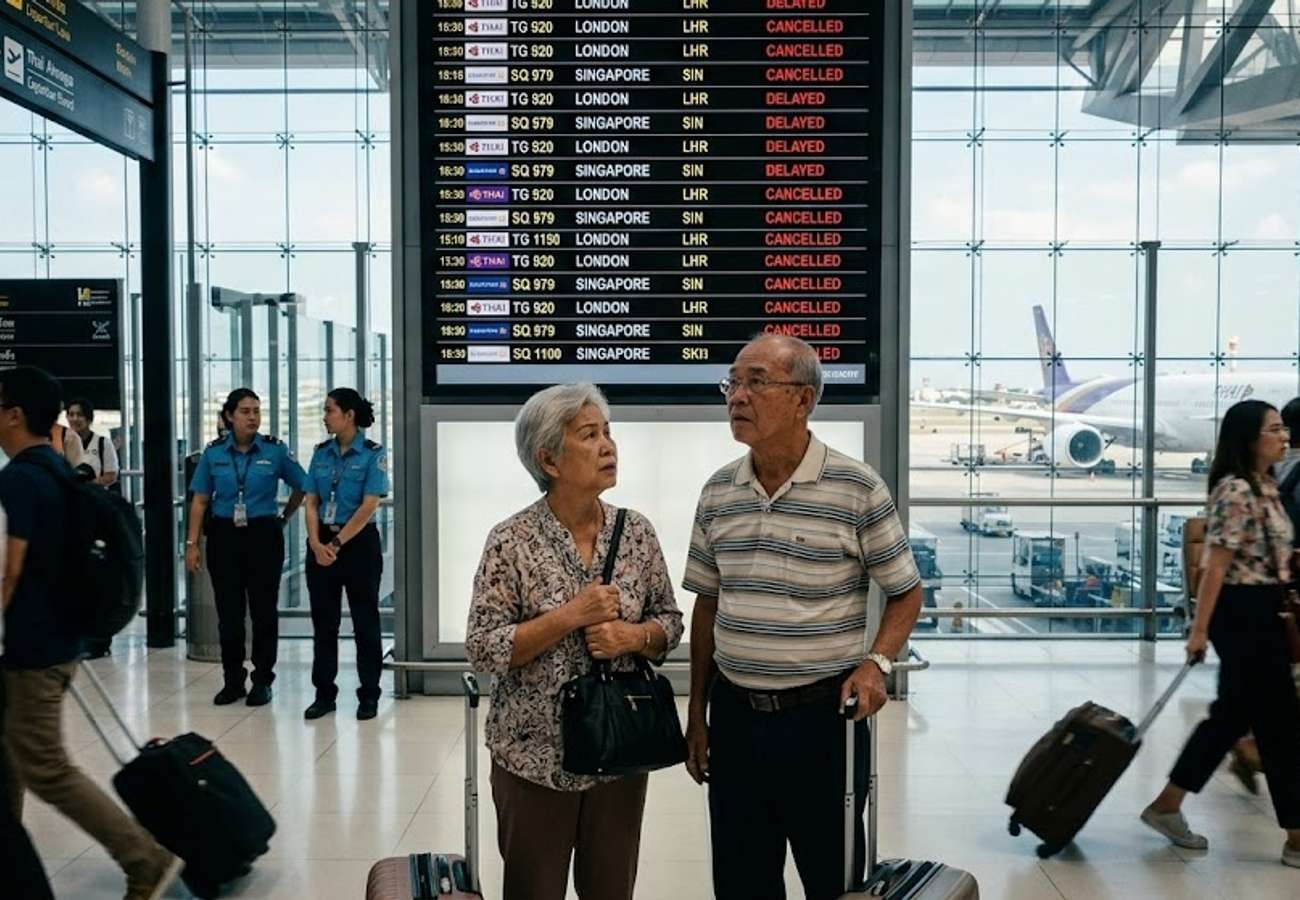
Image generated by AI
Thailand Escalates Crew Baggage Security After Melbourne Drug Allegation
Thailand's Civil Aviation Authority of Thailand (CAAT) issued a landmark regulatory notice on 4 July 2026 that fundamentally reshapes how airline crew members move baggage across international borders. The directive follows official Australian and Thai aviation records linking a Melbourne drug-importation case to a Thai national airline employee and a Thai airline crew member—a development that has forced policymakers to address crew-based insider threats at scale.
The measure compels every Air Operator Certificate (AOC) holder operating from Thai soil to formalize crew baggage controls, restrict items carried by personnel, prohibit third-party carriage unless airline-assigned, integrate screening into safety and compliance systems, retain records for minimum five years, and update all operating documents within thirty days. This is not a passenger baggage rule. It is a direct aviation security intervention targeting the systemic misuse of crew status for moving goods, cargo, parcels or personal property on behalf of others.
Anatomy of the Melbourne Case: What Triggered Regulatory Action
Australian Border Force (ABF) records, issued jointly with the Australian Federal Police, document the arrival of a Thai national airline employee, aged twenty-six, at Melbourne Airport on 25 June 2026 while performing assigned work duties on an international flight. ABF officers screened the person's baggage, detected anomalies across twelve tote bags, and found white powder concealed in bag linings. Presumptive testing returned a positive result for heroin.
The Australian record places the alleged quantity at more than one kilogram, with estimated street value of A$500,000. Charges have been laid for importing and possessing a marketable quantity of a border-controlled drug under the Commonwealth Criminal Code—each count carries a maximum penalty of twenty-five years imprisonment. The person was remanded in custody on 26 June 2026 with a court appearance scheduled for Melbourne Magistrates Court on 14 September 2026. These remain allegations unless proven in court.
This single incident exposed a critical vulnerability: crew privileges had become an unmonitored channel for contraband movement across sovereign borders. The reputational damage extends beyond the individual airline. It signals to corporate travel risk managers, tour operators, MICE planners and consular advisory teams that Thai aviation—despite strong passenger safety records—carries elevated insider-threat exposure.
CAAT Regulatory Architecture: What Airlines Must Change Now
| CAAT requirement | Operational meaning for airlines | Travel trade relevance |
|---|---|---|
| Define crew carriage limits | Airlines must restrict crew-carried items to duty needs or reasonable personal use only | Tour operators should not request crew or staff to informally carry client items |
| Set measurable thresholds | Weight, quantity, size and value limits move from custom practice to documented policy | Corporate and incentive groups need formal logistics for documents, gifts or equipment |
| Ban third-party carriage unless airline-assigned | Crew cannot use work status to carry goods for others, with or without payment | Travel agents must avoid informal courier practices through airline staff |
| Establish special approval protocols | Items outside ordinary limits require authorised approval with documented evidence retention | High-value MICE materials should use freight, courier or official airline cargo channels |
| Require crew cooperation in checks | Personnel must disclose, declare or open baggage when requested by authorised parties | Processing delays may occur from enhanced checks; primarily internal airline operation |
| Implement risk-based screening | Baggage screening can occur before duty, after duty, randomly or through targeted secondary checks | Crew processing time may increase on select routes during monitoring periods |
| Deploy detection technology | Airlines must use X-ray or equivalent detection equipment where operationally necessary | Rule aligns crew movement with stronger airport-side security standards |
| Conduct investigations and discipline | Suspected breaches trigger inquiry, evidence gathering and formal disciplinary action | Trade partners should expect stricter airline positions on staff conduct enforcement |
| Integrate into Safety Management Systems | Crew baggage control becomes part of formal management systems, not standalone communication | B2B partners may encounter stronger audit language in airline service agreements |
| Maintain five-year record retention | Screening records, random checks, investigations and disciplinary actions must be preserved | Traceability becomes core due-diligence requirement across aviation supply chains |
The notice defines crew member broadly to encompass pilots, flight engineers, flight operations staff and cabin crew assigned by an AOC holder to perform duties on an aircraft during duty time. Crew baggage is defined as both carry-on and checked baggage taken on board or moved through crew channels. This language deliberately closes the grey area between normal crew effects, company-assigned operating material and informal personal carriage.
Airlines must also establish annual risk assessments, confidential reporting channels, whistleblower protections, internal audits (minimum once yearly), corrective action tracking and mandatory CAAT reporting when requested. Operations manuals, Aircraft Operator Security Programmes, standard operating procedures and HR documentation must be updated within thirty days of the measure taking effect.
Why Thailand Aviation Security Directly Protects Tourism Revenue
Thailand aviation operates within a high-growth recovery cycle. CAAT first-quarter 2026 data recorded 42.07 million passengers—19.22 million domestic, 22.86 million international—across 256,306 flights and 416,309.77 tonnes of air cargo. Passenger volume increased 6.82 per cent quarter-over-quarter and 6.06 per cent year-on-year.
That scale explains why crew baggage security is now a strategic tourism issue, not merely an HR matter. Thailand depends on air connectivity for inbound tourism, domestic leisure distribution, outbound travel, cargo movement and regional hub positioning. A single insider-threat case travels rapidly through corporate travel risk desks and consular advisory monitoring—even when passenger operations remain statistically normal.
The Ministry of Tourism and Sports recorded 9.3 million international tourists in Q1 2026, generating 461.5 billion baht in revenue. Domestic Thai travel produced 71.4 million visitor movements and 284.8 billion baht in revenue. Aviation confidence sits directly inside this revenue protection, particularly for long-haul, premium, MICE and multi-city itineraries where risk perception drives booking decisions.
Network Expansion Amplifies Screening Discipline Importance
CAAT analysis shows Thai airlines expanding international capacity precisely when insider-threat risk rises. Thai Lion Air has added or expanded Bangkok Don Mueang to Seoul service. Thai VietJet has launched or expanded Bangkok Suvarnabhumi routes to Tokyo Narita, Kolkata and Nha Trang. This route proliferation increases staff movement, layover complexity, cross-border crew exposure and handling variation between airports.
Stronger crew baggage screening and traceable policy becomes operationally critical at exactly this moment. Route growth requires more staff movement across multiple jurisdictions, longer crew rest periods, higher turnover of personnel and greater vulnerability at airports with less mature security infrastructure. The CAAT rule forces airlines to embed screening discipline into the core of network expansion, not as an afterthought.
For travel businesses—tour operators, corporate travel desks, MICE planners and airline partners—the operational impact is measurable. Crew processing time may increase on certain routes during intensive monitoring periods. High-value equipment, gifts or materials can no longer flow informally through airline staff; formal cargo, courier or freight channels become mandatory. Contract language with Thai airlines will strengthen around due-diligence, staff conduct and documented carriage approval.
Compliance Timeline and B2B Procurement Implications
The rule takes effect immediately upon publication. Airlines have thirty days to update all operating documentation. Risk assessments, screening protocols and disciplinary frameworks must be operational within the compliance window.
For travel trade partners, this means audit language in airline service agreements will tighten. Requests for informal carriage of client materials through crew channels will face explicit refusal. Crew baggage allowances on incentive trips may be more strictly monitored. MICE logistics should assume that high-value items, conference materials or client equipment require official airline cargo service, not crew accommodation.
The five-year record retention requirement creates an audit trail that survives contract disputes, insurance claims and post-incident investigations. Airlines operating from Thai bases now carry a documented compliance burden that extends into every crew member's movement across international airspace.
Thailand's crew baggage crackdown transforms insider-threat management from a narrow HR function into a core aviation security discipline—reshaping how travel businesses source logistics, structure MICE programs, and manage crew-related risk across Southeast Asian networks.
Related Travel Guides
Disclaimer
This article is for informational and educational purposes only. It does not constitute legal, financial, or professional advice. While we strive to provide accurate and up-to-date information, travel policies, regulations, and conditions change rapidly. Always verify information with official sources before making travel decisions. Nomad Lawyer makes no representations about the accuracy, reliability, completeness, or suitability of the information provided. Readers should consult qualified professionals for advice specific to their circumstances. The views expressed in this article are those of the author and do not necessarily reflect the views of Nomad Lawyer.
Preeti Gunjan
Contributor & Community Manager
A passionate traveller and community builder. Preeti helps grow the Nomad Lawyer community, fostering engagement and bringing the reader experience to life.
Learn more about our team →