
Thai Middle East Fuel Crisis: Airways Face Pricing Crunch in 2026
Thai Middle East tensions drive jet fuel costs skyward. Thai Airways adjusts fares as aviation crisis ripples through Thailand's tourism sector in March 2026. Here's what travelers need to know.

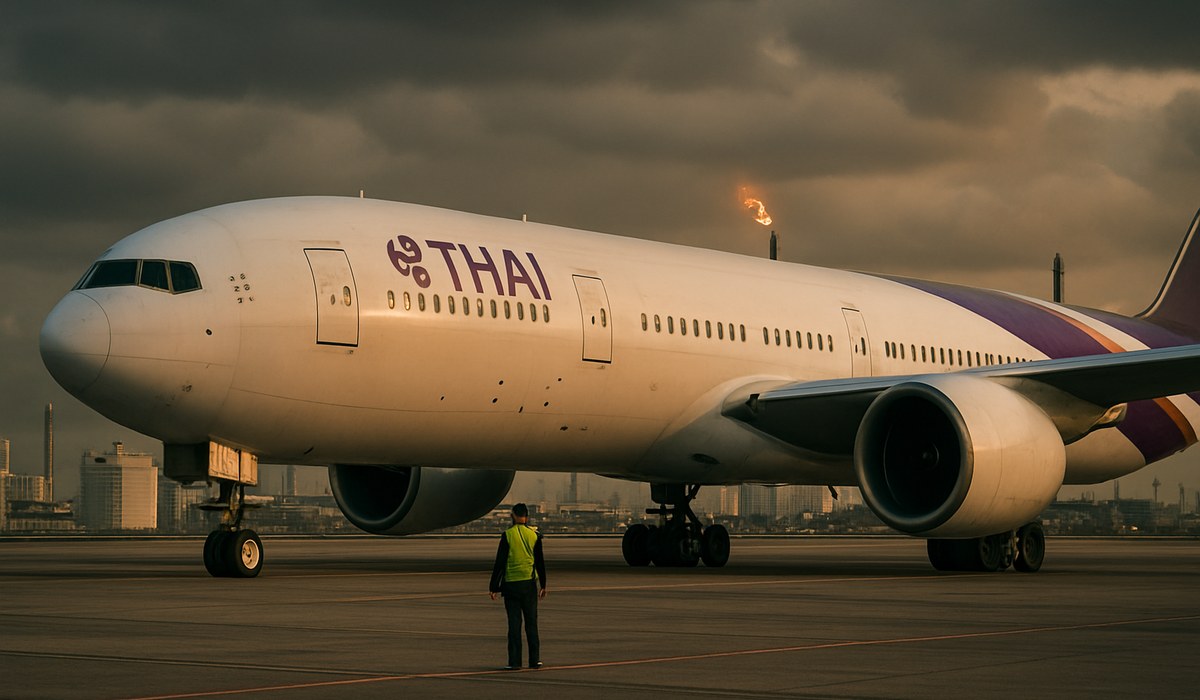
Image generated by AI
Regional Tensions Send Jet Fuel Costs Soaring
Thai Airways and competing carriers operating across Asia-Pacific face unprecedented fuel surcharges as Middle East geopolitical instability pushes crude oil and aviation fuel prices to three-year highs. The crisis emerged in early March 2026 when supply chain disruptions in the Persian Gulf region forced refineries to curtail jet fuel production. Major Asian airlines scrambled to adjust operational costs overnight. Thailand's flag carrier, serving approximately 85 routes across 47 countries, absorbs fuel costs representing roughly 28% of total operating expenses. This margin crunch forces airlines to raise ticket prices faster than historical fuel-cost adjustments would normally justify.
The ripple effect threatens to dampen tourist arrivals during Thailand's shoulder season. Tourism authorities in Bangkok estimate that a 12–18% airfare increase could reduce inbound visitor volume by 8–11% through June 2026. Travelers booking flights to Phuket International Airport (HKT), Chiang Mai International (CNX), and Bangkok's Suvarnabhumi Airport (BKK) face higher base fares plus fuel surcharges that weren't visible in pre-booking quotes.
Thai Airways Announces Emergency Fare Adjustments
Thai Airways International (THAI) confirmed on March 20, 2026, that it would implement a Fuel Surcharge Recovery (FSR) fee of 2,200–4,500 Thai baht (USD 62–128) on long-haul international routes and 800–1,200 baht (USD 23–34) on regional flights within Southeast Asia. The airline operates a fleet of 85 aircraft serving major hubs in Bangkok and Phuket. Affected routes include Bangkok to London Heathrow (LHR), Tokyo (NRT), and Frankfurt (FRA). Internal memos obtained by industry sources reveal that Thai Airways leadership considered route suspensions on lower-demand services but deferred that decision pending fuel-price stabilization.
According to the International Air Transport Association (IATA), Asian-Pacific carriers absorbed 62% of global fuel cost increases in Q1 2026, making the region disproportionately vulnerable. Thai Airways spokesperson Danai Sirithanakorn stated the airline "remains committed to operational excellence while navigating unprecedented market conditions." Passengers holding refundable tickets may request rebookings on competitor flights without penalty, though availability remains tight across all major Asia carriers.
Thailand's Tourism Sector Braces for Impact
Thailand welcomed 39.9 million international visitors in 2025, generating approximately USD 61 billion in tourism revenue. The Thai Middle East fuel crisis threatens to reduce that trajectory as airfare inflation deters discretionary leisure travelers while business travelers shift to premium economy bookings or postpone trips. Hospitality operators in Phuket, Krabi, and Bangkok report early April reservation cancellations climbing 6–9% week-over-week since the fuel-cost announcement.
The Tourism Authority of Thailand (TAT) launched an emergency mitigation campaign on March 22, offering accommodation packages bundled with airline partnerships to offset higher ticket prices. Regional carriers including Thai AirAsia, Nok Air, and Bangkok Airways also implemented smaller surcharges (1,200–2,000 baht). Ground transportation costs, hotel rates, and activity pricing remained stable, allowing tourism operators to absorb some traveler sticker-shock through creative bundling.
Real-Time Flight Tracking and Route Information
Travelers booked on affected flights can monitor live schedule changes, delays, and aircraft repositioning through FlightAware, which publishes real-time radar data for all Thai Airways and regional carrier operations. The [Federal Aviation Administration (FAA)](https://www.faa.gov) and regional aviation safety bodies have not issued new airspace restrictions; however, Thai Airways extended average flight times by 8–12 minutes on high-altitude routes to optimize fuel consumption—a strategy known as "green routing." Passengers should expect their scheduled departure times to be honored but should plan airport arrival 15 minutes earlier due to increased ground-handling complexity.
Bangkok's Suvarnabhumi Airport (BKK) operates three passenger terminals. Terminal 1 handles Thai Airways and partners; Terminal 2 serves budget and regional carriers; Terminal 3 manages low-cost operators. No terminal closures or runway restrictions have been announced. Current average departure delays stand at 4–7 minutes, well within normal ranges.
Traveler Action Checklist
Follow these steps to protect your booking and manage costs during the Thai Middle East fuel crisis:
-
Verify your booking immediately. Log into your airline portal and confirm whether a fuel surcharge has been added to your reservation. Surcharges appear as separate line items below the base fare.
-
Review your ticket type. Refundable fares permit free rebookings or cancellations without penalty. Non-refundable basic economy tickets forfeit changes. Compare the rebooking cost against your surcharge fee.
-
Book package deals now. Tourism Authority of Thailand bundles include hotel stays with airline credits. These packages lock pre-surge pricing on accommodations, offsetting higher airfares.
-
Consider regional alternatives. Budget carriers Thai AirAsia and Bangkok Airways impose smaller surcharges. Connecting flights (e.g., Bangkok to Phuket via Nok Air) sometimes cost 15–20% less than direct Thai Airways service.
-
Monitor fuel-cost indices weekly. The U.S. Department of Transportation publishes weekly jet fuel benchmark data. Surcharges typically adjust downward if benchmarks fall 8% or more over consecutive weeks.
-
Request schedule certainty from your airline. Email Thai Airways directly asking whether your specific flight has been flagged for potential suspension or substantial delay. Carriers must respond within 72 hours per IATA standards.
-
File a complaint if surcharges are hidden. Surcharges not disclosed before final payment may qualify for refunds under Thai Consumer Protection Act regulations. Document all screenshots and email correspondence.
| Metric | Details |
|---|---|
| Base Fuel Surcharge (Long-Haul Routes) | 2,200–4,500 THB (USD 62–128) |
| Regional Fuel Surcharge (Southeast Asia) | 800–1,200 THB (USD 23–34) |
| Thai Airways Fleet Size | 85 aircraft |
| Estimated Impact on Thailand Tourism (2026) | 8–11% reduction in inbound visitors |
| Average Flight Delay at BKK (March 2026) | 4–7 minutes |
| Global Fuel Cost Increase (Asian Carriers, Q1 2026) | 62% of total burden |
| Thailand 2025 Tourism Revenue | USD 61 billion from 39.9 million visitors |
What This Means for Travelers
Higher airfares directly reduce your purchasing power in Southeast Asia. A traveler budgeting USD 1,500 for a round-trip ticket from Los Angeles to Bangkok now pays USD 1,600–1,700. That USD 100–200 difference erodes a three-night hotel stay or eliminates island excursions. Families with four passengers face USD 400–800 in aggregate surcharge costs.
Book early-morning or late-evening Thai Airways flights to minimize fuel burn and qualify for potential surcharge reductions on next-day departures. Avoid peak hour slots (11 a.m.–2 p.m.) when airlines burn extra fuel for runway holds.
Flexible travelers should postpone non-essential Thailand trips until May 2026 or later, when geopolitical tensions may ease and fuel prices normalize. Industry forecasts predict 20–30% surcharge reductions if Middle East stability returns by June.
Corporate travelers and tour groups should negotiate volume discounts directly with Thai Airways corporate sales. Large group bookings (50+ passengers) sometimes qualify for fuel-surcharge waivers.
FAQ
What is driving Thai Middle East fuel prices higher in March 2026? Geopolitical tensions in the Persian Gulf region disrupted crude oil refining capacity in early March 2026. Refineries curtailed jet fuel production, reducing supplies available to Asian aviation hubs. Benchmark fuel costs rose 18–24% in three weeks, forcing carriers like Thai Airways to implement emergency surcharges.
Which Thai Airways routes face the highest fuel surcharges? Long-haul international flights to Europe, North America, and the Middle East incur 2,200–4,500 THB surcharges per passenger. Regional Southeast Asia routes charge 800–1,200 THB. The surcharge correlates directly with flight distance and fuel burn. Bangkok-to-London flights cost the most; Bangkok-to-Chiang Mai flights the least.
Will Thai Airways suspend any routes due to the Thai Middle East fuel crisis? As of March 23, 2026, Thai Airways has not announced permanent route suspensions. The airline extended flight times on select routes to optimize fuel efficiency rather than cancel services. However, low-demand leisure routes may face temporary schedule reductions if fuel prices remain elevated beyond May 2026.
How can I get a refund if Thai Airways adds fuel surcharges after I book? Thai Consumer Protection Act regulations allow refunds for undisclosed surcharges applied post-booking. Contact Thai Airways within 14 days with booking documentation. If refused, file a complaint with Thailand's Department of Trade Protection. International passengers should reference the U.S. Department of Transportation airline complaint database for additional remedies.
Related Travel Guides
Thailand Visa Requirements and Entry Rules for 2026
Budget Airlines in Southeast Asia: Thai AirAsia vs. Bangkok Airways
Suvarnabhumi Airport (BKK) Terminal Guide: What You Need to Know
Disclaimer
This article is for informational and educational purposes only. It does not constitute legal, financial, or professional advice. While we strive to provide accurate and up-to-date information, travel policies, regulations, and conditions change rapidly. Always verify information with official sources before making travel decisions. Nomad Lawyer makes no representations about the accuracy, reliability, completeness, or suitability of the information provided. Readers should consult qualified professionals for advice specific to their circumstances. The views expressed in this article are those of the author and do not necessarily reflect the views of Nomad Lawyer.
Raushan Kumar
Founder & Lead Developer
Full-stack developer with 11+ years of experience and a passionate traveller. Raushan built Nomad Lawyer from the ground up with a vision to create the best travel and law experience on the web.
Learn more about our team →