
Texas Allocates $4.2 Million to Sustain Heartland Flyer Rail Service Between Fort Worth and Oklahoma City in 2026
Texas has pledged $4.2 million to ensure the continued daily operation of the Heartland Flyer passenger rail service, supporting over 80,000 annual passengers across a 206-mile corridor.

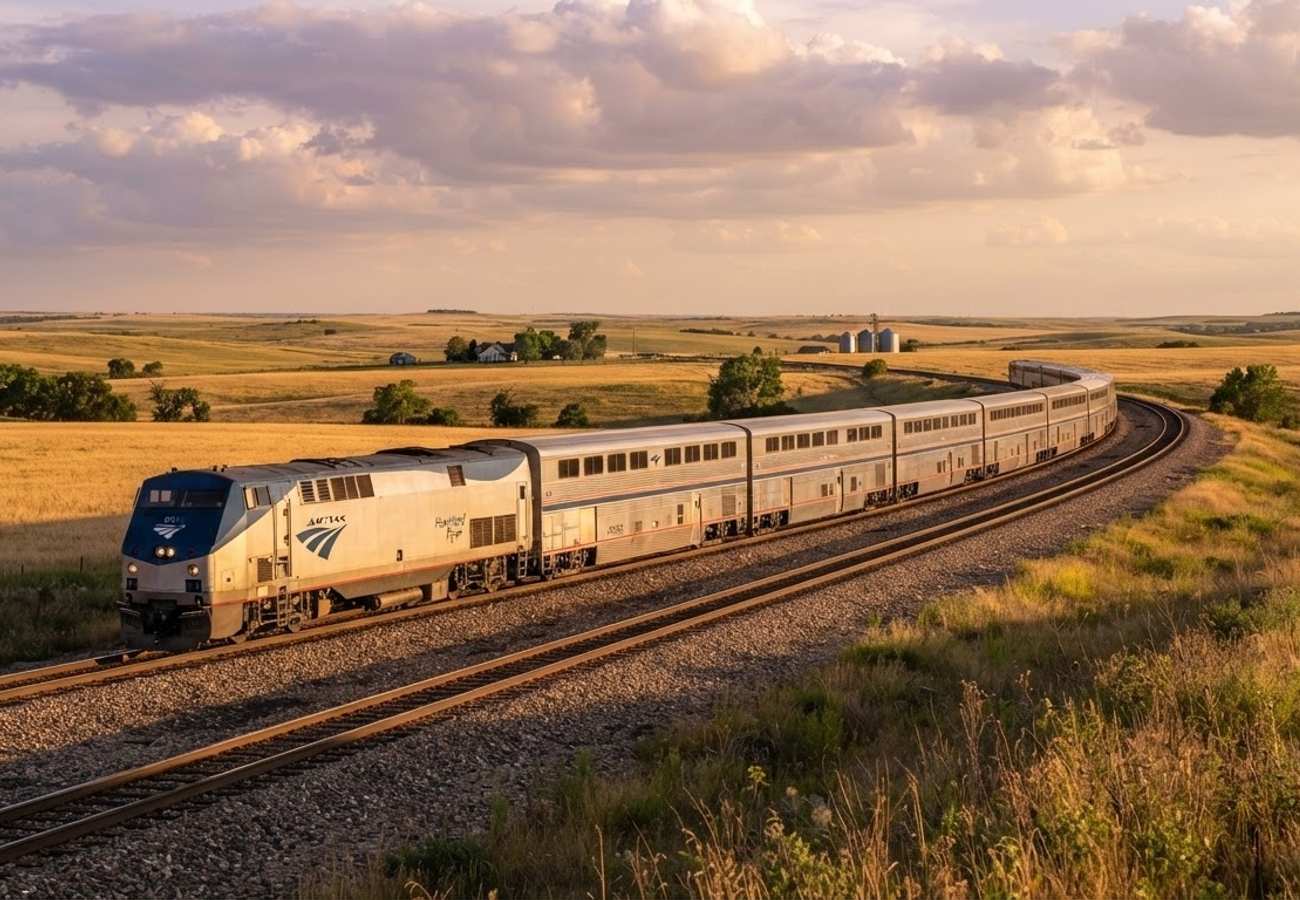
Image generated by AI
Texas has committed $4.2 million in funding to maintain the daily Heartland Flyer passenger rail service, preventing a critical collapse of regional connectivity between Fort Worth and Oklahoma City.
Regional Rail Continuity and Funding Analysis
The state of Texas has pledged $4.2 million to sustain the Heartland Flyer, a vital passenger rail link connecting Texas and Oklahoma. This funding is essential for the daily operation of the service, which spans more than 200 miles and serves as a primary mobility artery for thousands of commuters, students, and tourists.
The current financial arrangement acts as a bridge to sustain operations until the state of Texas determines long-term passenger rail allocations within the 2027-2028 budget.
Flight and Route Impact Breakdown
The Heartland Flyer operates as a state-supported Amtrak service. Our analysis of the route indicates the following operational specifics:
- Primary Route: Fort Worth, Texas $\rightarrow$ Oklahoma City, Oklahoma.
- Total Distance: 206 miles.
- Service Frequency: Daily.
- Key Intermediate Stops: Gainesville (TX), Ardmore (OK), Pauls Valley (OK), Purcell (OK), and Norman (OK).
- Special Services: The "Big Game Train" extension, providing direct transit between Fort Worth and Dallas for the University of Texas vs. University of Oklahoma football rivalry.
Operational Performance and Economic Data
Data for the 12-month period ending September 2025 confirms a surge in demand for regional rail over short-haul driving or domestic aviation.
| Metric | Data Point |
|---|---|
| Annual Ridership (Sept 2025) | 80,767 passengers |
| Texas Funding Transfer | $4.2 million |
| Federal Station Investment | $17 million |
| Fort Worth Workforce | 50 Amtrak employees |
| Texas Economic Impact (2025) | $95 million+ in goods and services |
Passenger Rights & Advisory
For the affected passenger traveling on the Heartland Flyer, the reliance on state-supported funding means that service stability is tied to legislative budgets. Our analysis of current passenger protections suggests the following:
Rebooking and Delays Because this is an Amtrak-operated service, passengers are subject to Amtrak's Guest Relations policies. For the passenger, this means that in the event of significant delays or cancellations, you are entitled to request re-accommodation on the next available train.
Refund Eligibility If a trip is canceled by the carrier due to funding lapses or operational failures, passengers are generally entitled to a full refund of the ticket price. We advise passengers to maintain digital copies of their receipts and booking confirmations to expedite claims.
Accessibility Upgrades The planned $17 million federally funded investment in station improvements will directly impact passenger experience. For travelers with reduced mobility, this means enhanced accessibility at stations along the 206-mile corridor, reducing the friction of regional transfers.
The survival of the Heartland Flyer signals a shift in American transit preferences. For decades, the "hub-and-spoke" model of aviation dominated, but there is a measurable trend toward "connected tourism corridors."
By linking smaller municipalities like Ardmore and Pauls Valley to major urban hubs, the rail service creates an economic ecosystem that supports local procurement and hospitality. The $95 million expenditure in Texas goods and services in 2025 proves that the rail line functions as an economic engine, not merely a transport cost. The integration of special-event transit, such as the Big Game Train, further demonstrates how rail can mitigate road congestion during peak regional events.
Regional rail is evolving from a basic utility into a strategic tourism asset for the American Heartland.
Related Travel Guides
Disclaimer
This article is for informational and educational purposes only. It does not constitute legal, financial, or professional advice. While we strive to provide accurate and up-to-date information, travel policies, regulations, and conditions change rapidly. Always verify information with official sources before making travel decisions. Nomad Lawyer makes no representations about the accuracy, reliability, completeness, or suitability of the information provided. Readers should consult qualified professionals for advice specific to their circumstances. The views expressed in this article are those of the author and do not necessarily reflect the views of Nomad Lawyer.
Kunal K Choudhary
Co-Founder & Contributor
A passionate traveller and tech enthusiast. Kunal contributes to the vision and growth of Nomad Lawyer, bringing fresh perspectives and driving the community forward.
Learn more about our team →