
Sydney Delta Crew Hospitalized: A350 Turbulence Incident March 2026
Three Delta Air Lines crew members were hospitalized after severe turbulence struck a trans-Pacific A350 approaching Sydney Airport (SYD) on March 21, 2026. The sydney delta crew incident highlights risks during overnight flights to Australia.

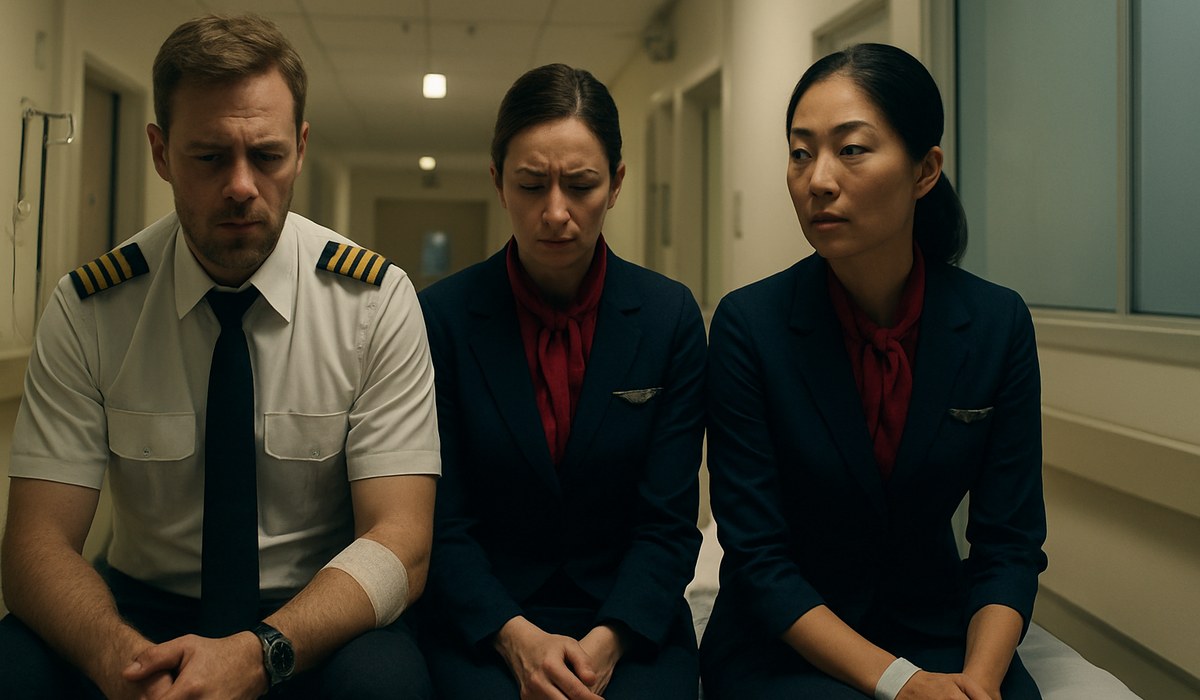
Image generated by AI
Lede
Three crew members aboard a Delta Air Lines Airbus A350 were hospitalized after encountering severe turbulence during descent into Sydney Airport (SYD) on March 21, 2026. The sydney delta crew members suffered injuries when the aircraft experienced unexpected atmospheric disturbance on approach. The wide-body jet landed safely approximately 45 minutes ahead of schedule, allowing paramedics to meet the aircraft at the gate. This incident underscores ongoing safety concerns during trans-Pacific airline operations to Australia.
Airbus A350 Encounters Severe Turbulence on Trans-Pacific Route
The Airbus A350 operating the trans-Pacific flight experienced what aviation authorities describe as "brutal" turbulence during the final descent phase into Sydney. The aircraft was cruising at approximately 28,000 feet when the atmospheric conditions deteriorated rapidly. Delta's crew initiated standard emergency procedures and diverted the jet's approach vector to avoid additional turbulent air masses. The A350's advanced structural design and flight control systems prevented structural damage during the encounter.
Modern turbulence detection systems activated warning protocols, but the severity exceeded initial expectations. Cabin crew and flight attendants were not secured in designated jump seats when the primary turbulence event occurred. This positioning gap contributed to the hospitalization of three crew members who sustained injuries from the violent motion.
Sydney Airport Response and Medical Intervention
Sydney Airport (SYD) emergency protocols activated immediately upon the pilot's declaration of a medical emergency. Ground crews prepared receiving stations and coordinated with local paramedics and hospital facilities. The hospitalized sydney delta crew members were transported to Royal Prince Alfred Hospital, one of Australia's major trauma centers, within 15 minutes of landing.
Medical evaluation determined that two crew members sustained moderate lacerations and contusions. The third crew member experienced a fractured wrist and soft tissue damage. All three were admitted for observation and underwent imaging studies to rule out internal injuries. Delta Air Lines provided family support services and coordinated with Australian aviation safety authorities for a complete incident investigation.
Current reports indicate stable conditions for all hospitalized crew members as of March 21, 2026. Follow updates on IATA's official safety resources for industry response guidance.
Flight Operations Impact and Schedule Recovery
Delta Air Lines issued operational bulletins to all trans-Pacific flight crews regarding atmospheric hazard awareness and procedural reinforcement. The incident prompted immediate review of weather routing systems and turbulence prediction algorithms used for flights approaching Sydney.
Airlines operating to Australia have increased pre-flight briefings emphasizing cabin crew positioning during descent phases. The FAA and international aviation bodies monitor these incidents to refine safety protocols. You can review current aviation safety standards on the FAA's official website.
Sydney Airport maintained normal operations following the incident. No other aircraft were affected by the turbulence event. Delta rerouted passenger connections and provided accommodation for travelers with schedule disruptions.
Understanding Turbulence Risks for Long-Haul Travel
Turbulence during trans-Pacific flights remains an unavoidable meteorological reality. Weather systems over the Pacific Ocean generate unpredictable wind shear and vertical air currents, especially during descent operations. The sydney delta crew incident demonstrates why cabin safety procedures require crew members to remain in secured positions during critical flight phases.
Modern aircraft like the Airbus A350 include turbulence detection systems, but severe encounters can still produce injuries. Airlines continuously upgrade weather radar and collaborate with meteorological services to predict and avoid hazardous conditions. Crew training emphasizes proper positioning and restraint protocols to minimize injury risk during unexpected turbulence.
Passengers should expect occasional mild to moderate turbulence on routes to Australia. Severe turbulence events remain statistically rare but produce significant injuries when they occur. Compliance with seatbelt instructions and secure stowage of luggage reduces passenger injury risk substantially.
Traveler Action Checklist
-
Review airline safety briefings before departure. Locate your nearest emergency exit and review oxygen mask procedures for long-haul flights.
-
Keep seatbelt fastened during descent phases. Flight attendants typically remain seated during initial and final descent segments for this reason.
-
Stow all luggage and personal items securely. Unsecured items become hazards during turbulence and can cause cabin injuries.
-
Request seat assignments away from galleys. Galley areas experience greater motion during turbulence because they lack structural support.
-
Avoid sleeping during critical flight phases. Stay alert during the first 30 minutes and final 45 minutes of flights to maintain situational awareness.
-
Know your passenger rights for schedule disruptions. Visit the U.S. Department of Transportation for compensation guidelines if turbulence causes flight delays or diversions.
-
Document any injuries sustained during flights. Request incident reports and medical documentation for insurance and compensation claims immediately after landing.
Key Facts: Sydney Delta Crew Incident Summary
| Event Component | Details |
|---|---|
| Airline Involved | Delta Air Lines |
| Aircraft Type | Airbus A350 (trans-Pacific configuration) |
| Destination Airport | Sydney Airport (SYD), Australia |
| Incident Date/Time | March 21, 2026, approximately 4:45 PM local Sydney time |
| Crew Members Hospitalized | Three crew members admitted to Royal Prince Alfred Hospital |
| Injury Classification | Moderate lacerations, contusions, one fractured wrist |
| Landing Status | Safe landing, 45 minutes early arrival |
| Aircraft Damage | None reported; airframe and systems intact |
| Passenger Injuries | None reported |
| Flight Operations Impact | Delta issued operational advisories for trans-Pacific routes |
What This Means for Travelers
The sydney delta crew hospitalization reinforces why safety compliance matters on international flights. Long-haul routes to Australia present unique atmospheric challenges that even modern aircraft cannot entirely eliminate. Travelers should interpret this incident as validation that safety procedures—seatbelts, secure stowage, crew positioning—exist because turbulence events do occur.
Airlines operating to Australia have increased turbulence awareness training following this incident. Crew members now receive reinforced briefings on positioning protocols during descent phases. Passengers benefit from these improvements through reduced injury risk on future flights.
For travelers with upcoming trans-Pacific flights, expect airlines to emphasize cabin safety announcements more thoroughly. This represents enhanced risk management, not cause for alarm. Severe turbulence remains statistically uncommon, but preparedness reduces injury consequences when it does occur.
FAQ: Sydney Delta Crew and Trans-Pacific Flight Safety
What happened to the sydney delta crew during the March 2026 incident? Three crew members aboard a Delta Air Lines A350 sustained injuries when the aircraft encountered severe turbulence during descent into Sydney Airport. The crew members were hospitalized with moderate to serious injuries, including lacerations, contusions, and a fractured wrist. All three remained in stable condition as of the incident date.
How common is severe turbulence on flights to Australia? Severe turbulence occurs infrequently on trans-Pacific routes, though mild to moderate turbulence is routine during these long-distance flights. The sydney delta crew incident represents an unusual event, with statistics showing major injury incidents occur in fewer than 1 per million flight hours. Weather systems over the Pacific Ocean create unavoidable turbulence, but modern aircraft and routing systems minimize dangerous encounters.
Why weren't the sydney delta crew members secured when turbulence struck? Crew members on the A350 were not positioned in jump seats during the descent phase when turbulence occurred. Flight operations procedures allow cabin crew to move throughout the aircraft during certain flight phases, though international best practices recommend secured positioning during descent approaches. This incident has prompted airlines to reinforce crew positioning protocols during final approach phases.
What should passengers do if turbulence causes injury on their flight? Document all injuries immediately and request an incident report from the flight crew before exiting the aircraft. Contact your airline's customer service department and notify your travel insurance provider. Preserve medical records and incident documentation for potential compensation claims under international aviation liability regulations.
Related Travel Guides
- Turkish Airlines Reports Record Passenger Load Factor in Q2 2026
- Avianca and LATAM Colombia Ground 4 Flights at Bogotá El Dorado, Triggering Cascading Delays Across Americas and Europe
- Emirates' Dubai Hub Powers Auckland Route: How UK and India Feed 8,810 Miles of Strategic Connectivity in 2026
Disclaimer
Disclaimer
This article is for informational and educational purposes only. It does not constitute legal, financial, or professional advice. While we strive to provide accurate and up-to-date information, travel policies, regulations, and conditions change rapidly. Always verify information with official sources before making travel decisions. Nomad Lawyer makes no representations about the accuracy, reliability, completeness, or suitability of the information provided. Readers should consult qualified professionals for advice specific to their circumstances. The views expressed in this article are those of the author and do not necessarily reflect the views of Nomad Lawyer.
Raushan Kumar
Founder & Lead Developer
Full-stack developer with 11+ years of experience and a passionate traveller. Raushan built Nomad Lawyer from the ground up with a vision to create the best travel and law experience on the web.
Learn more about our team →