
Switzerland Exceeds $960 Billion GDP as Premium Tourism and High-Tech Innovation Drive European Growth

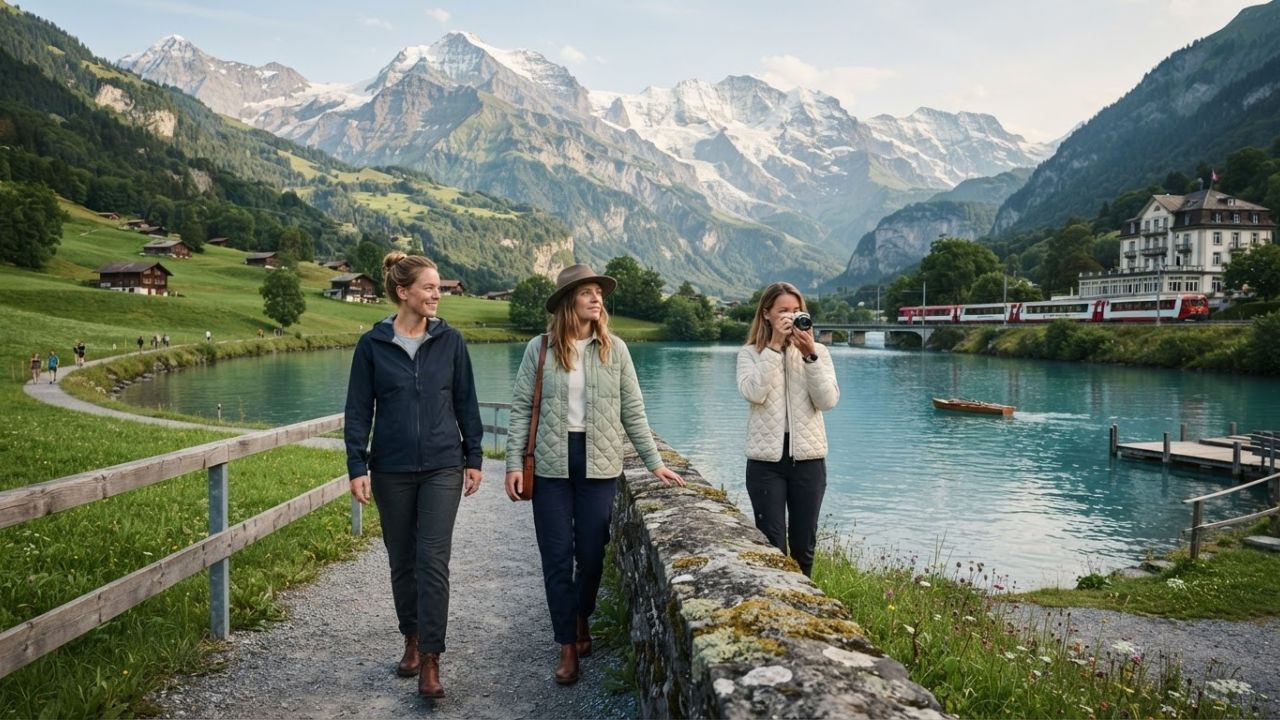
Image generated by AI
Economic forecasts for 2026 place Switzerland’s gross domestic product (PPP) at over $960 billion, propelled by a value-driven expansion in luxury tourism, pharmaceutical exports, financial services, and high-tech innovation across major urban centers.
ZURICH, Switzerland — Switzerland is solidifying its standing as one of Europe's most resilient and productive national economies, with its gross domestic product measured at purchasing power parity (GDP PPP) surpassing $960 billion in 2026. Rather than relying on population size or raw resource extraction, the Alpine nation has engineered a high-productivity economic model where a thriving premium tourism sector acts as a direct growth multiplier alongside world-leading industrial, pharmaceutical, and financial services.
The economic expansion reflects a strategic transition from volume-driven visitor counts to high-value travel experiences. By integrating luxury mountain hospitality, wellness retreats, scenic rail transit, and year-round Alpine activities, Swiss economic planners are converting the nation's natural environment into a sustainable, high-yielding economic engine.
Economic Data Places Switzerland's GDP Past $960 Billion in 2026
Switzerland's structural ability to generate outsized national output from a modest land area stems from specialized, high-margin production networks. In 2026, national economic strategy focuses on expanding industries that yield maximum economic value per worker, with international tourism emerging as a pivotal pillar.
While traditional tourism models rely on peak seasonal volume, Switzerland’s updated model targets premium travelers seeking extended stays, wellness retreats, and eco-certified luxury accommodation. This approach increases per-visitor spending while safeguarding fragile Alpine ecosystems from environmental degradation.
Alongside hospitality, core export sectors—including pharmaceuticals, biotechnology, medical technology, precision engineering, and financial wealth management—provide a stable economic floor, shielding the country from global macroeconomic volatility.
Switzerland Economic Growth Pillars and Tourism Sector Matrix
The breakdown table below outlines the core economic sectors powering Switzerland's $960 billion+ GDP (PPP) in 2026, detailing primary sub-sectors, urban hubs, and economic contribution mechanisms:
| Sector Category | Key Industry Components | Primary Regional & Urban Hubs | Economic Growth Contribution |
|---|---|---|---|
| Premium Tourism | Luxury hotels, wellness retreats, scenic rail & year-round Alpine sports | Zurich, Geneva, Lucerne, Bern, Zermatt, St. Moritz | High per-visitor yield & year-round regional job creation |
| Pharmaceuticals & Life Sciences | Prescription medicine, biotech research & medical technology | Basel, Zurich, Vaud | Major export revenue & high-wage research employment |
| Financial & Banking Services | Wealth management, private banking, reinsurance & fintech | Zurich, Geneva | Capital mobilization & international investment stability |
| Advanced Manufacturing & Engineering | Precision watchmaking, robotics, specialized machinery & micro-tech | Jura Arc, Winterthur, Neuchâtel | Global export competitiveness & high-productivity output |
| Technology & Innovation | Artificial intelligence, digital platforms & research institutes | Zurich (ETH), Lausanne (EPFL) | Commercial IP creation & productivity optimization |
Premium Tourism Strategy in Zurich, Geneva, Lucerne, and Bern
Switzerland’s urban centers serve as vital gateways connecting international capital with regional tourism corridors. Major metropolitan hubs—including Zurich, Geneva, Lucerne, and capital city Bern—are expanding their tourism product offerings beyond traditional city sightseeing.
- Zurich: Combines international banking infrastructure with luxury shopping, high-end culinary venues, and cultural festival tourism along Lake Zurich.
- Geneva: Serves as a global diplomatic and wealth management center, drawing high-net-worth international business and diplomatic travelers.
- Lucerne: Acts as the primary gateway to Central Switzerland, blending historic lakefront heritage with access to mountain railways like Mount Pilatus and Mount Rigi.
- Bern: Leverages its UNESCO-listed Old Town and Federal Palace architecture to attract heritage and cultural travelers.
By offering world-class public transport, low crime rates, and pristine urban environments, these cities generate high daily visitor expenditures across retail, dining, and luxury lodging sectors.
Alpine Eco-Tourism and Year-Round Mountain Infrastructure
The Swiss Alps remain the central geographic asset of the nation's tourist economy. To reduce vulnerability to changing climate patterns and seasonal snowfall variations, resort operators across the Canton of Valais, Graubünden, and the Bernese Oberland have developed comprehensive year-round outdoor programs.
Winter sports continue to generate significant seasonal revenue, but summer and autumn tourism has expanded rapidly through high-altitude trekking trails, mountain biking parks, alpine wellness spas, and eco-certified resorts.
Furthermore, the national public transportation system—managed by Swiss Federal Railways (SBB) and regional narrow-gauge operators—serves as a primary tourism product itself. Scenic rail routes like the Glacier Express and Bernina Express transport travelers across mountain passes with zero private vehicle emissions, supporting the national "Swisstainable" eco-certification framework.
Industrial Foundation: Pharmaceuticals, Precision Engineering, and Tech AI
While hospitality serves as a dynamic growth engine, industrial innovation maintains Switzerland’s economic competitiveness. The pharmaceutical and life sciences cluster—headquartered around Basel and Zurich—remains the nation's single largest export sector, generating billions in global trade surplus.
Simultaneously, Switzerland invests heavily in domestic research and technology development. Top-ranked academic institutions—such as ETH Zurich and EPFL Lausanne—partner directly with private enterprise to advance artificial intelligence, robotics, precision watchmaking, and medical technology.
This focus on specialized, high-value manufacturing enables Swiss companies to command premium global pricing without competing on low-cost labor, sustaining high household purchasing power and strong domestic consumer demand.
Practical Implications for European Travel and Economic Resilience
For international travelers, Switzerland’s $960 billion GDP milestone underscores the country's position as a premier, high-quality travel destination. The nation's continuous reinvestment in transport infrastructure, luxury lodging, and environmental protection ensures that visitors experience unexcelled reliability, cleanliness, and service quality.
From a macro-economic perspective, Switzerland demonstrates how advanced European nations can build sustainable economic growth by balancing high-tech industrial exports with eco-conscious, high-yield tourism.
As global competition for high-value international travelers intensifies, Switzerland’s combined focus on luxury service, public transport integration, and environmental stewardship solidifies its leadership in European economic performance.
Traveler Planning Guide: Navigating Switzerland's Premium Tourism Network
Travelers planning a holiday in Switzerland during the 2026–2027 season should keep these practical recommendations in mind:
- Utilize the Swiss Travel Pass: Invest in an all-in-one public transport pass providing unlimited travel across trains, buses, and lake steamers, plus entry to over 500 museums.
- Explore Shoulder Seasons: Visit during May, June, September, or October for mild weather, lower hotel rates, and uncrowded alpine hiking trails.
- Experience Scenic Rail: Book advance seat reservations on panoramic trains like the Glacier Express or Bernina Express to view Alpine passes.
- Stay in Swisstainable-Certified Hotels: Choose eco-certified hotels that prioritize regional sourcing, energy efficiency, and low-impact hospitality.
Related Travel Guides
Disclaimer
This article is for informational and educational purposes only. It does not constitute legal, financial, or professional advice. While we strive to provide accurate and up-to-date information, travel policies, regulations, and conditions change rapidly. Always verify information with official sources before making travel decisions. Nomad Lawyer makes no representations about the accuracy, reliability, completeness, or suitability of the information provided. Readers should consult qualified professionals for advice specific to their circumstances. The views expressed in this article are those of the author and do not necessarily reflect the views of Nomad Lawyer.
Raushan Kumar
Founder & Lead Developer
Full-stack developer with 11+ years of experience and a passionate traveller. Raushan built Nomad Lawyer from the ground up with a vision to create the best travel and law experience on the web.
Learn more about our team →