
Suan Dusit Arun Emerges As Bangkok’s Must-Visit Rooftop Park For Green Travel Experiences
Suan Dusit Arun Emerges As Bangkok’s Must-Visit Rooftop Park For Green Travel Experiences
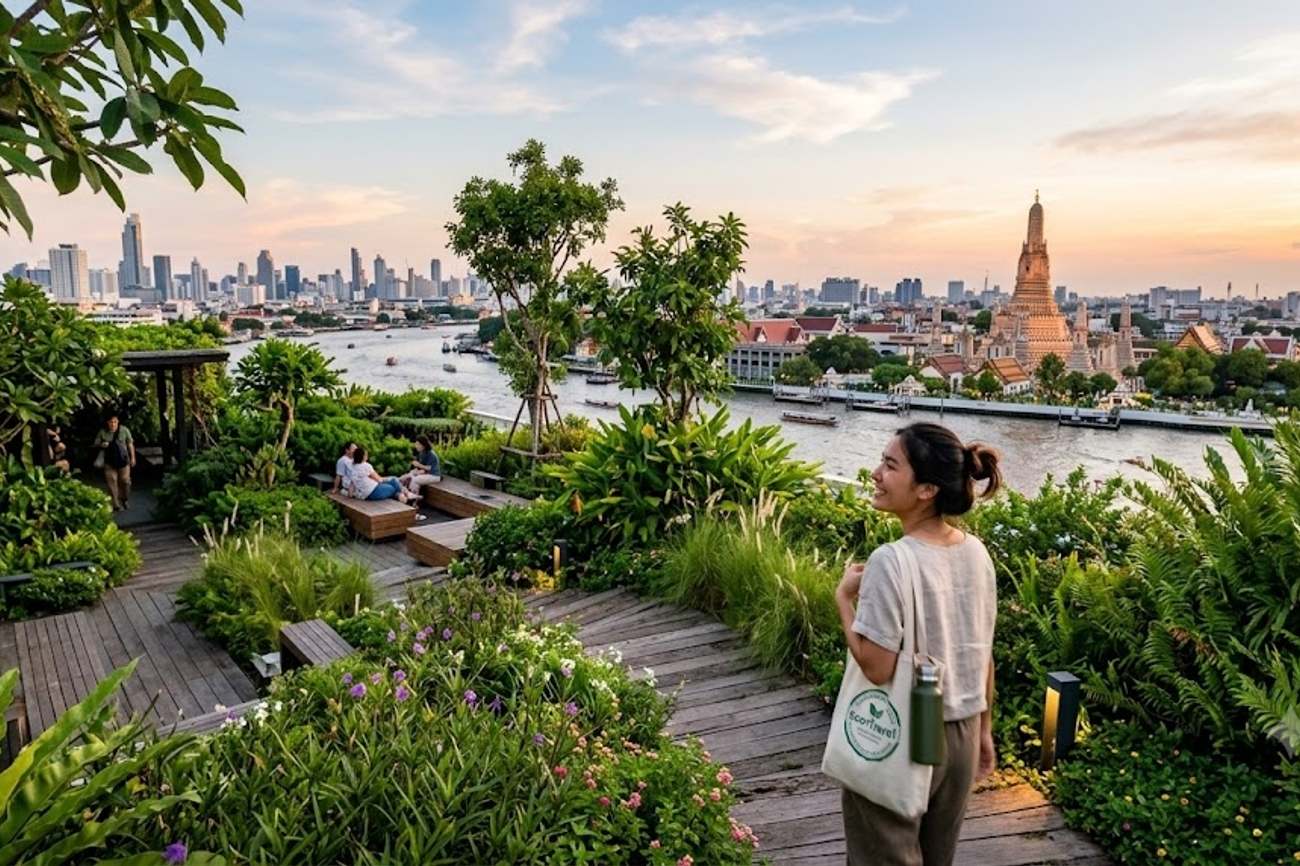
Image generated by AI
951,000 visitors in a single year proves that the appetite for accessible green space in Bangkok's concrete core is no longer a luxury, but a public necessity. This figure, reported on the first anniversary of Suan Dusit Arun on September 3, underscores a shifting paradigm in Southeast Asian urbanism where "vertical parks" are transitioning from architectural novelties to essential infrastructure for climate resilience.
The Architecture of Urban Resilience in Bangkok
Suan Dusit Arun is not a standalone botanical garden but the ecological anchor of the massive Dusit Central Park development. Situated within the central business district, the park serves as a connective tissue linking several high-density assets: the Dusit Thani Bangkok hotel, the Central Park shopping center, Central Park Offices, and a 69-storey residential complex comprising Dusit Parkside and Dusit Residences.
The project was conceived as a direct response to the "Urban Heat Island" effect—a phenomenon where dense concentrations of pavement and buildings trap heat, raising city temperatures significantly above surrounding rural areas. By utilizing a nature-focused design that integrates sunlight patterns, wind movement, and Feng Shui, the park attempts to mitigate the oppressive tropical climate of Thailand's capital. This is not merely aesthetic; it is a strategic attempt to make the city center more hospitable for the residents, corporate workers, and international travelers who frequent the district.
Quantifying the Environmental Dividend
The scale of the greening effort is significant, with 98% of the total rooftop area dedicated to vegetation. This is not a monoculture of ornamental grass, but a complex ecosystem featuring 184 plant varieties. The botanical strategy blends cultural identity—using jasmine and sacred spirit trees—with rigorous conservation goals.
The park’s impact on the immediate microclimate and urban drainage is supported by specific data points gathered during its inaugural year.
| Metric | Data Point / Value | Context |
|---|---|---|
| Daily Average Visitors | 2,621 | First-year average |
| Total Annual Visitors | 951,000+ | First-year total |
| Green Space Coverage | 98% | Percentage of rooftop area |
| Plant Diversity | 184 varieties | Including 48 native Thai species |
| IUCN Red List Species | 9 species | 2 Critically Endangered, 2 Endangered, 5 Vulnerable |
| Water Recycled/Harvested | 25% | Portion of irrigation requirements |
| Stormwater Runoff Reduction | 30% to 50% | Compared to hard rooftop surfaces |
| Temperature Differential | 2°C Reduction | 31°C (Inside) vs 33°C (Outside) |
| Air Quality Improvement | 35% Lower | Reduction in suspended particulate matter |
| Community Programming | 43 events | 9,500+ total participants |
The air quality data, recorded on March 13 and 14, 2026, is particularly telling. A 35% reduction in suspended particulate matter within the park boundaries suggests that the vegetation acts as a biological filter, providing a localized "clean air zone" in a city frequently plagued by smog and industrial pollutants.
Expert Analysis: The "Green Premium" and Urban Logistics
For the business traveler or the digital nomad residing in Bangkok, the emergence of Suan Dusit Arun signals a shift in how luxury and utility are defined in the city. We are seeing the rise of the "Green Premium," where the value of a real estate asset is no longer just about the square footage or the view, but about the proximity to managed ecological zones.
The direct consequence for the traveler is a change in the logistical flow of the CBD. By integrating a public park into a mixed-use development (retail, office, and residential), the project reduces the need for "transit-to-nature." When a professional can move from a 69-storey office tower to a temperature-controlled green space without leaving the building complex, the productivity and wellness outcomes improve.
Suan Dusit Arun, a newly opened rooftop park in Bangkok, is gaining popularity among tourists and locals alike for its unique blend of green spaces and urban views. For visitors planning to explore this attraction, it is recommended to check the official Tourism Authority of Thailand website for up-to-date information on opening hours, ticket prices, and special events. This will help travelers plan their itinerary and make the most of their visit to Suan Dusit Arun.
Furthermore, the stormwater runoff data (30% to 50% reduction) addresses a critical legal and logistical pain point for Bangkok: seasonal flooding. By absorbing rainfall that would otherwise overwhelm the city's aging drainage networks, Suan Dusit Arun functions as a piece of "sponge city" infrastructure. For the traveler, this means fewer localized flash floods that typically paralyze the CBD during the monsoon season.
The inclusion of species from the International Union for Conservation of Nature (IUCN) Red List also suggests that private developers are stepping into roles traditionally held by government conservation agencies. This privatization of biodiversity protection is a trend we are seeing globally, where corporate ESG (Environmental, Social, and Governance) mandates drive the preservation of endangered flora within commercial zones.
Key Takeaways
- Climate Mitigation: The park successfully lowered local temperatures by 2°C and reduced particulate matter by 35% compared to the surrounding street level.
- Biodiversity Hub: The site preserves 9 IUCN Red List species, including two that are critically endangered, blending urban utility with global conservation.
- Infrastructure Relief: The rooftop design cuts stormwater runoff by up to 50%, contributing to the broader effort to prevent urban flooding in Bangkok.
- High Demand: With nearly one million visitors in year one, there is a proven, massive demand for non-commercialized public space in high-density districts.
- Resource Efficiency: One-quarter of the park's water needs are met through recycled or harvested sources, reducing the strain on the municipal water supply.
FAQ: Suan Dusit Arun 2026
Is Suan Dusit Arun open to the general public? Yes, the rooftop landscape is designed as a publicly accessible space for residents, workers, and travelers, integrating nature into the heart of Bangkok's central business district.
How does the park help with Bangkok's air pollution? Data from March 2026 shows that suspended particulate matter levels are approximately 35% lower inside the park than in surrounding areas, thanks to the 184 varieties of plants acting as natural filters.
What makes the plant selection unique? The park features 48 native Thai species and 9 species listed on the IUCN Red List, including critically endangered plants, alongside culturally significant flora like jasmine.
Does the park use a sustainable water system? Yes, 25% of the irrigation is supplied via harvested or recycled water, managed by an automated system to ensure efficiency and minimize waste.
The transition from concrete jungle to vertical forest is no longer a conceptual sketch—it is now a measurable metric of urban survival.
Tags: Suan Dusit Arun, Dusit Central Park, Bangkok Urban Planning, IUCN Red List, Thailand Climate Resilience, Dusit International
Related Travel Guides
- Spain Tourism Jobs Hit 3 Million in August as Employment Rises 2.3% and Madrid Leads Growth
- San Diego Tourism Hits Record Hotel Revenue As Rising Costs And AI Booking Disruption Reshape Hospitality Future Ahead Of 2027
- Jamaica Joins Saudi Arabia’s Air Connectivity Push to Expand Aviation Links and Drive Tourism Opportunities
Disclaimer
This article is for informational and educational purposes only. It does not constitute legal, financial, or professional advice. While we strive to provide accurate and up-to-date information, travel policies, regulations, and conditions change rapidly. Always verify information with official sources before making travel decisions. Nomad Lawyer makes no representations about the accuracy, reliability, completeness, or suitability of the information provided. Readers should consult qualified professionals for advice specific to their circumstances. The views expressed in this article are those of the author and do not necessarily reflect the views of Nomad Lawyer.
Naina Thakur
Contributor & Travel Specialist
Travel enthusiast and legal writer covering visa regulations, responsible tourism, and cultural journeys across global destinations.
Learn more about our team →